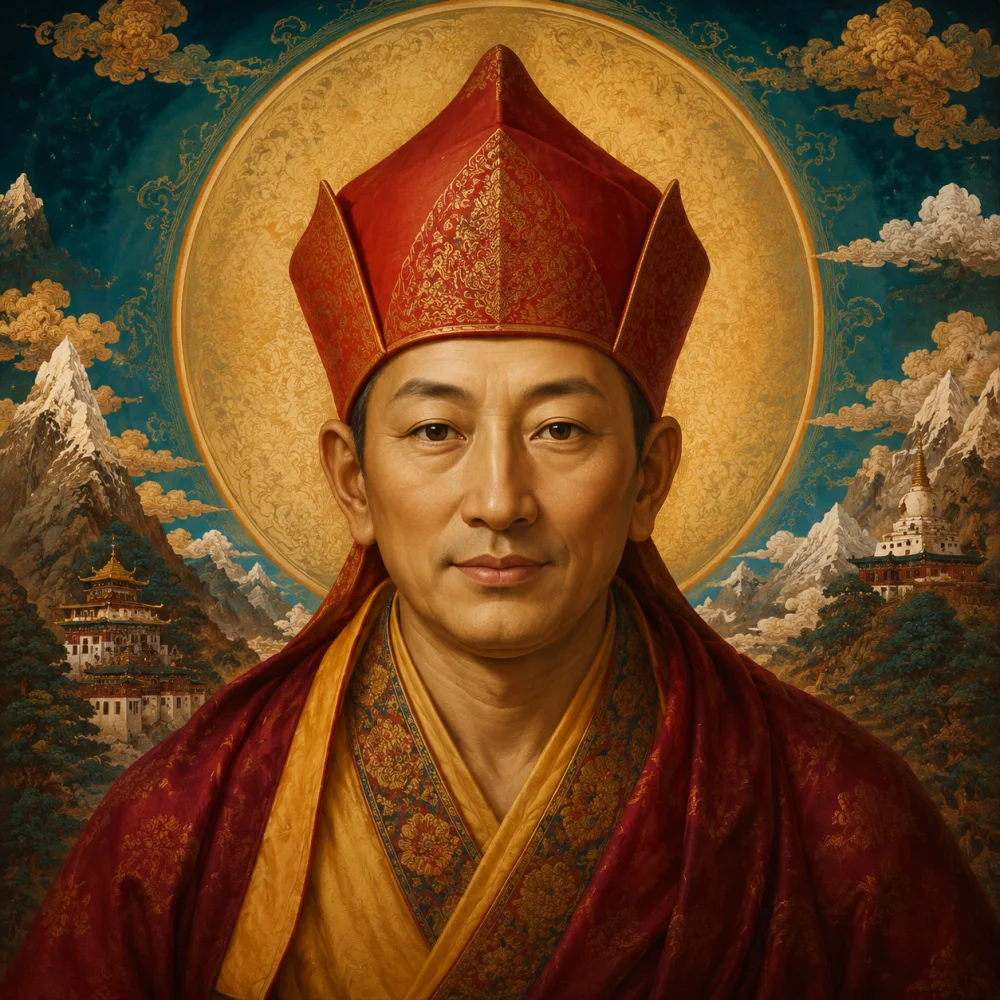
Masters · Dzogchen · 14th c.
Longchenpa
Longchen Rabjam · Kunkhyen ("the All-Knowing") · Drime Özer
The greatest systematizer of Dzogchen, the Great Perfection. His "Seven Treasuries" are the summit of the exposition of the nature of mind. He taught: the nature of mind is already perfect, primordially pure and spontaneously luminous — there is nothing to attain, only to recognise what is always there.
The Great Perfection: The nature of mind is primordially pure, open, luminous awareness (rigpa). It need not be created or improved — only recognised, for it is always present.
How he is seen
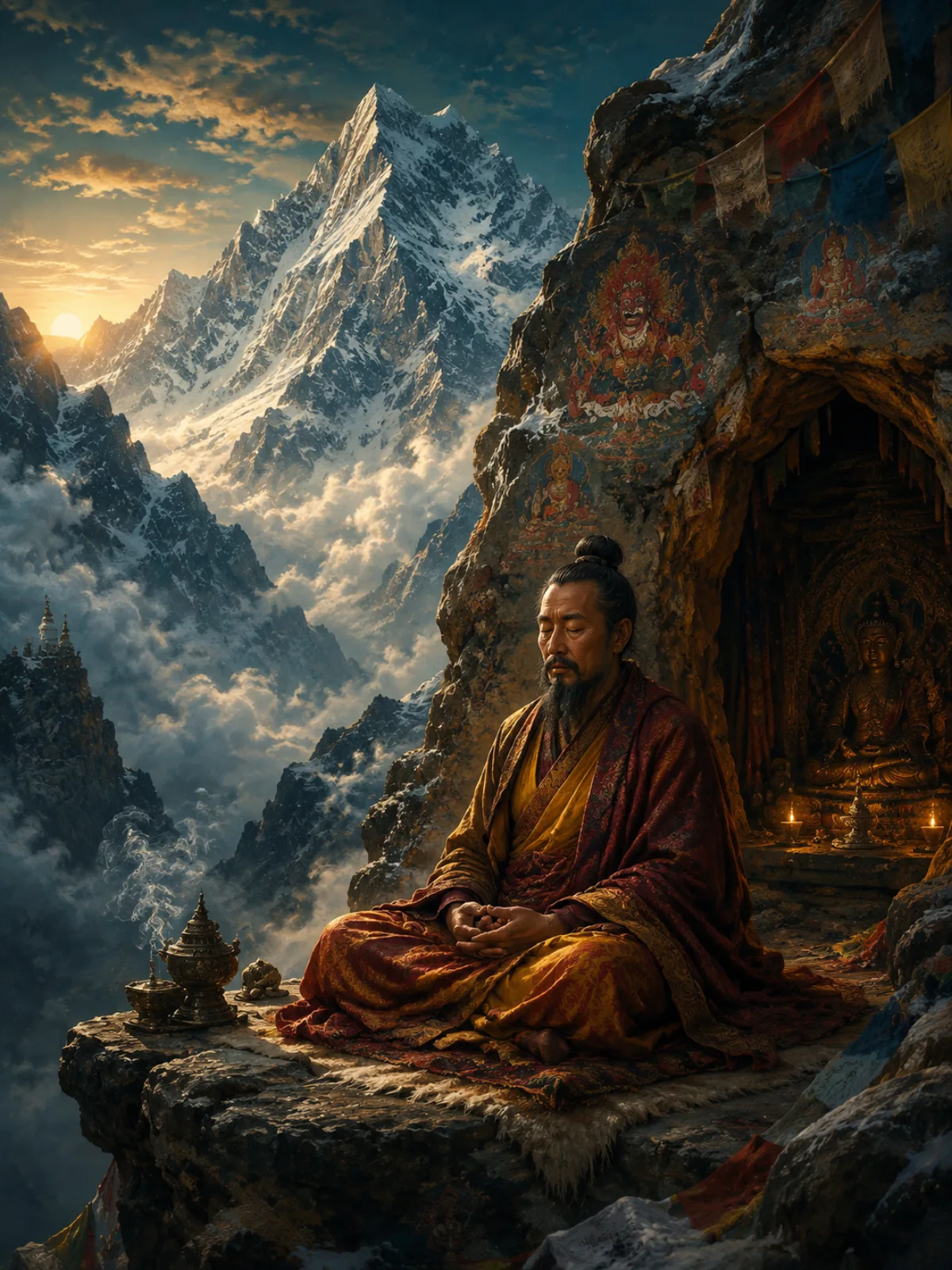
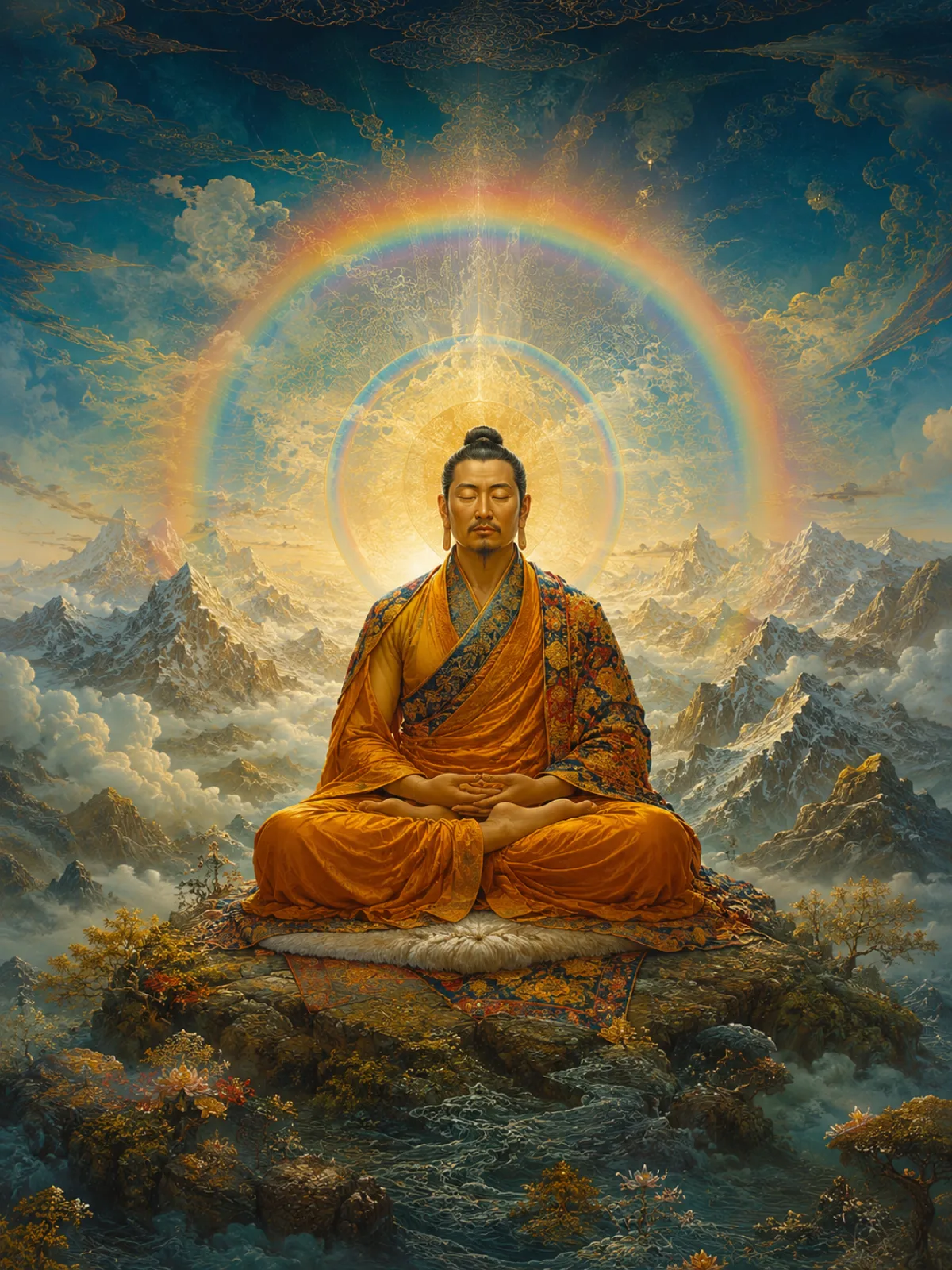
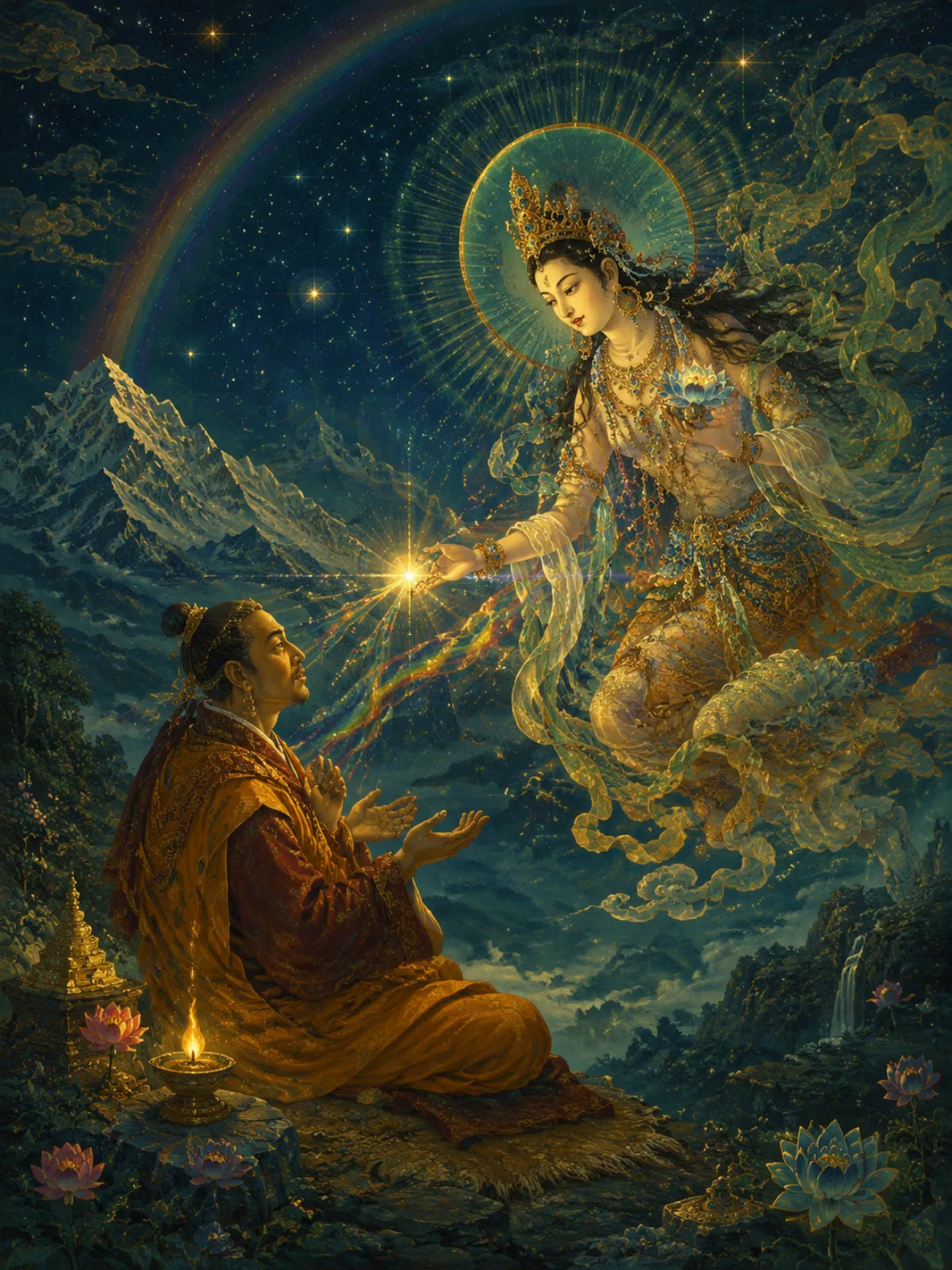
There are no photographs — the images follow the Tibetan thangka tradition, in our style.

The All-Knowing
Born in 1308, a prodigy, a monk of Sangphu monastery, he became the student of Kumaradza, a holder of the Dzogchen lineage. For the breadth and depth of his knowledge he was named Kunkhyen — "the All-Knowing." He united the learning of the sutra with the intimacy of the tantra.
Gangri Thökar
He spent most of his life as a hermit in the mountain retreat of Gangri Thökar — "White Skull." Amid the snows and the silence he wrote his major works, living that very natural simplicity of which he taught.
The Seven Treasuries
His "Dzö Dün" — the Seven Treasuries — is an encyclopedic exposition of the whole Buddhist path and of the Great Perfection in particular. Together with the "Trilogy of Rest," the "Trilogy of Natural Freedom," and his commentaries on the intimate Nyingtik instructions.
Primordial purity
The essence of his teaching: the nature of mind is primordially pure (ka-dag) and spontaneously present (lhun-drub). Samsara and nirvana are the play of that luminous emptiness. Nothing can be added to it and nothing taken away. Liberation is the recognition of what was always there.
Leave it as it is
His instruction for practice is beyond effort: leave the mind in its natural state, without correcting, without grasping, without distraction. Not to meditate "on" something — but to rest as open awareness itself. Longchenpa's rainbow legacy became the foundation of all later Dzogchen.
Words
Since everything is but an apparition, perfect in being what it is, having nothing to do with good or bad, acceptance or rejection, one might as well burst out in laughter.
Mind itself is like the sky — empty, open, and clear; rest in that nature, without grasping or rejecting.
Within the expanse of self-arising awareness, samsara and nirvana are but ornaments.
A living transmission
Listen in voice — the full transmission with the text, in the Atlas of Consciousness.
The Masters section is growing. The School gathers the wisdom of ages into one living system. Support the launch →