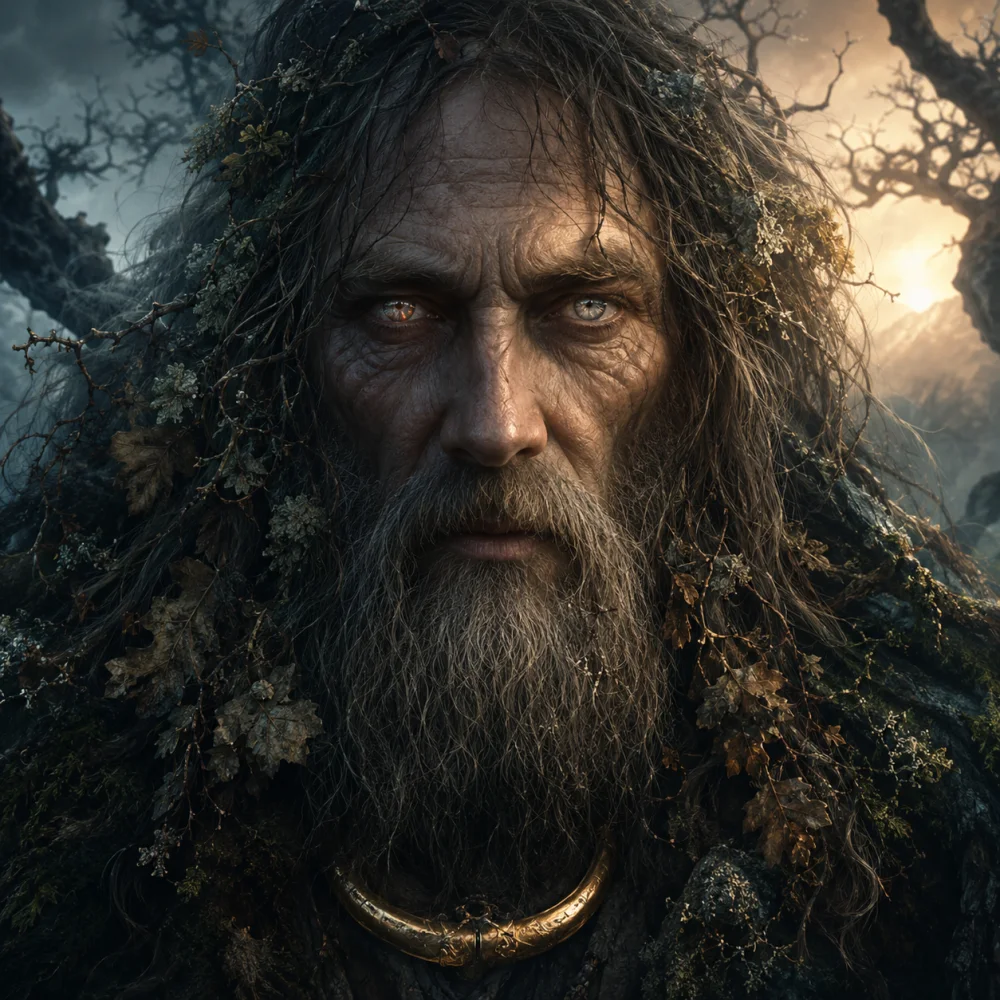
Masters · the Celtic tradition · 5th–12th c.
Merlin
Myrddin Wyllt · Merlinus Ambrosius · Merlinus Silvester
A wild prophet who became the archetype of the sage. Not one man, but a thousand-year amalgam: the mad bard of the Caledonian Wood, the boy-seer beneath Vortigern's tower, the son of a demon and a maiden, the stargazer, the shapeshifter, the maker of kings.
The truth of the inquiry: Merlin the man almost certainly never existed. What we call Merlin is a stitching-together of two Welsh figures (the prophet Myrddin Wyllt + the war-leader Ambrosius Aurelianus), carried out by Geoffrey of Monmouth around 1136.
How he is described
Images across the whole corpus — from the most ancient layer to the late departure. Each is marked by the nature of its source.
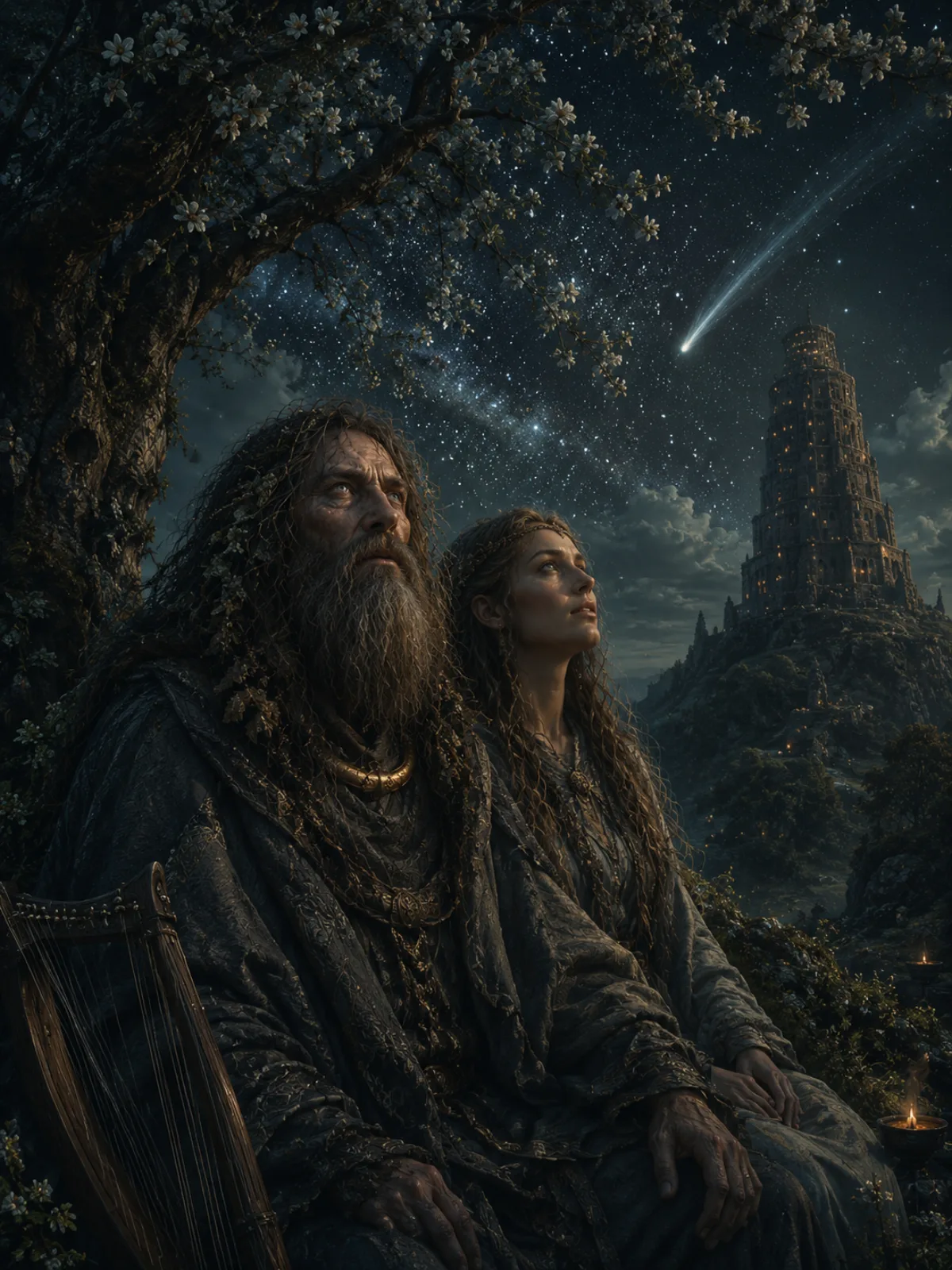
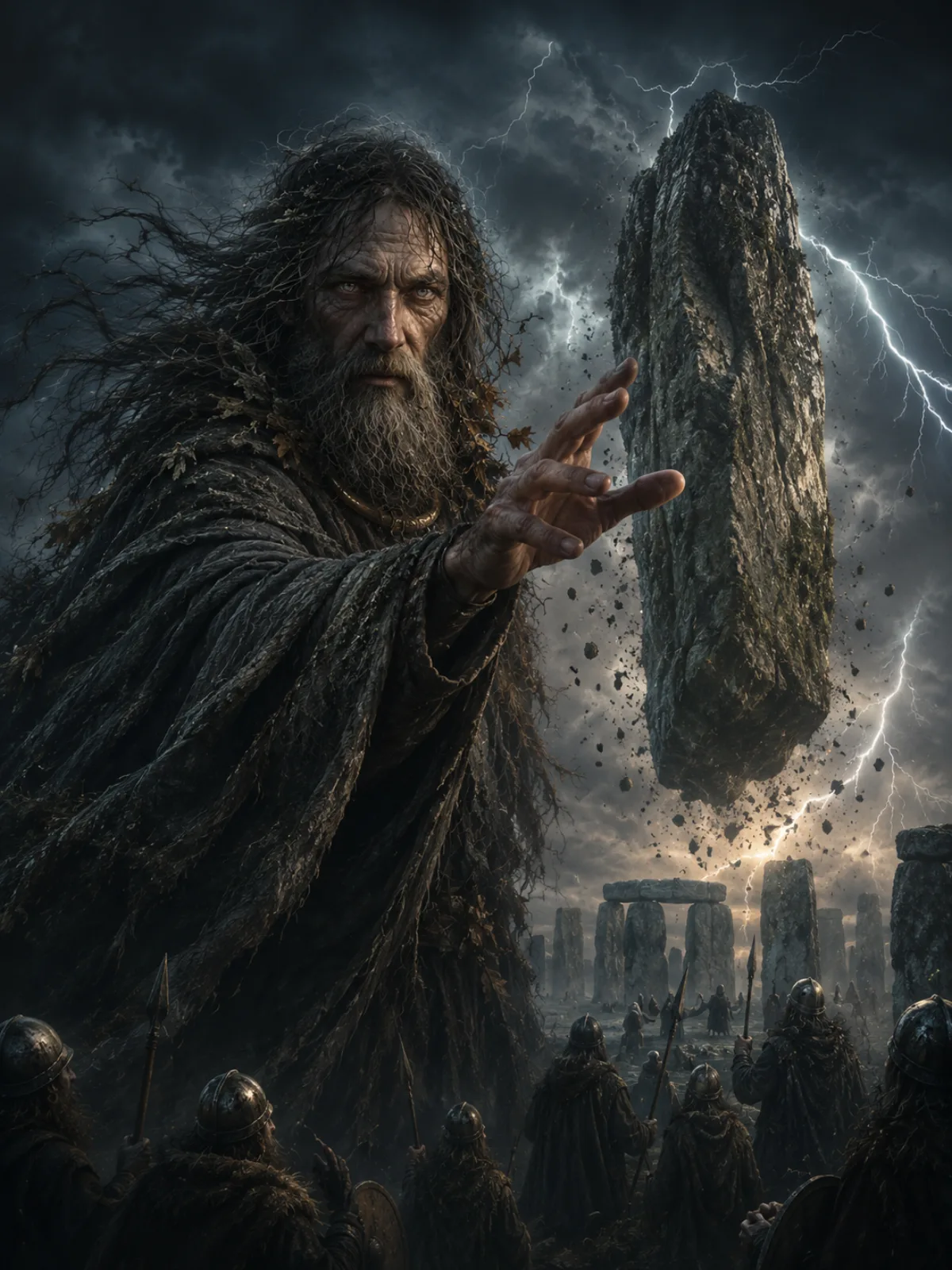
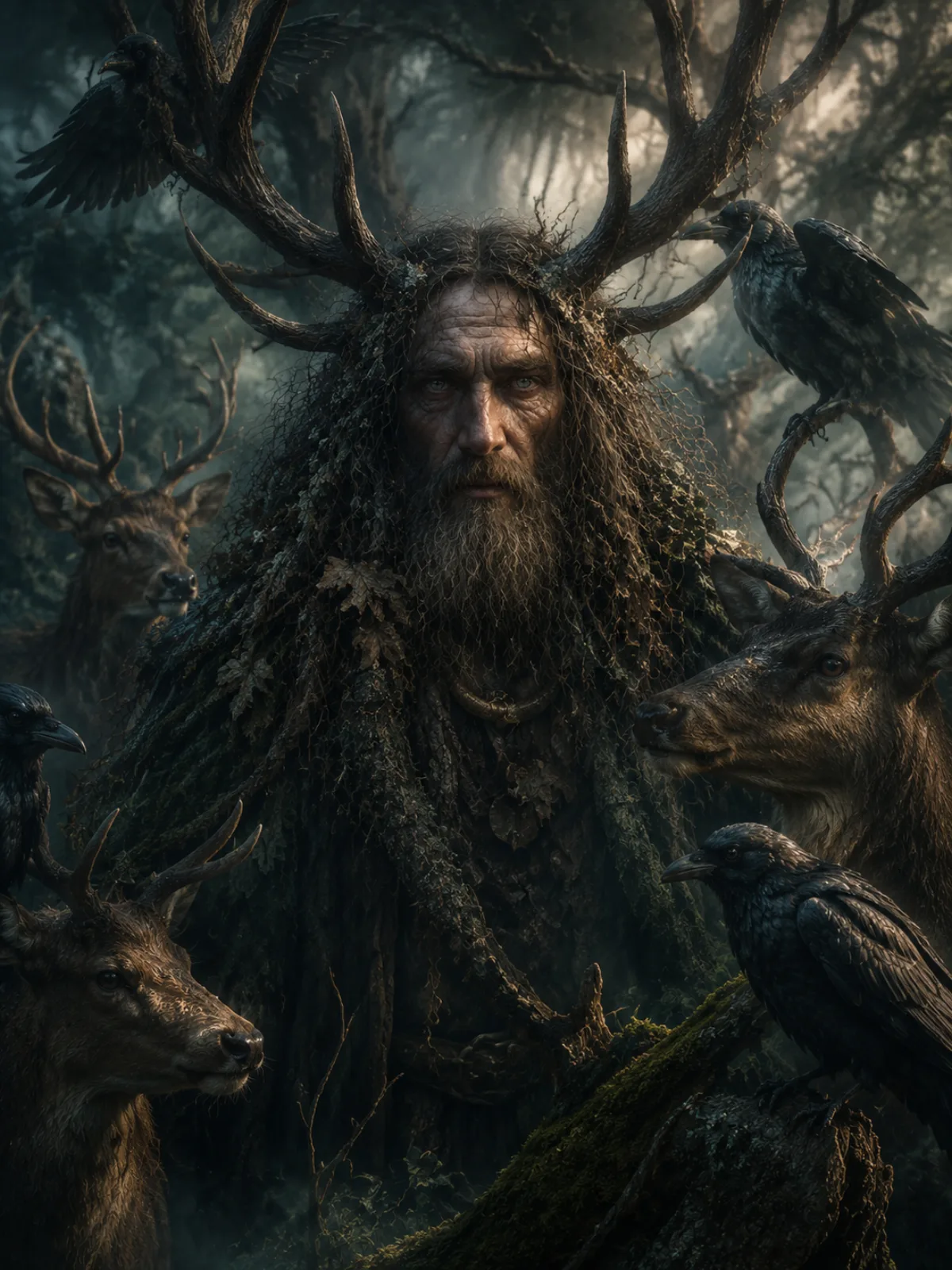
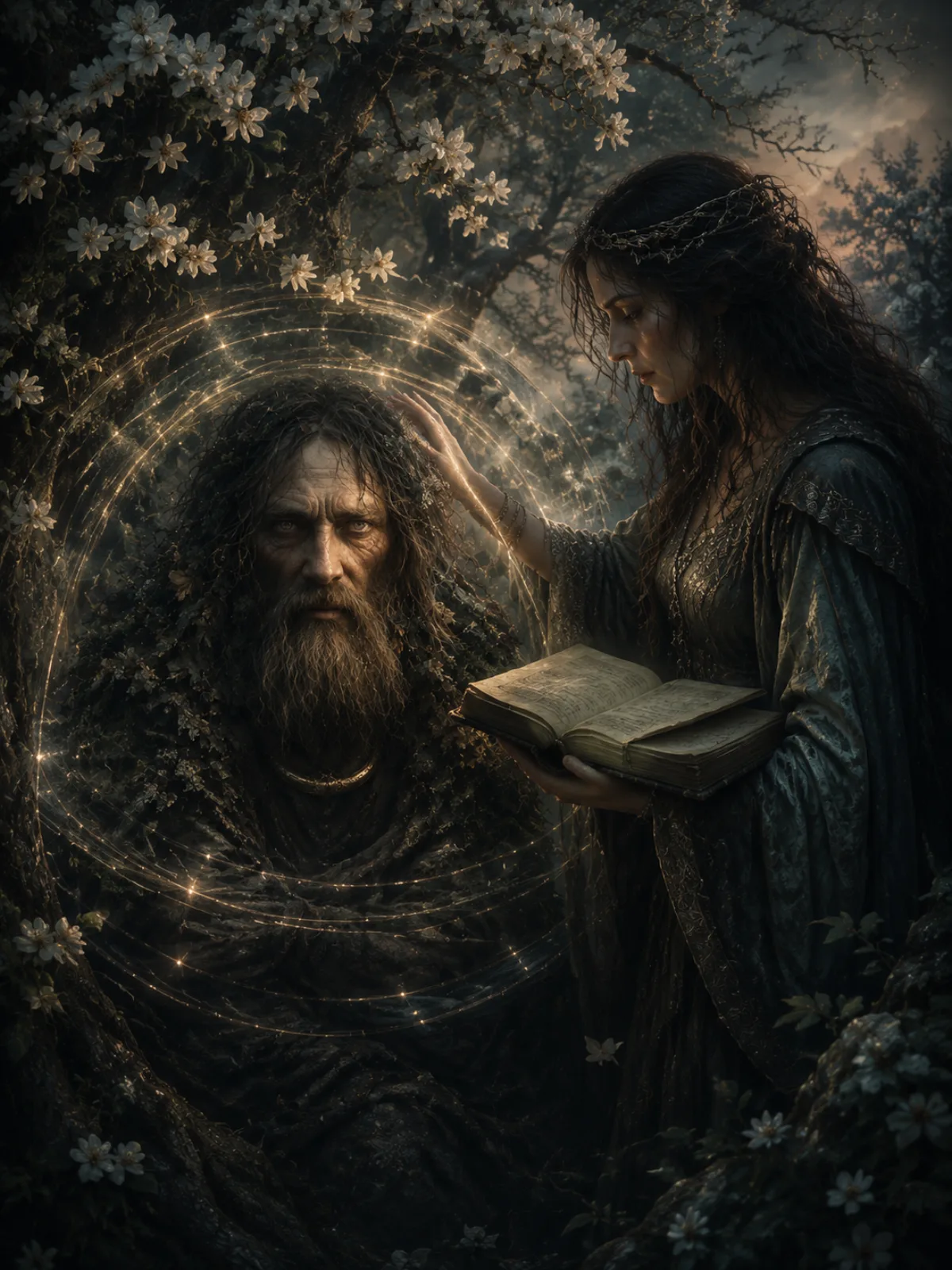
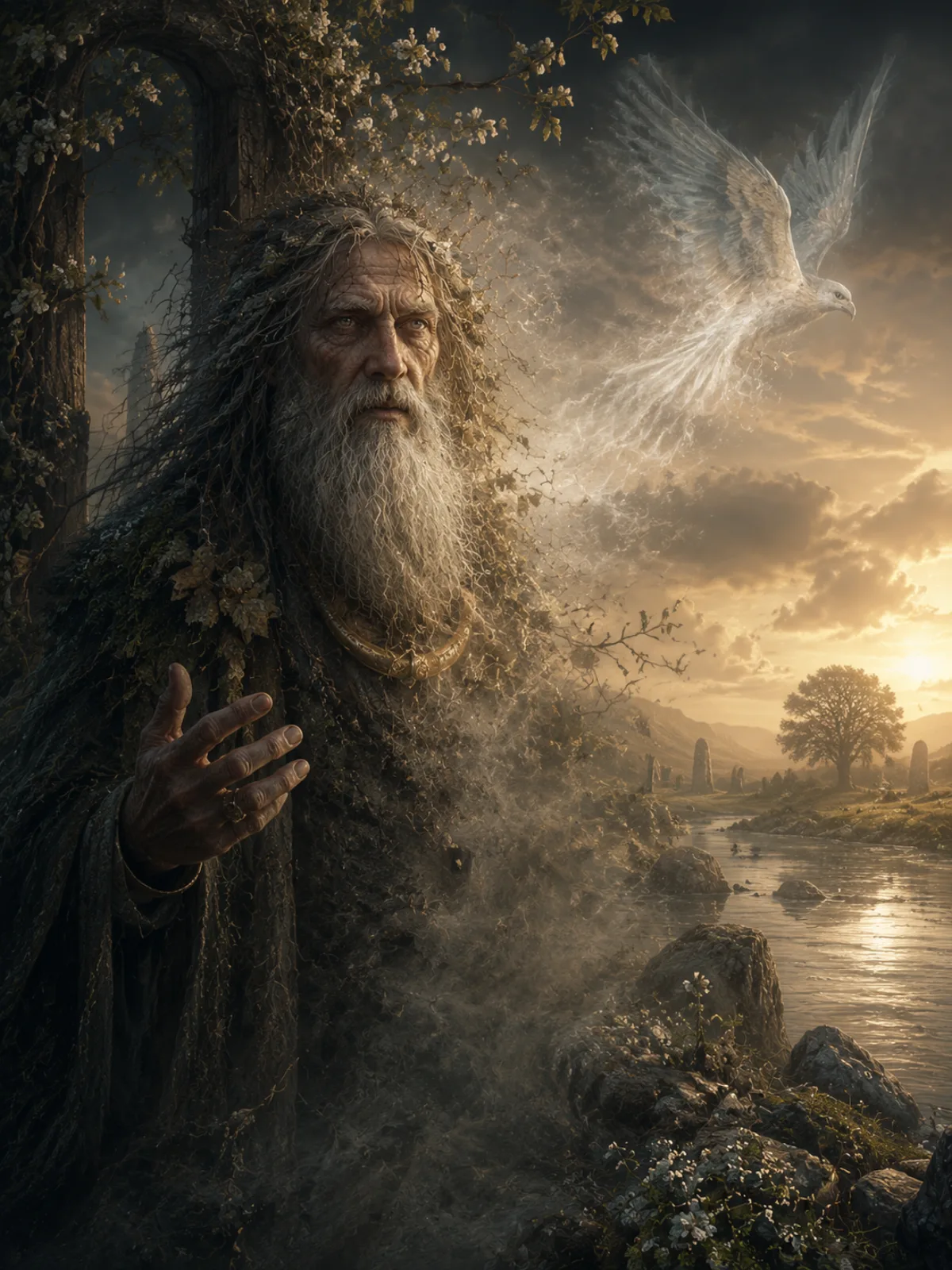
Origin: two men fused into one
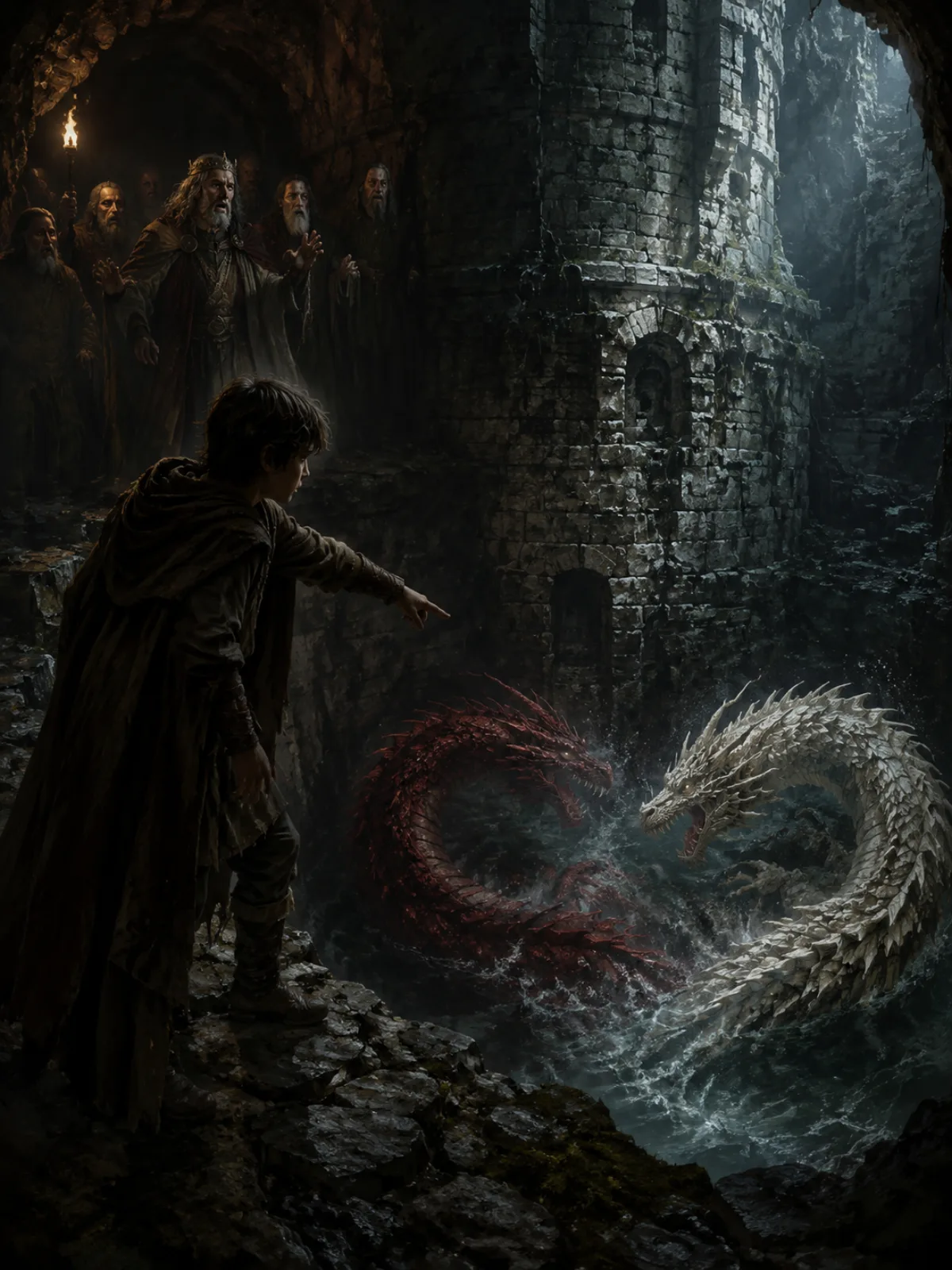
Geoffrey of Monmouth (c. 1136–1150) fused Myrddin Wyllt — a bard-seer driven mad after the battle of Arfderydd (573) and fled into the Caledonian Wood — with Ambrosius of the "Historia Brittonum," the boy-prophet of the two dragons. The name "Merlinus" is a Latinization of the Welsh Myrddin (derived from the place-name Carmarthen), adjusted so as not to sound like the French merde. The battle of Arfderydd is the real kernel of the legend; the prophet-bard himself is not.
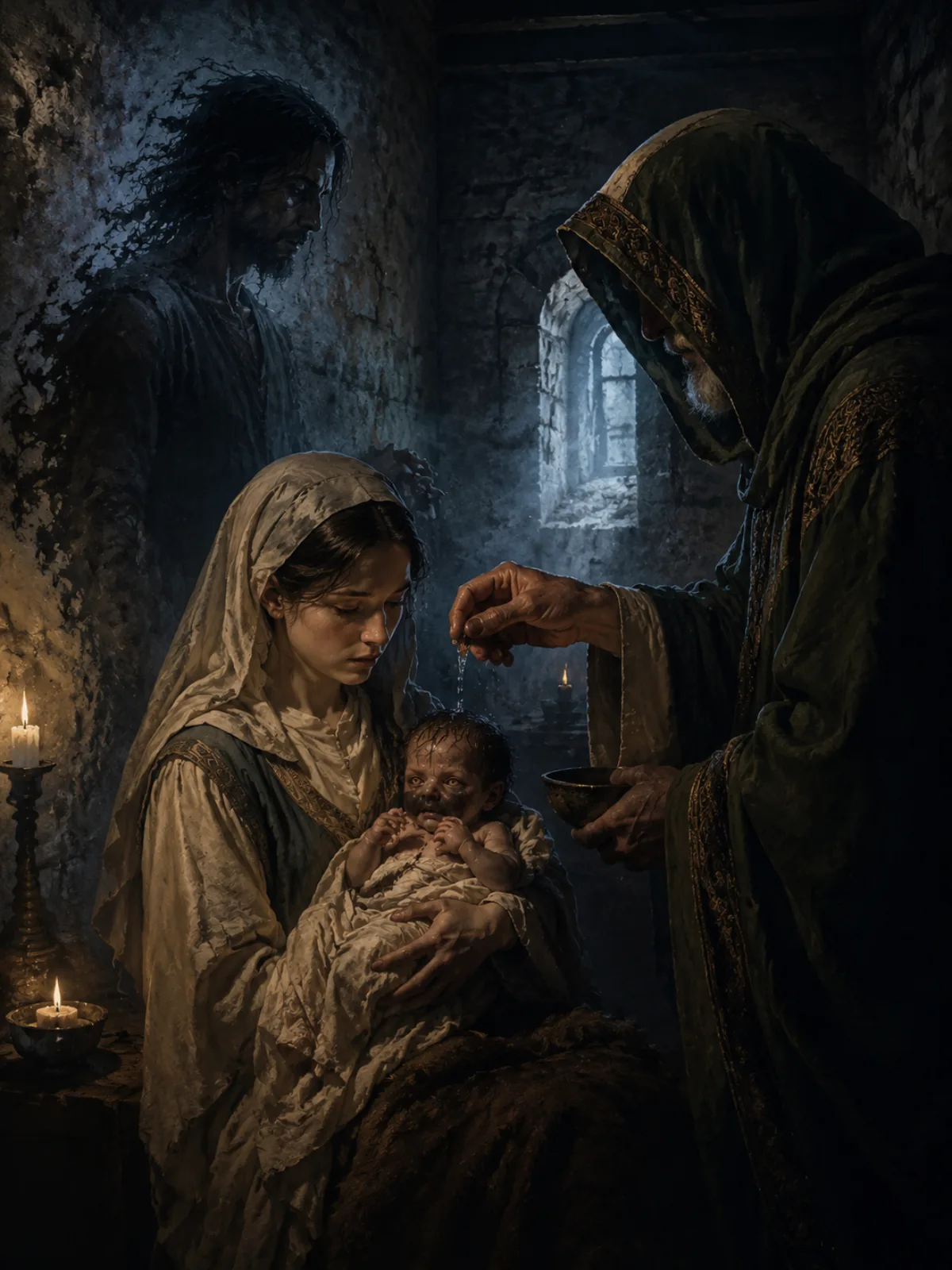
Lineage: son of an incubus, a redeemed Antichrist
The motif of the demonic father was first introduced by Geoffrey: the mother a nun, daughter of the king of Dyfed, who conceived by an incubus. Robert de Boron sharpened it: a council of demons breeds Merlin as an anti-Christ to reverse the Harrowing of Hell — but baptism "turns him over." So Merlin became the canonical cambion: knowledge of the past from the devil, knowledge of the future from God. Behind the "father" stands the real Romano-British leader Ambrosius Aurelianus.
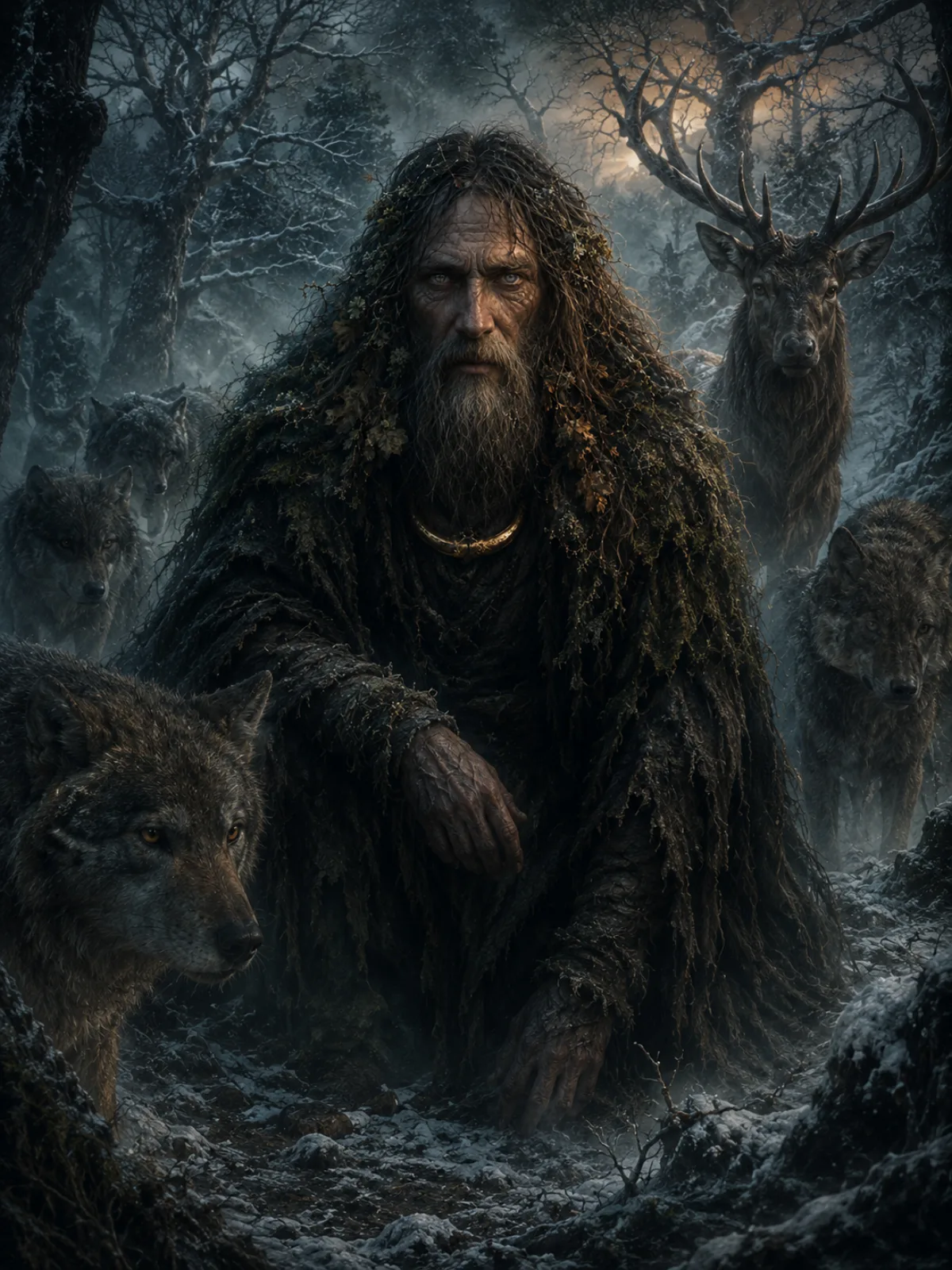
The wild prophet: Myrddin, Lailoken, Suibhne
The oldest and most authentic layer is the "wild man of the woods." The Welsh Myrddin, the Strathclyde Lailoken, and the Irish Suibhne Geilt are quasi-cognate descendants of a single tale (late 6th c.). They share the "threefold death" motif. The Irish geilt and the Welsh gwyllt are cognate, from the Proto-Indo-European root *gʷʰel-t- ("wild"). Lawrence Eson compares Merlin to Odin: a sacrifice on the World Tree for the sake of mantic knowledge.
Knowledge: prophecy and magic
In the medieval tradition Merlin is above all a prophet, not a magician. The core is the zoomorphically-encoded "Prophecies": the red dragon (the Britons) and the white (the Saxons). Magic is secondary: the moving of the "Giants' Dance" from Ireland (Stonehenge), the changing of Uther's likeness at Tintagel for the begetting of Arthur. The Round Table and the sword in the stone are later accretions of Robert de Boron. The genuine "wisdom" in the Vita Merlini, however, is natural philosophy and the observation of birds — knowledge won by living in the forest.
Prophecies: a 400-year political industry
The "Prophecies" gave rise to the Galfridian genre — political prophecy in animal ciphers, alive for at least 400 years. It was deployed for Robert the Bruce against Edward I, in Glyndŵr's revolt (Henry IV = "the mole"), in France against the English, and climactically — in Tudor propaganda: Henry VII as "the son of prophecy," descendant of Cadwaladr, bore the red dragon at Bosworth. The source of its longevity is the deliberate vagueness of the cipher.
Legacy: from the senex to Gandalf
The image of the "wise old man with the white beard" in the pointed cap was fixed not by the Middle Ages, but by T. H. White (1938) and Disney. The Victorians remade Merlin into a doomed victim: Tennyson made Vivien a seductress, Burne-Jones painted her as a Medusa. Merlin is the direct template of the fantasy wizard: Gandalf, Dumbledore, by way of Prospero. "The initiator's last gift is his absence."
Channelings: "Merlin = Saint Germain" — a myth of 1952
The identification of Merlin with the Ascended Master Saint Germain is not classical theosophy (Merlin is in neither Blavatsky's nor Leadbeater's list of incarnations) and not Guy Ballard. The earliest datable source is Bridge to Freedom, the medium Geraldine Innocente, the pamphlet "The Seventh Ray" (1953). The Prophets (Church Universal and Triumphant) merely canonised what was ready ("12 battles = 12 initiations"). All of it is channeling, not history.
Places and graves
The folk cult attached itself to the landscape: the Carmarthen oak ("when the oak falls, the town falls"), "Merlin's cave" at Tintagel (a Victorian accretion), three rival deathbeds — Marlborough, Bardsey, and Drumelzier, where the archaeology of 2022–24 confirmed that the legend was born there locally. The Breton Brocéliande is a 19th-century romantic construction: the "tomb of Merlin" is a Neolithic alley, blown up by treasure-hunters.
The full study
A two-volume compendium: 17 facets, ~200 findings with sources, verification of the disputed claims. Origin, lineage, books, prophecies, channelings, graves, the screen canon.
This is the beginning of the Masters section. The School gathers the wisdom of ages into one living system. Support the launch →