Masters · Advaita · non-duality · 1897–1981
Nisargadatta Maharaj
Maruti Shivrampant Kambli · "I Am That" · Inchegiri Sampradaya
A bidi-seller from a Bombay back-lane who became one of the greatest teachers of non-duality of the twentieth century. His method is utterly simple and merciless: hold to the sense "I Am" until everything dissolves except that which was before it.
The single fact: "The only thing you are sure of is that you are. 'I am' is certain. 'I am this' is not. Hold to 'I am' until the source opens."
How he was
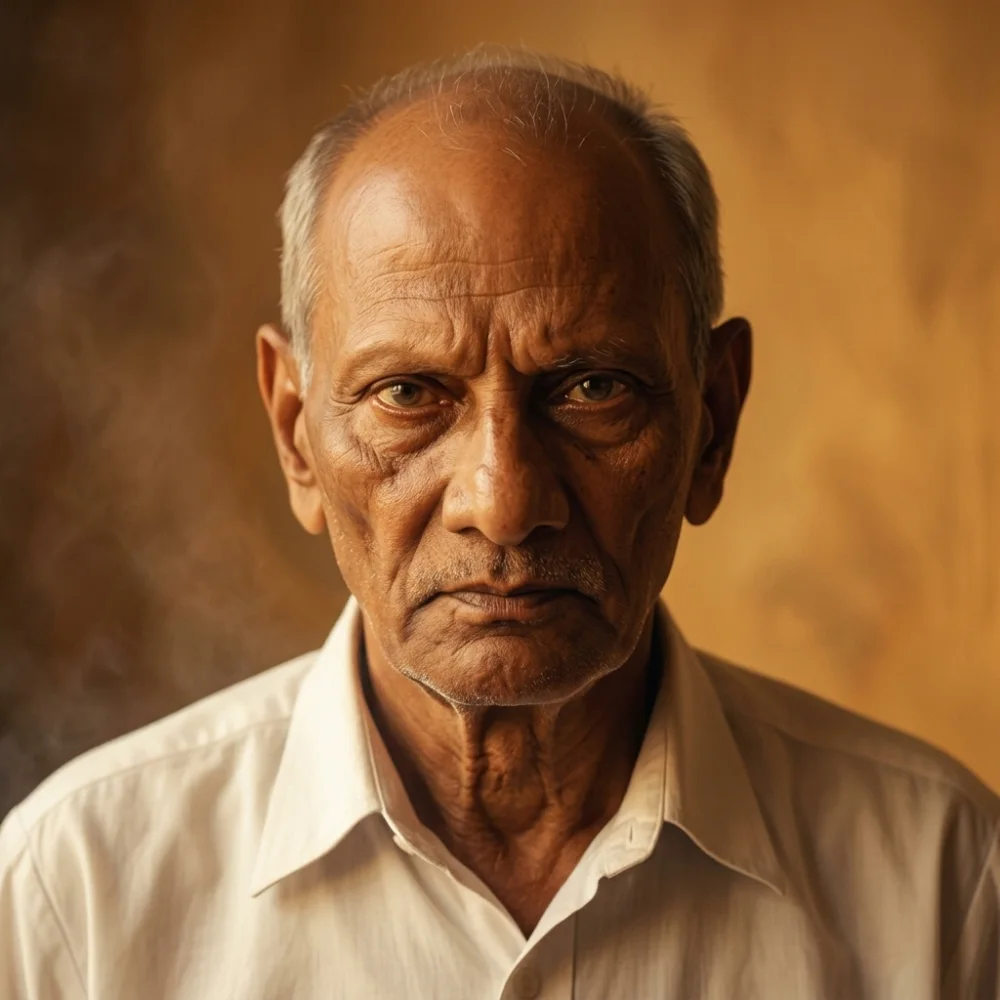
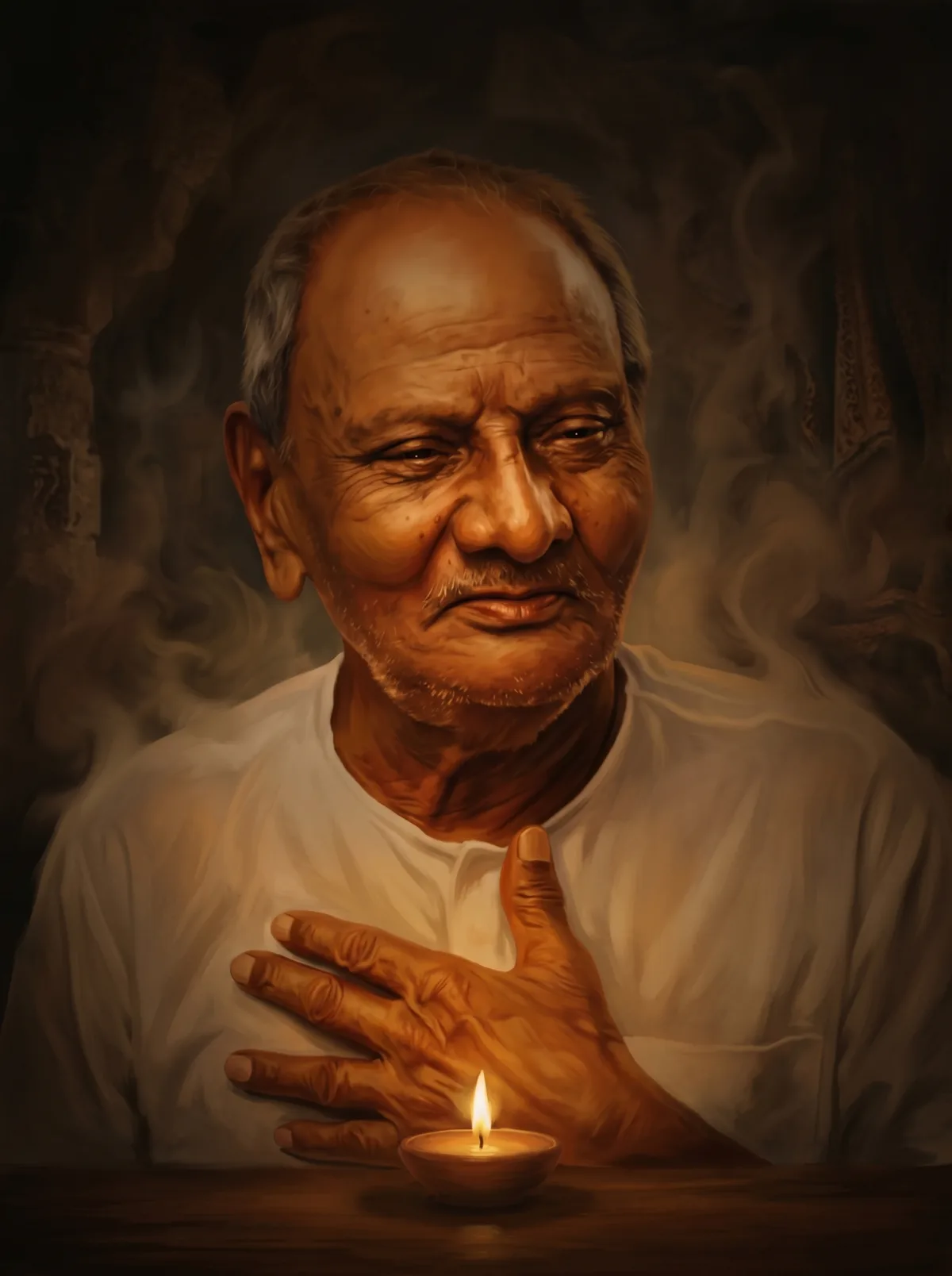
The images are reconstructed from authentic photographs — the master's exact face, carried into our style.
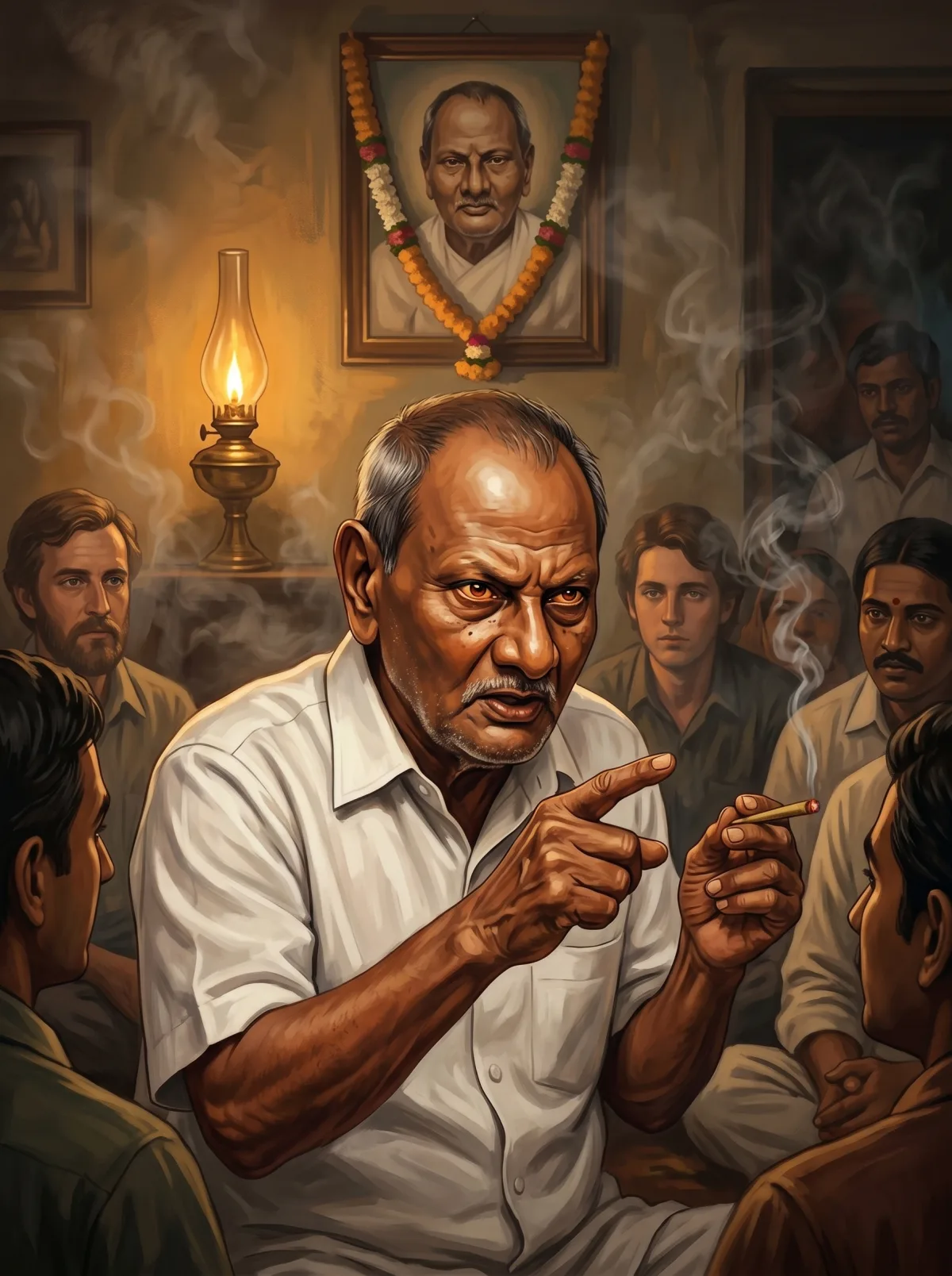

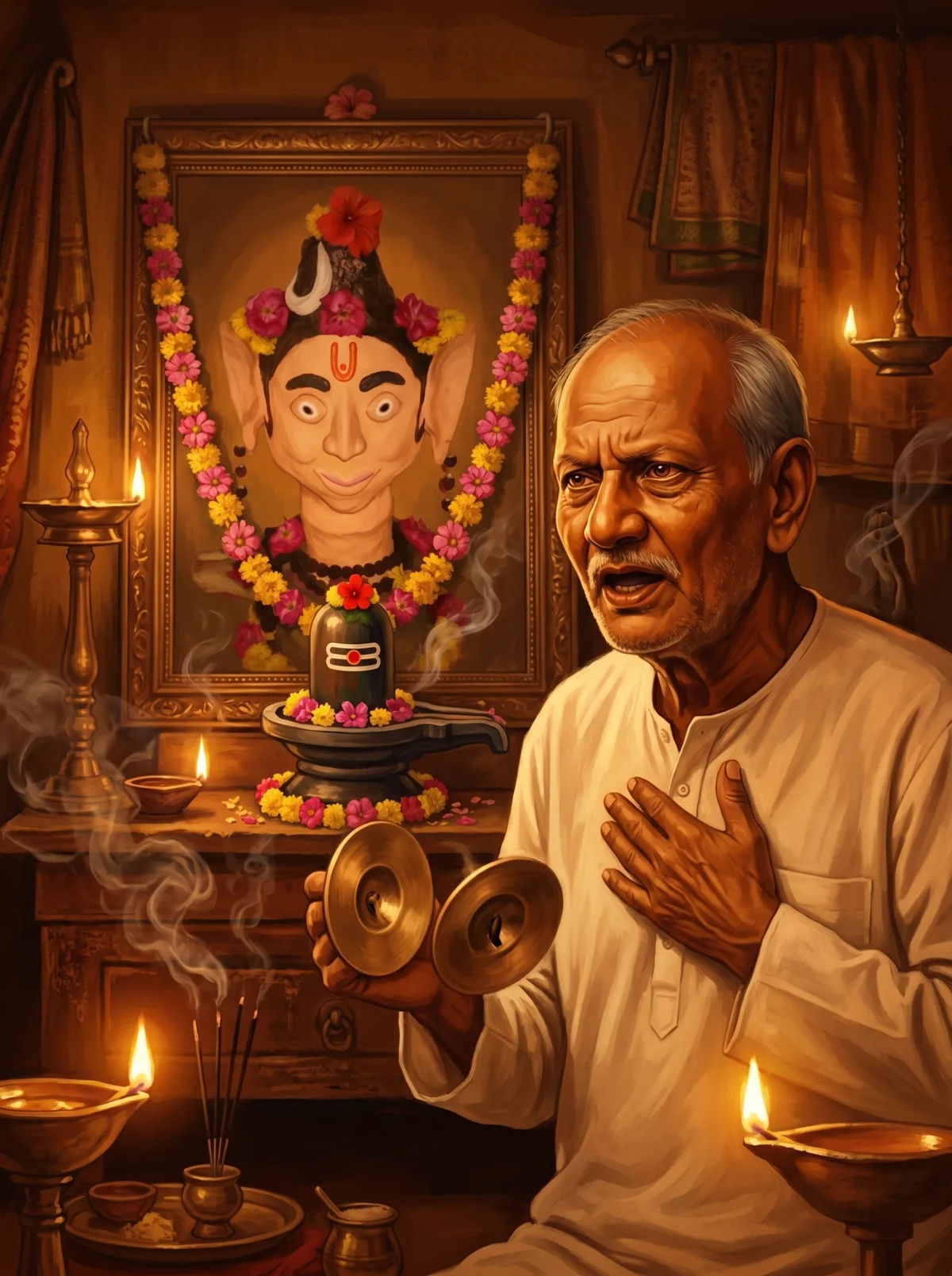
The merchant who became a sage
Maruti Kambli kept a stall of hand-rolled bidis in a Bombay back-lane — the ordinary life of an ordinary man into his middle years. In 1933 his friend Yashwantrao Baagkar brought him to his guru, Siddharameshwar Maharaj, head of the Inchegiri branch of the Navnath lineage. He gave him a mantra and a single instruction for meditation. That evening turned everything over.
One instruction
"My Guru told me to hold attention on the sense 'I Am' and to give attention to nothing else. I simply obeyed." No special breathing, no meditations, no study of scripture — only the holding of the sense of being. After three years realization came. "It may seem too simple, even crude. But it worked."
"I Am" — a pointer
The method: hold to the pure "I Am," go to its source. But "I Am" itself is not the Absolute — it is a pointer: it rises out of the body and vanishes with it. When pure awareness is reached, even "I Am" falls away — what remains is that which was before all, indescribable, more real than anything.
The loft in Khetwadi
Having left the shop in 1966, he went on giving talks twice a day in the tiny mezzanine room of his Bombay flat. The translation of his talks, I Am That (Maurice Frydman, 1973), brought him world fame — and turned his home, in his own words, into "a railway platform."
Only negation
His style was Zen-sharp, provocative, cutting to the core. "It is enough to know what you are not. What you are you need not know." Anything you can point to as 'this' or 'that' is not you. You are nothing perceivable, and yet without you there is neither perception nor imagining.
The passing
He stayed a simple Bombay working man to the end. Throat cancer; he taught almost to the last day — the late talks ("Prior to Consciousness," "Consciousness and the Absolute") go deeper still, toward that which is prior to consciousness itself. He died on 8 September 1981.
Words
The only fact you are sure of is that you are. The 'I am' is certain. The 'I am this' is not.
My Guru ordered me to attend to the sense 'I am' and to give attention to nothing else. I just obeyed… Yet it worked!
Establish yourself firmly in the awareness of 'I AM'. This is the beginning, and also the end of all endeavour.
It is enough to know what you are not. You need not know what you are.
The Masters section is growing. The School gathers the wisdom of ages into one living system. Support the launch →