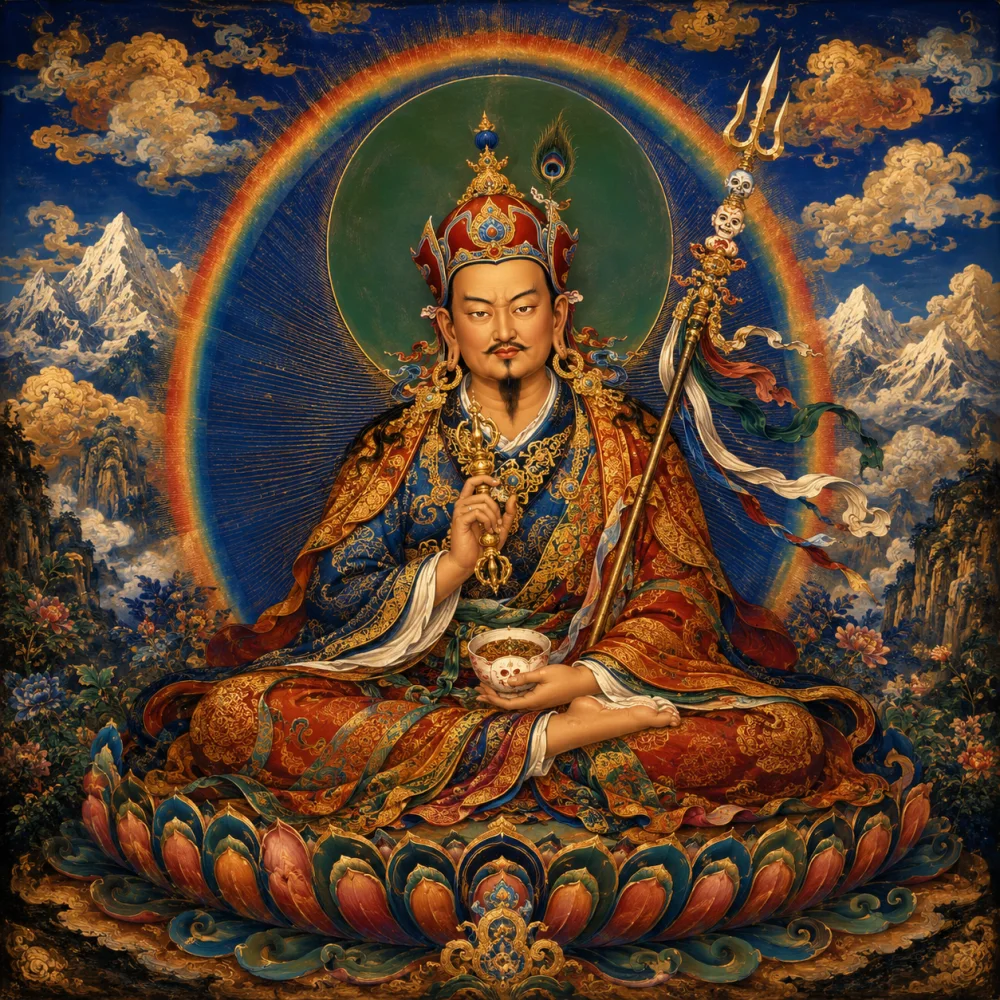
Masters · Vajrayana · Dzogchen · 8th c.
Padmasambhava
Guru Rinpoche · Padmakara · the Lotus-Born · "the Second Buddha"
The tantric master who brought Buddhism to Tibet in the 8th century. The Lotus-Born — appearing from a lotus, not from a womb. He subdued the demons of the land, bound them by oath to serve the Dharma, and hid thousands of terma-treasures for times to come. To the Tibetans — "the Second Buddha."
His word: "Though my View is as high as the sky, my conduct is finer than flour." Boundless emptiness — and with it, flawless attention to cause and effect.
How he is seen
There are no photographs — the images follow the canonical Tibetan thangka form of Guru Rinpoche, in our style.
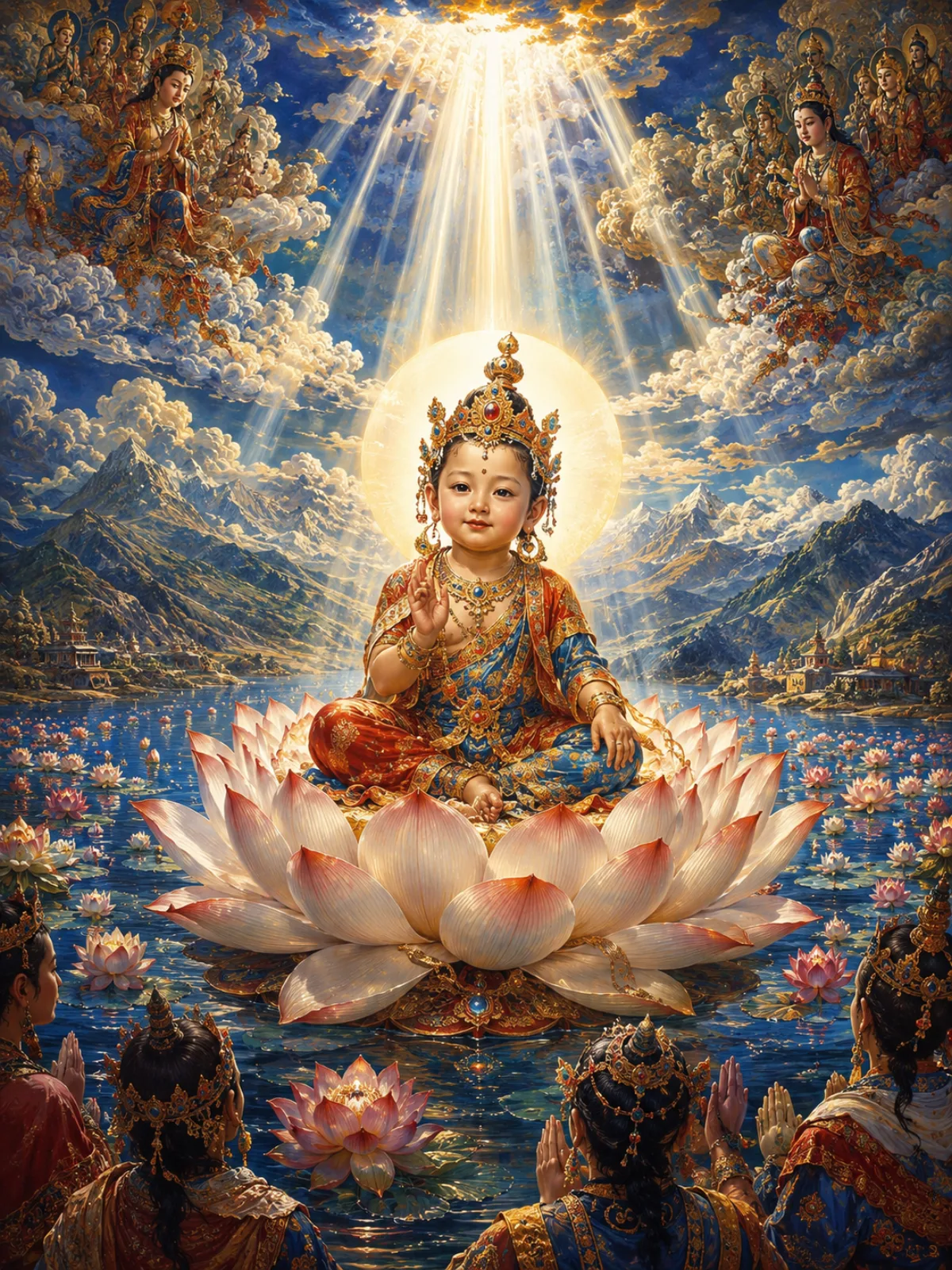
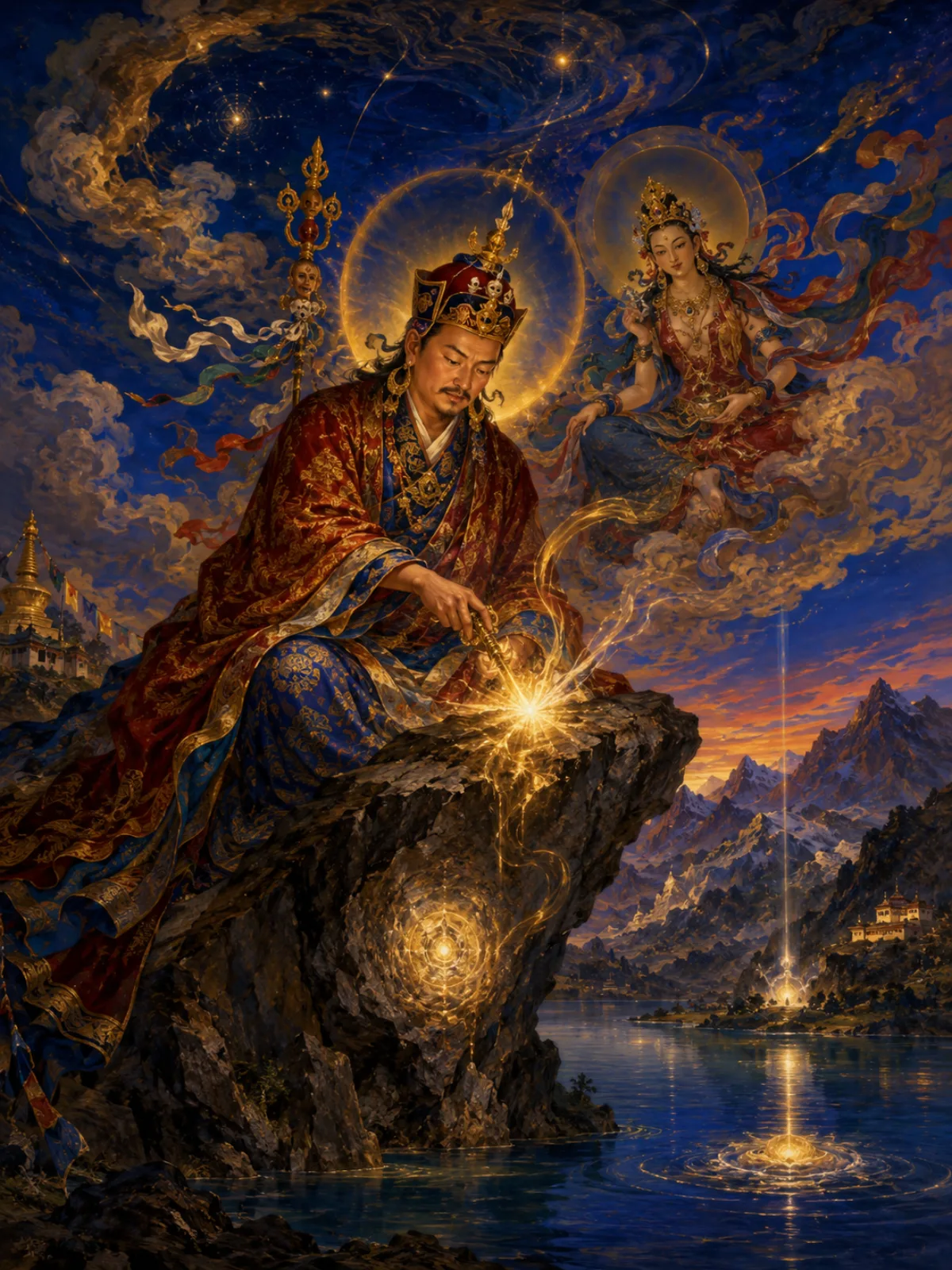
The Lotus-Born
According to legend, he appeared not from a womb but as an eight-year-old child upon a lotus flower in the midst of Lake Dhanakosha in the land of Uddiyana — radiant, perfect, already awakened. A childless king adopted him as his heir. So Padmakara, "the Lotus-Born," entered the world.
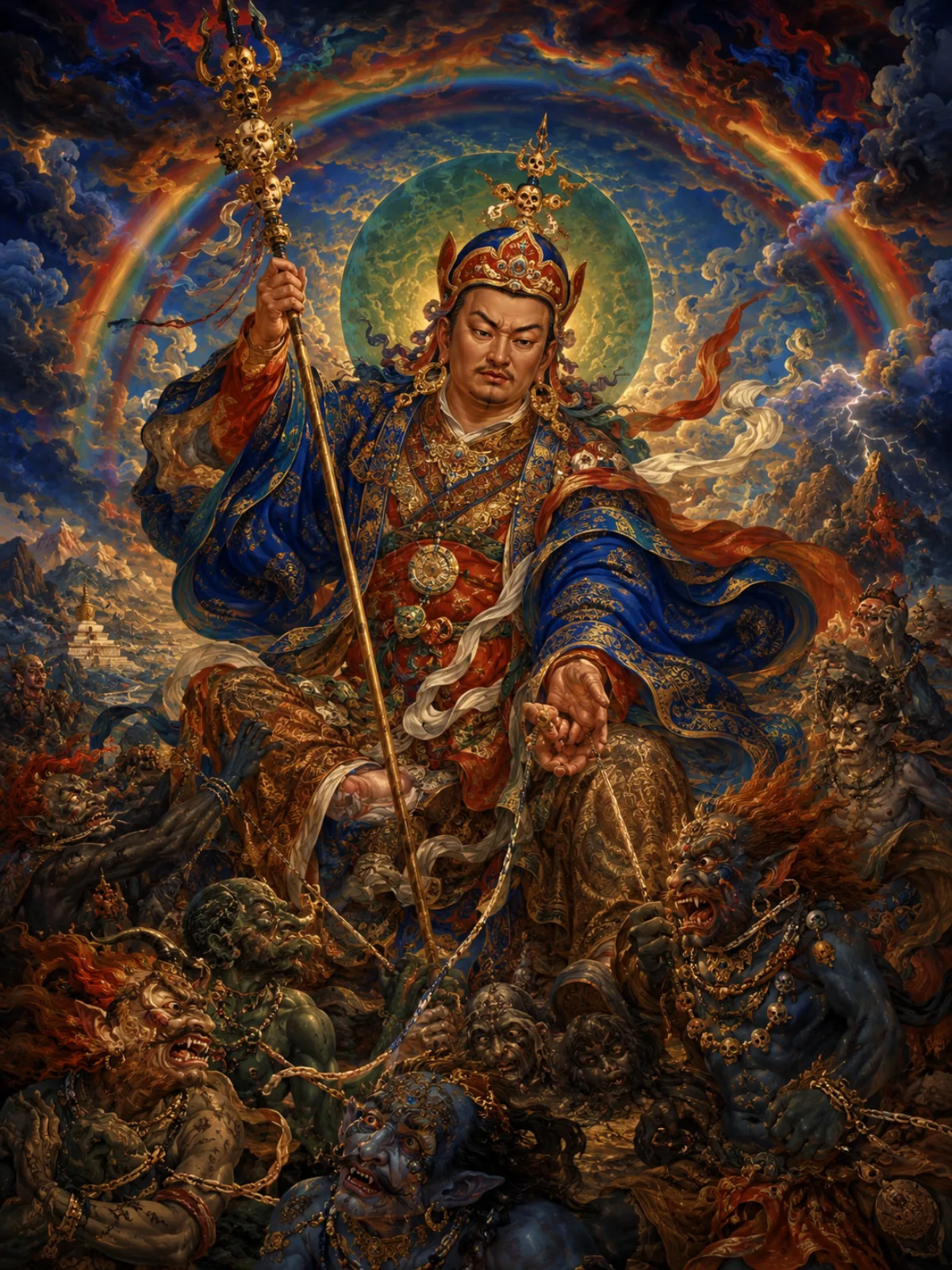
The tamer of Tibet
In the 8th century King Trisong Detsen summoned him to Tibet. The abbot Shantarakshita was building the first monastery, Samye, but the spirits of the land tore down by night what was raised by day. Padmasambhava subdued them one by one, binding them by oath to serve the Dharma — and Samye stood. Buddhism took root in the Land of Snows.
Twenty-five disciples
He transmitted the tantras and Dzogchen to twenty-five principal disciples — the king and his subjects. His consort and student Yeshe Tsogyal, possessed of perfect recall, set the teachings down. So was born the intimate heart of the most ancient school — the Nyingma.
Terma — a treasure for the future
Foreseeing dark times when the teachings would be in peril, he hid thousands of terma — treasure-teachings — in rocks, lakes, in space itself and in the minds of his disciples, sealing them so that the prophesied tertöns would reveal them in the appointed age. The stream of revelations continues to this day.
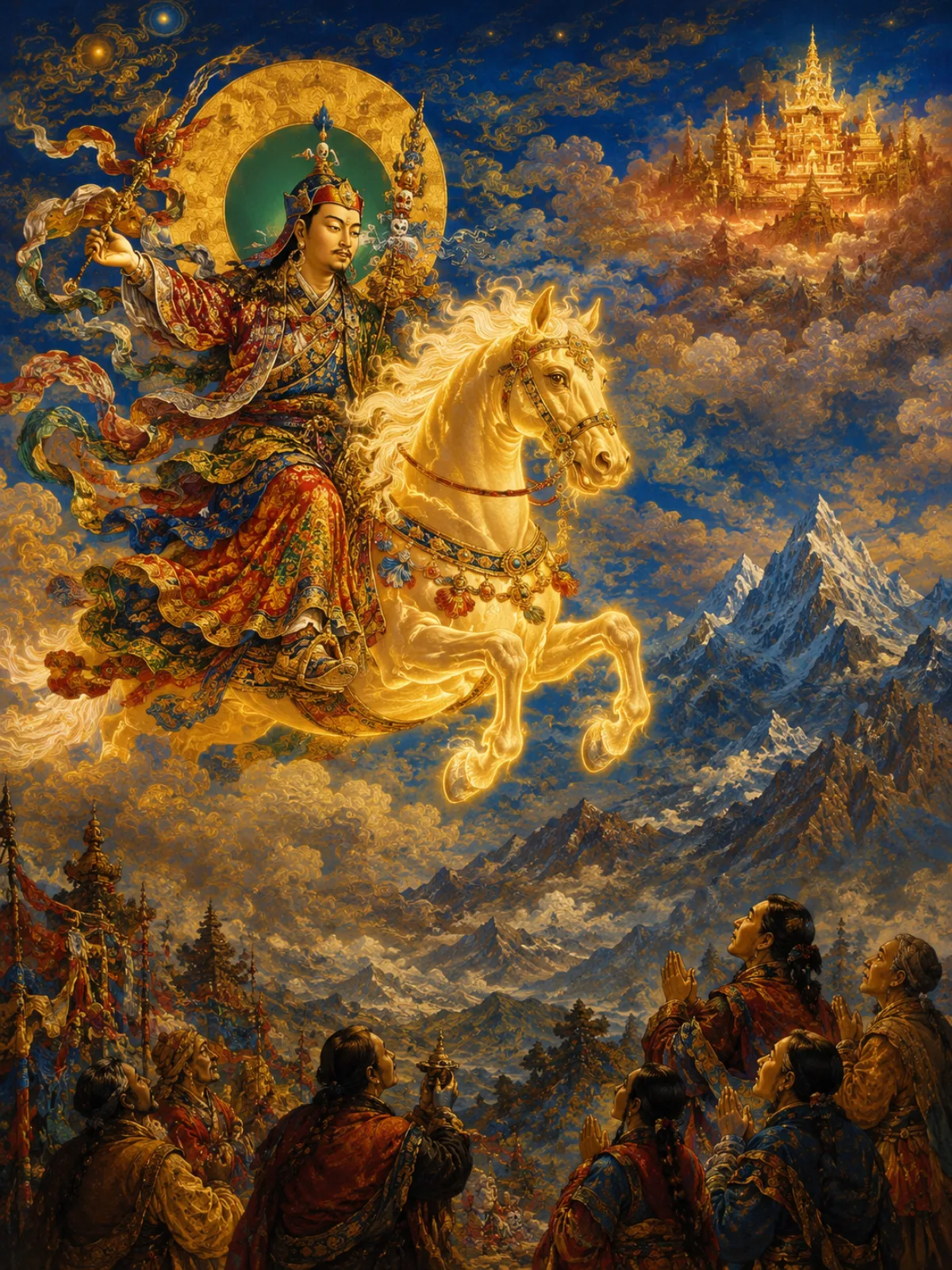
The Copper-Coloured Mountain
He did not die an ordinary death, but rode away across the sky to the glorious Copper-Coloured Mountain, Zangdok Palri, whence, the Tibetans believe, he guards the world to this day. He promised: "In the hour of need, call upon me — and I will come." His mantra Om Ah Hum Vajra Guru Padma Siddhi Hum sounds across all the Himalayas.
Words
Though my View is as high as the sky, my attention to actions and their effects is as fine as grains of flour.
Om Ah Hum Vajra Guru Padma Siddhi Hum
When the iron bird flies and horses run on wheels, the Dharma will spread to the land of the red-faced people.
The Masters section is growing. The School gathers the wisdom of ages into one living system. Support the launch →