Masters · Advaita Vedanta · 1879–1950
Ramana Maharshi
Bhagavan · the sage of Arunachala · Venkataraman Iyer
At sixteen he lived through his own death — and found that he does not die. He spent the rest of his life at the foot of the mountain Arunachala, pointing everyone to one direct path: to trace the thought "I" back to its source. Most often, he taught through silence.
His single question: "Who am I?" Not an answer from the mind, but an inquiry that dissolves the very one who asks. What remains is that which was before any thought of "I."
How he was
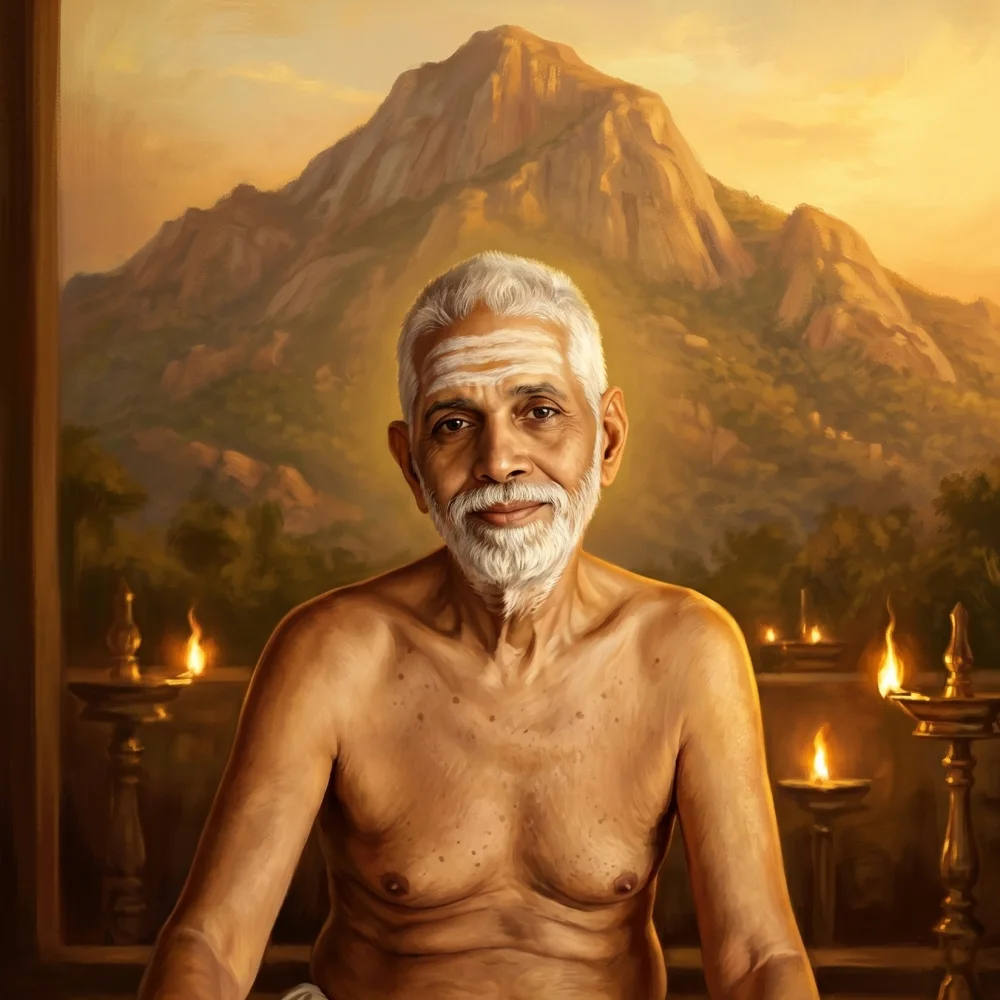
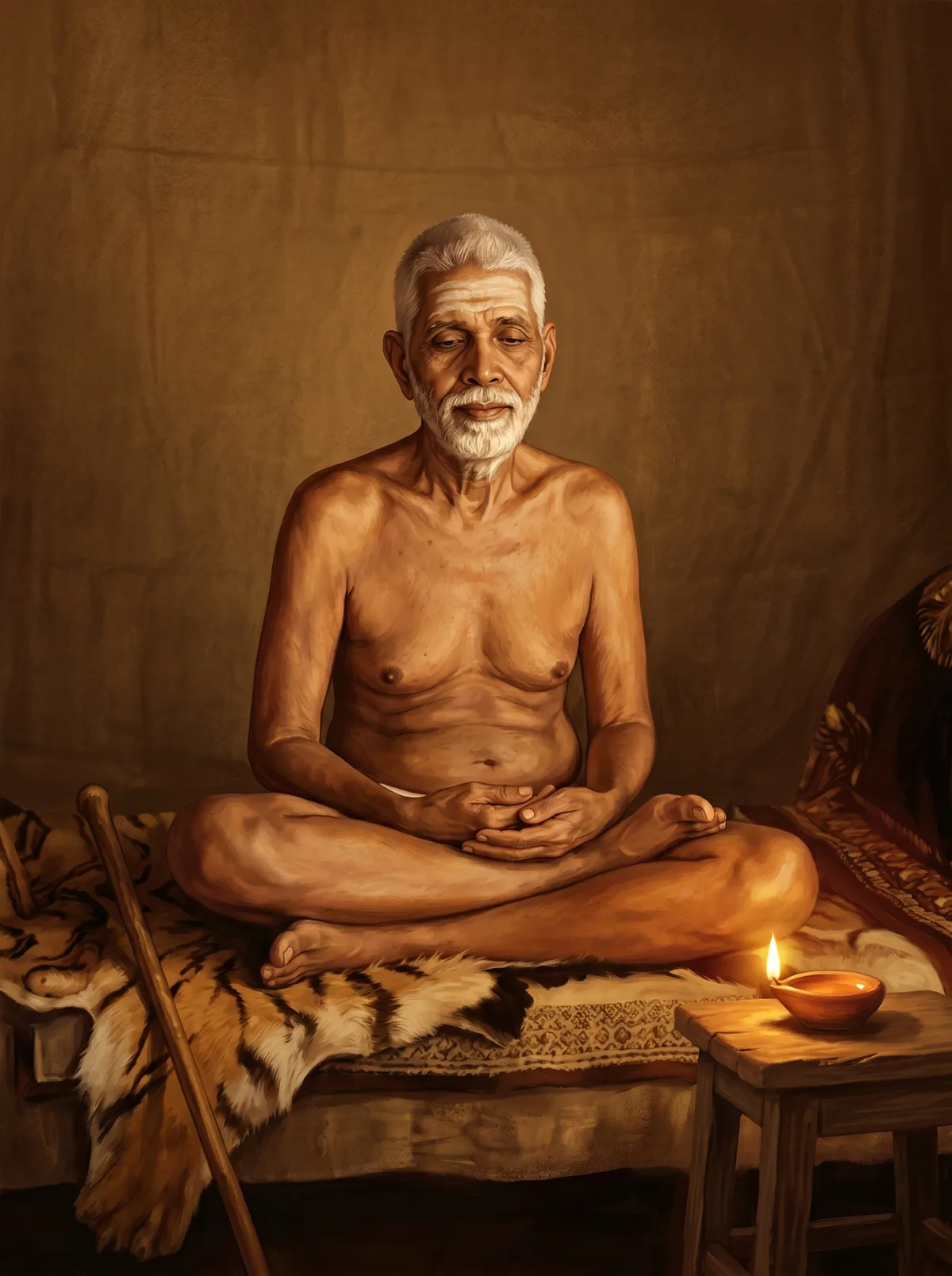
The images are reconstructed from authentic photographs of 1902 and 1948 — the master's exact face, carried into our style.
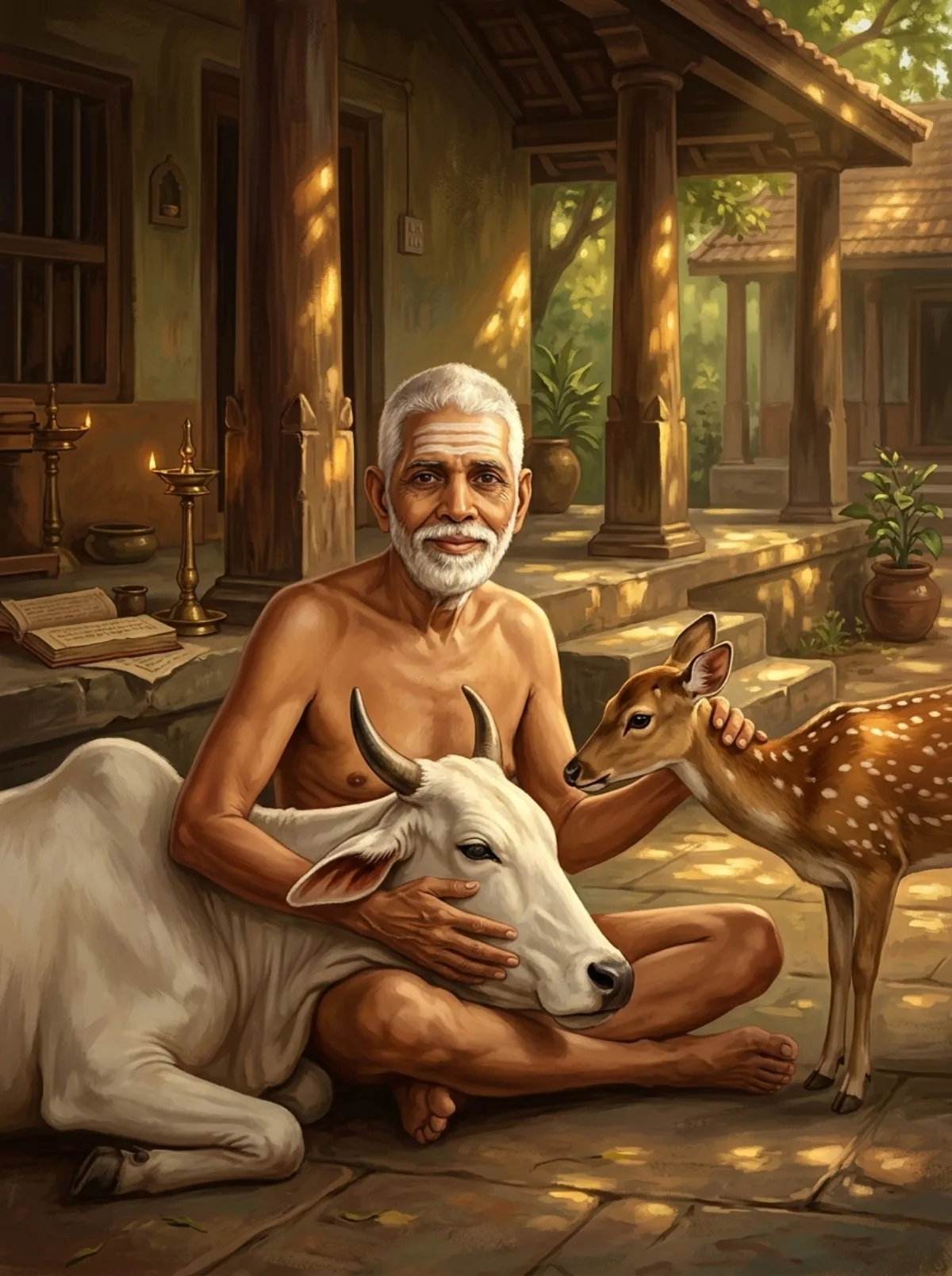
Death at sixteen
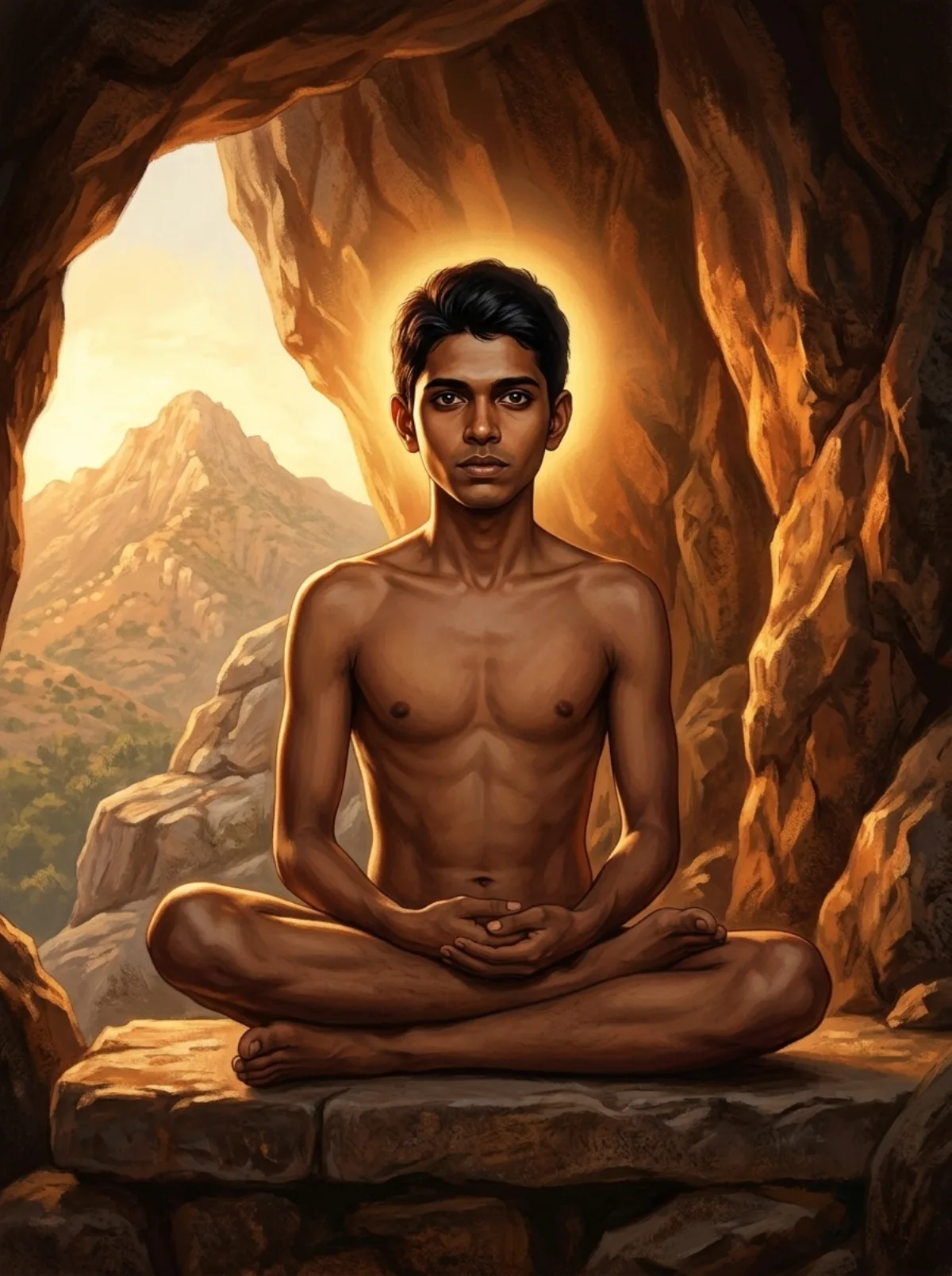
Madurai, the summer of 1896. The healthy adolescent Venkataraman was suddenly seized by an unaccountable fear of death. Instead of fleeing, he lay down and let death come: he held his breath, imagined the body dead, and asked — what is it that dies? The body will stiffen and burn. But the "I" — does it vanish? He saw clearly: the body dies, while the Consciousness "I Am" remains, untouched. The fear left him forever. From that moment he lived out of this knowing.
Arunachala
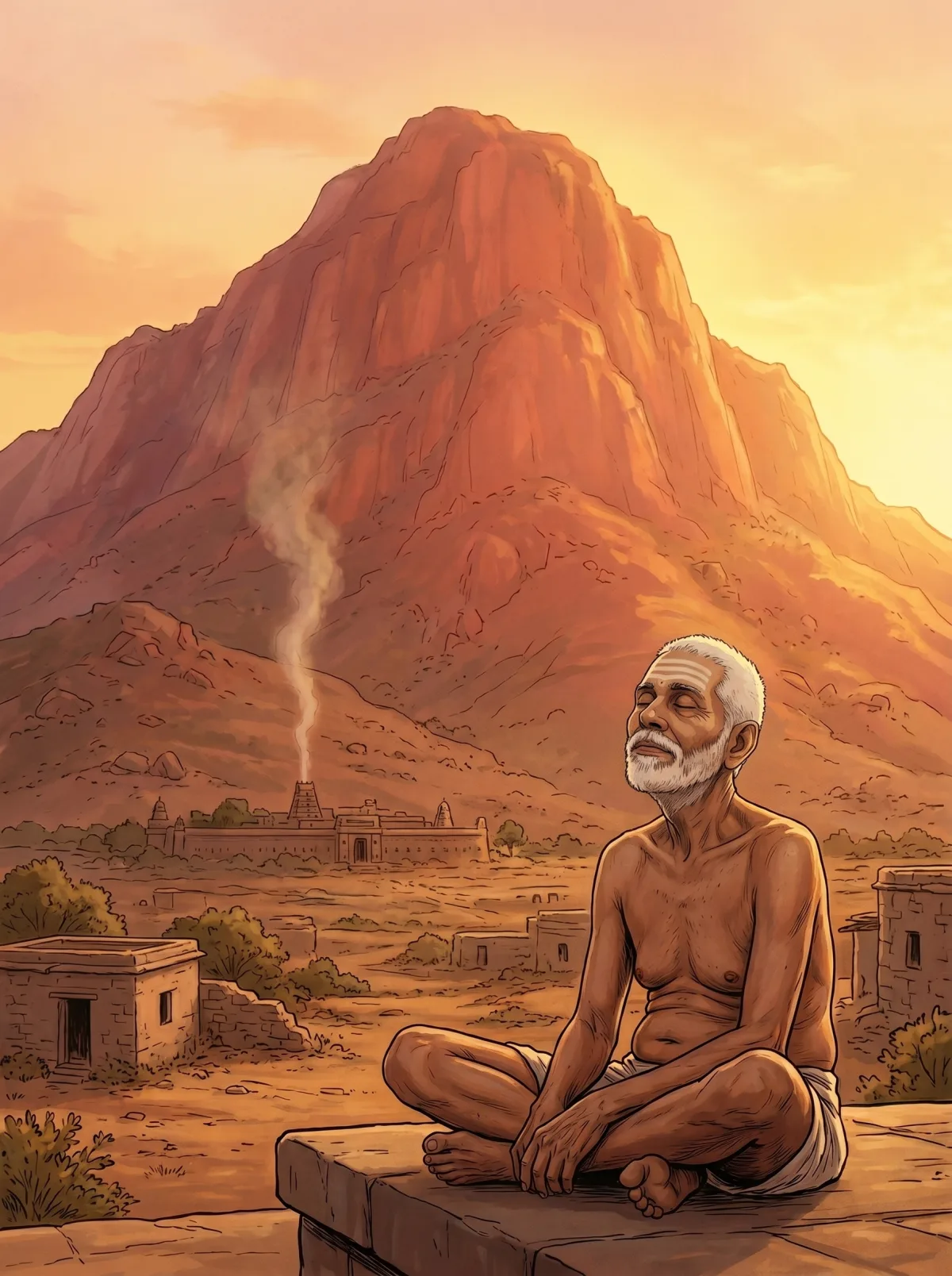
A few weeks later he silently left home and came to the sacred mountain Arunachala in Tiruvannamalai — and did not leave it for 54 years. First, sunk in silence in the temple's underground vault and in the Virupaksha cave, then at Skandashram, finally at Ramanashram, which grew up around him. For him the mountain was no symbol, but the Atman itself — the living presence of the Heart.
"Who am I?" — the direct path
His method is atma-vichara, self-inquiry. Not to repeat "I am the Atman," but to trace: where does the very sense of "I" rise from? Hold to that "I," go to its source — and you will find that there is no separate "I" there, only pure Consciousness-Heart. "All other thoughts depend on the thought 'I.' Find to whom they come — and they will vanish." This, he said, is the shortest path.
Teaching through silence
The deepest he passed on through silence (mauna). People came with questions, sat in his presence — and the questions dissolved of themselves. "Silence is ever-living eloquence… Silence is the highest speech." Words he gave to those who still need words; the rest was done by presence.
The passing
In 1950, cancer of the arm. The doctors offered amputation to prolong the body's life; he refused — the body is not he. His disciples begged him not to leave them. His answer became the last teaching: "Where would I go? I am here." On the evening of 14 April 1950, as the breath stopped, witnesses saw a bright star pass slowly across the sky toward the summit of Arunachala. He did not leave — he pointed out that there is no one to leave.
A living transmission
Listen to Ramana in voice — the full transmission with the text, in the Atlas of Consciousness.
The Masters section is growing. The School gathers the wisdom of ages into one living system. Support the launch →