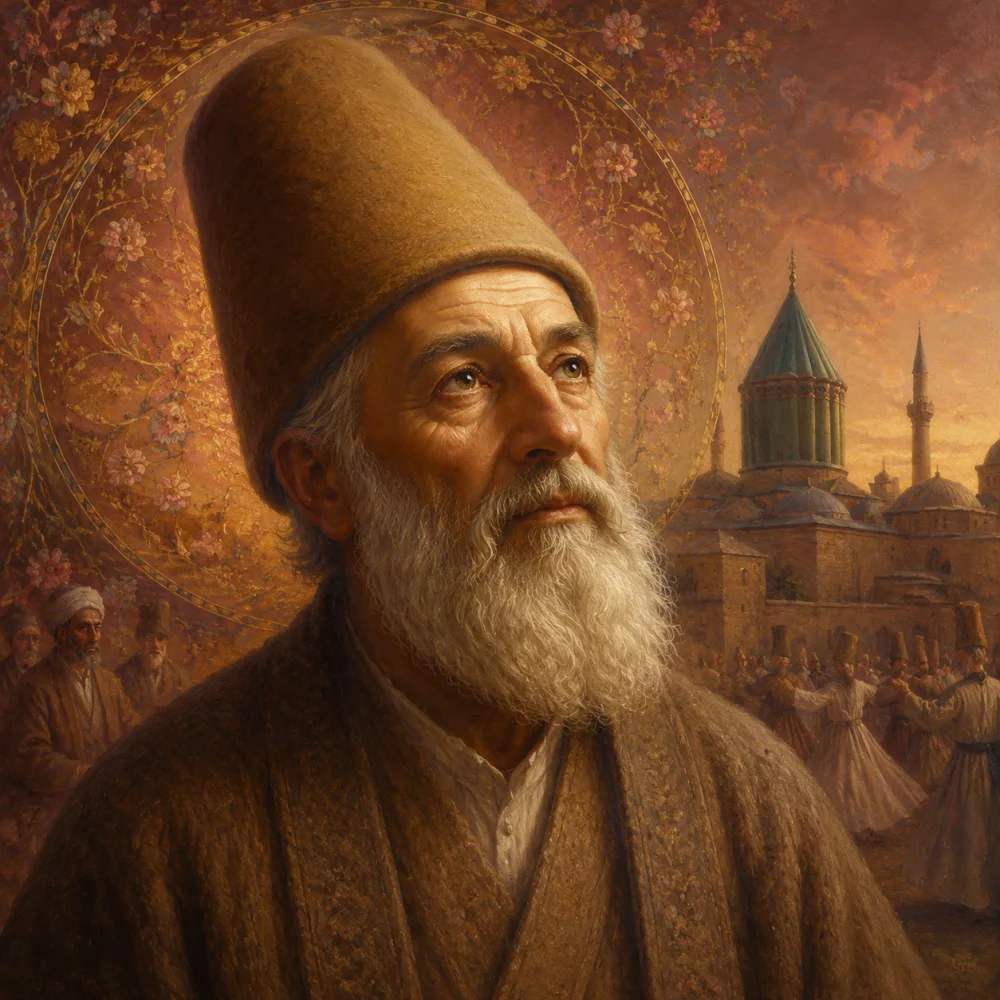
Masters · Sufism · 13th c.
Rumi
Jalaluddin Rumi · Mawlana · Molana
The Persian mystic poet whose meeting with the wandering dervish Shams of Tabriz turned a respected theologian into the greatest poet of love. His "Masnavi" is called "the Persian Qur'an." The path — dissolving in the Beloved.
His way: "Your task is not to seek for love, but to seek out and tear down every barrier within yourself that you have built against it." What you seek is seeking you.
How he is seen
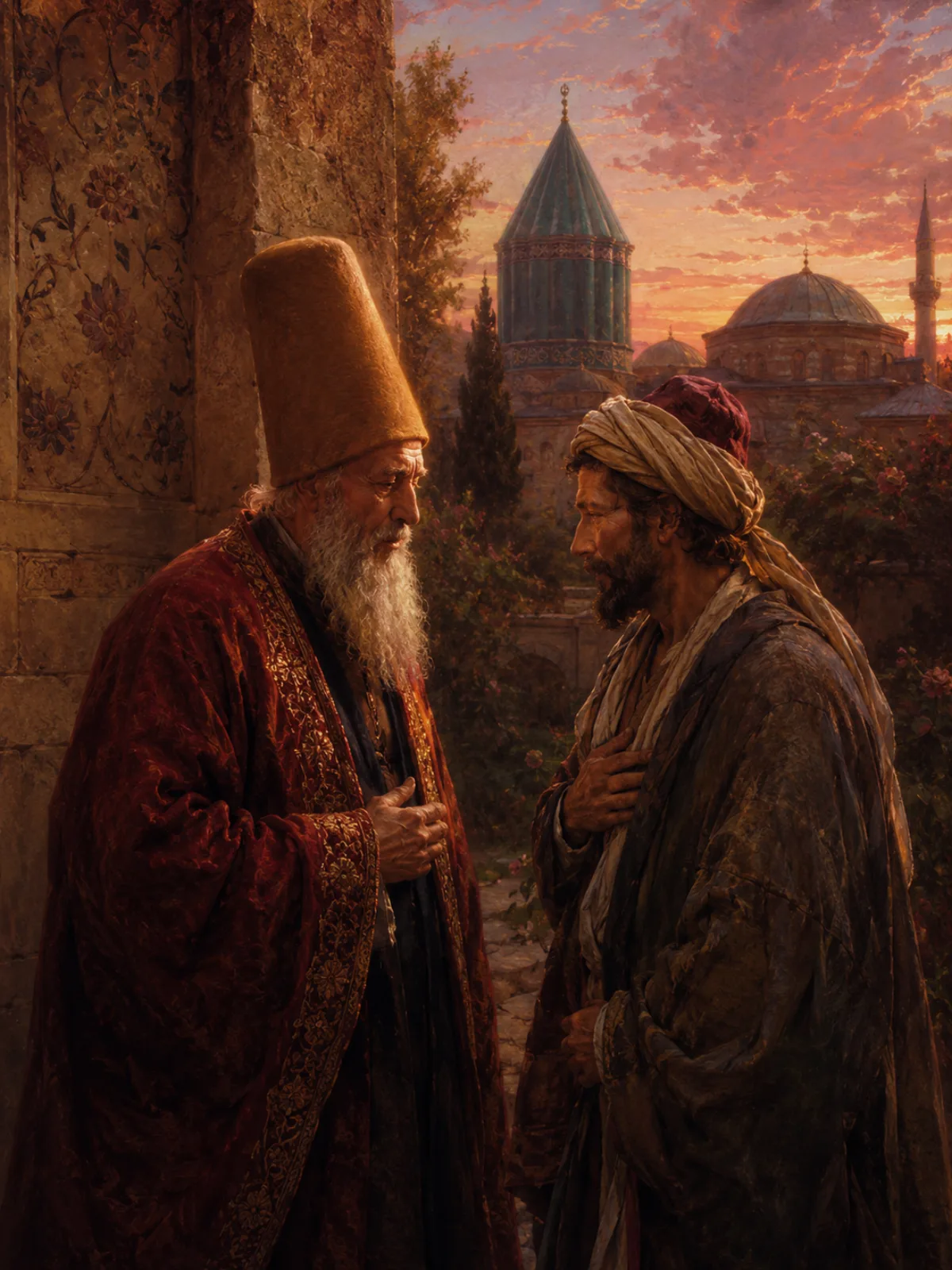
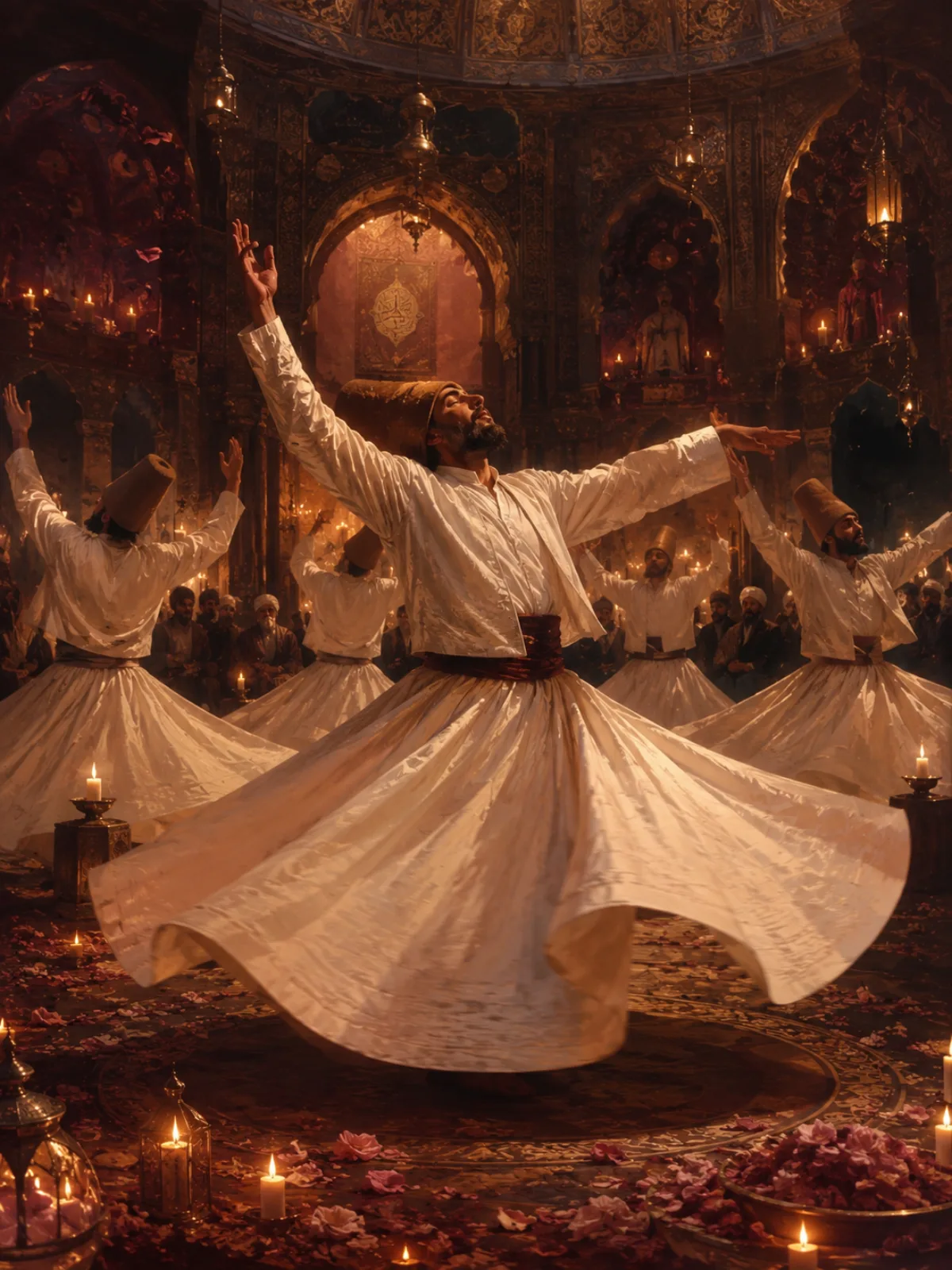
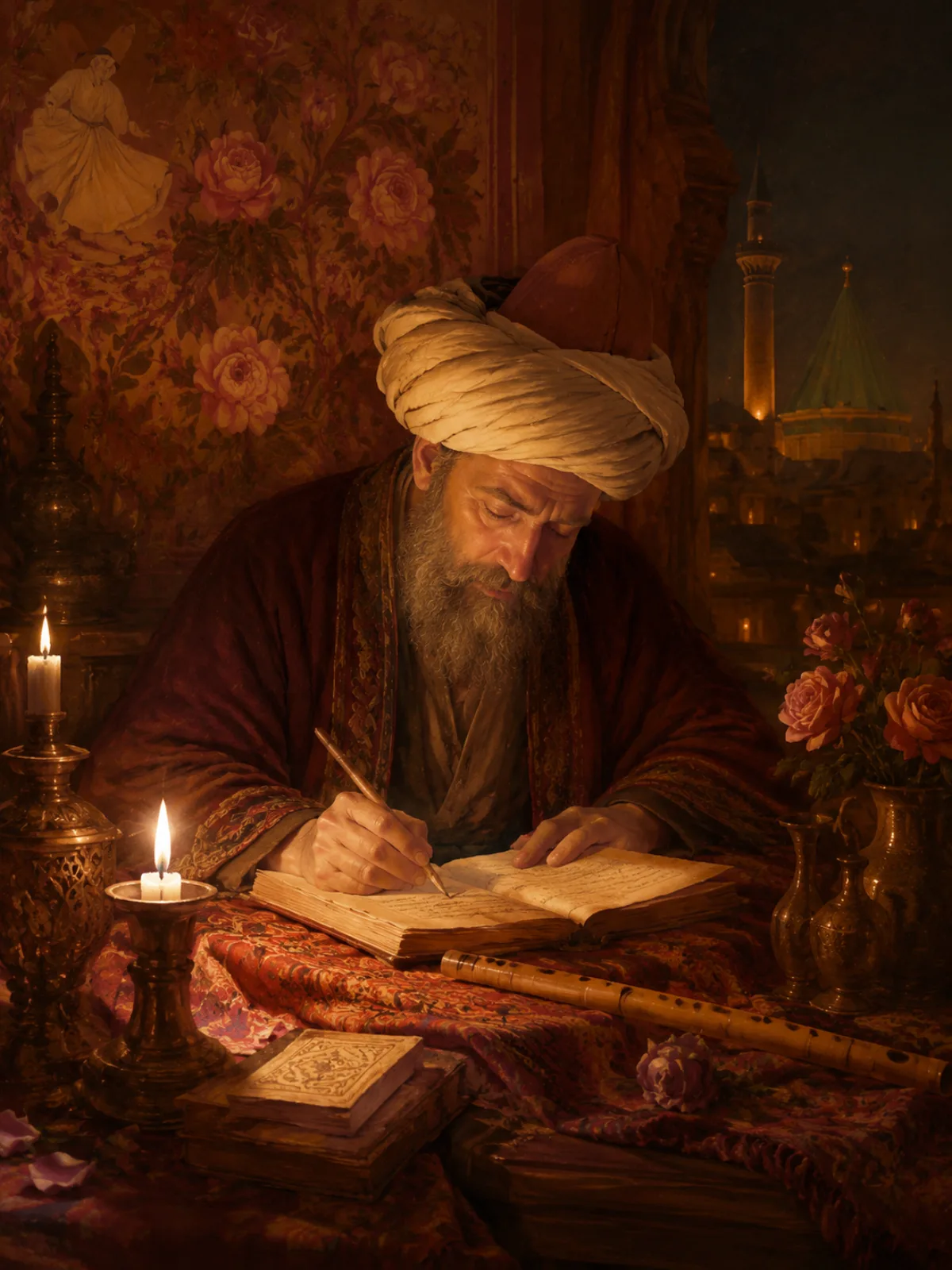
There are no photographs — the images follow the Persian-Ottoman miniature tradition, in our style.

The scholar of Konya
Born in Balkh, fleeing the Mongol invasion with his family, Jalaluddin settled in Konya (in present-day Turkey) and became a respected theologian and preacher, heir to his scholar father. Outwardly — the summit of learned respectability. Within — he was waiting for fire.
Shams of Tabriz
In 1244 a wild wandering dervish, Shams, came to Konya. Their meeting was a lightning-strike. The theologian vanished — a lover was born. They shut themselves away for weeks in a converse beyond words. "What I had only read — now I live."
Loss and the Masnavi
Shams disappeared — most likely killed by jealous disciples. Out of the grief of separation, poetry was born. Rumi signed his "Divan-e Shams" with the very name of the Beloved. And the "Masnavi" — 26,000 couplets — became one of humanity's greatest spiritual works.
The reed that weeps
The "Masnavi" opens with the song of the reed flute — the ney: a reed cut from the reed-bed weeps for the separation. So too the soul, torn from its Source, longs to return. The separation itself is the road home.
The religion of love
The turning (sema) of the Mevlevi is a prayer with the body: the dervish whirls, one palm to the sky, the other to the earth, becoming a conduit for descending love. "I am not Christian, nor Jew, nor Muslim… I belong to the Beloved." All paths — to the One.
Words
بشنو این نی چون شکایت میکند / از جداییها حکایت میکند
Listen to the reed, how it weeps, / telling its tale of separations.
Your task is not to seek for love, but merely to seek and find all the barriers within yourself that you have built against it.
What you seek is seeking you.
A living transmission
Listen in voice — the full transmission with the text, in the Atlas of Consciousness.
The Masters section is growing. The School gathers the wisdom of ages into one living system. Support the launch →