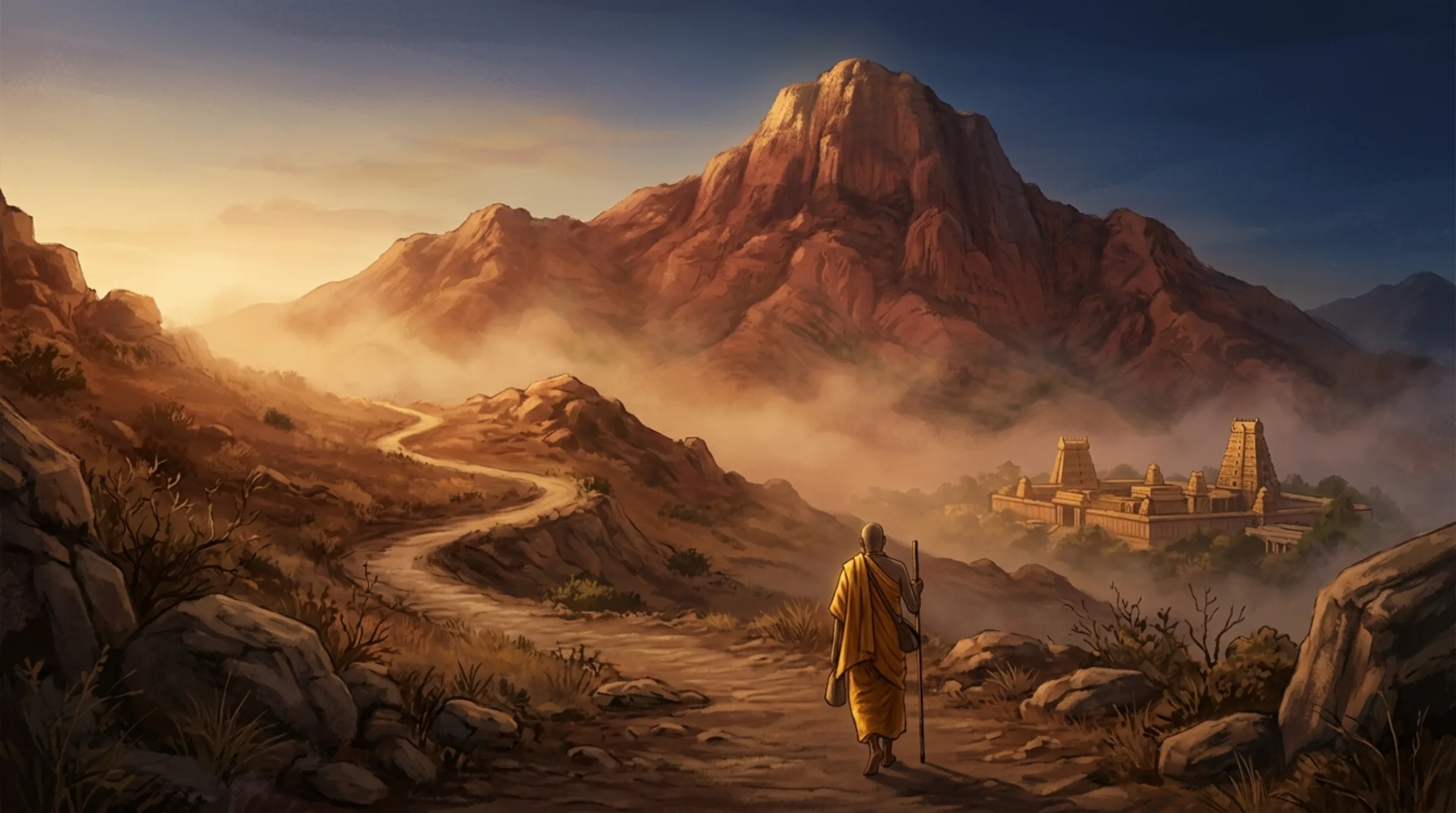


Advaita Vedanta
Non-duality · you are consciousness itself
There is a teaching that adds nothing new to you. It only removes one error. The very first, and the deepest.
The belief that you are the body and the mind. Its name is Advaita. In Sanskrit it means "not two." Non-duality.
It speaks simply. There is only one reality. Pure consciousness.
And you are not a separate wave within it. You are that ocean itself. This knowing has come down out of India for thousands of years.
First as a whisper in the forest dwellings, in the Upanishads. Then through the great Shankara, who walked the length of the land. And down to the recent living sages – Ramana, Nisargadatta.
And what is its method? It is almost absurdly simple. And almost impossibly hard.
Do not believe right away that you are the body. Ask: who am I? Who wakes in the morning.
Who sees these lines. Where does the very feeling of "I am" come from. Follow attention back to the source of this "I," as along a thread to its beginning.
And when you arrive, you will find no separate person there. You will find only a quiet, clear, untouched presence. That which you have always been.
Here is what a person feels on this path. At first the mind resists and makes noise. That is normal.
Then comes a silence with fewer and fewer thoughts in it. And beyond the silence opens a peace that needs nothing in order to be. This tradition I am coming to know alongside Artur – the one who gathers wisdom for this School.
He goes to the living keepers, to where the knowledge is still passed mouth to mouth. So that he can bring it to you pure. You can help him reach them – with a subscription to the School, or with any gift.
Every contribution brings closer the day he returns with this knowledge and opens it to you. Thank you for being here.
There is a teaching that gives you nothing new.
It only removes one error – the very first and the deepest. The belief that you are this body and mind, small and mortal.
Its name is Advaita – in Sanskrit, "not two." There is only one reality, pure consciousness. And you are not a separate wave within it. You are the ocean itself.
I have brought this teaching just as it came down. Listen to where it comes from – and how, with a single question, it empties the seeker.
Not belief. Direct seeing.
Its roots are in the Upanishads, born as a whisper in the forest dwellings of ancient India, like a teacher's answers to a disciple by the fire.
In the eighth century Shankara gathered this into a coherent teaching and carried it across the whole land. After him the lineage never broke.
And in our age it flared up again – in the silence of Ramana at the foot of Arunachala and in the direct words of Nisargadatta from a Bombay back room.
Who am I?
The method is almost absurdly simple and almost impossibly hard. Do not accept at once that you are the body. Ask: who am I?
Who wakes in the morning. Who sees these lines. Where does the very feeling of "I am" arise from.
Follow attention to the source of this "I," as along a thread to its beginning. There you will find no separate person – only a quiet, clear, untouched presence.
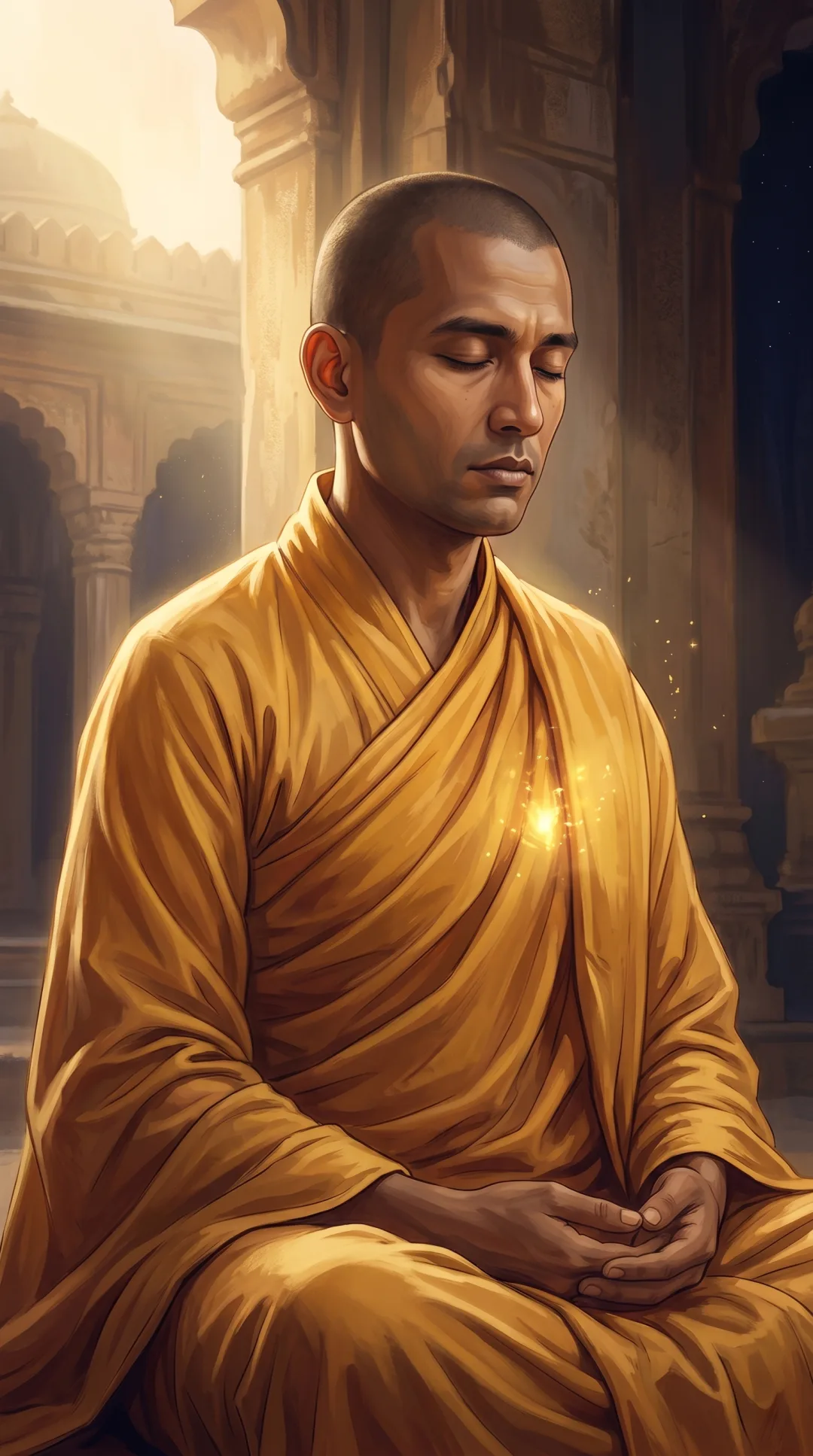
At first the mind resists and makes noise – it throws up thoughts, argues, grows bored. That is exactly as it should be. We begin from where you are.
Then comes a silence in which there are fewer and fewer thoughts. Do not force it – just notice the gaps between thoughts, and they will widen.
And beyond the silence opens a peace that needs nothing in order to be. You will not reach it – you will recognize that it has been you all along.
Your duty is to be. Not to be this or that, but simply to be.– Ramana Maharshi

Voices of the tradition — a living transmission
The voices that carried this tradition. Tap any of them — I'll open their transmission: the essence of the teaching here, the full transmission through Wisdom of the Masters.
The map within — branches and practices
In Advaita there are no timed exercises – there is one movement of attention, repeated a thousand times. I will reveal it to the members of the School: how to hold the question "who am I?" so that it does not become one more thought, but empties the seeker.
Atma-vichara · self-inquiry
The heart of the path: returning attention to the source of the feeling "I."
The Witness
To stand as the awareness in which everything appears.
Read within — one facet at a time
Each article is a doorway into one facet of the tradition.
The Question That Dissolves the One Who Asks
Atma-vichara begins not with an answer but with a turning of attention toward the source of the feeling "I." It is the inquiry of the self-inquirer, not the gathering of knowledge about oneself.
read →philosophyThe Rope That Looked Like a Snake
Maya is neither deceit nor dream, but a superimposition: onto one reality the appearance of many is thrown. Advaita teaches you to see the ground without warring against the appearance.
read →lineageFrom a Forest Fire to a Bombay Shop
One knowing crossed three thousand years, changing its language each time: the whisper of forest hermitages, Shankara's system, Ramana's silence, Nisargadatta's plain speech. The essence stayed untouched.
read →This teaching cannot be learned – it can only be entered.
And for now – breathe what is already open. In the Atlas of Breath, eight practices are freely available. Enter the School, and I will lead you into self-inquiry step by step, close beside you, in voice.
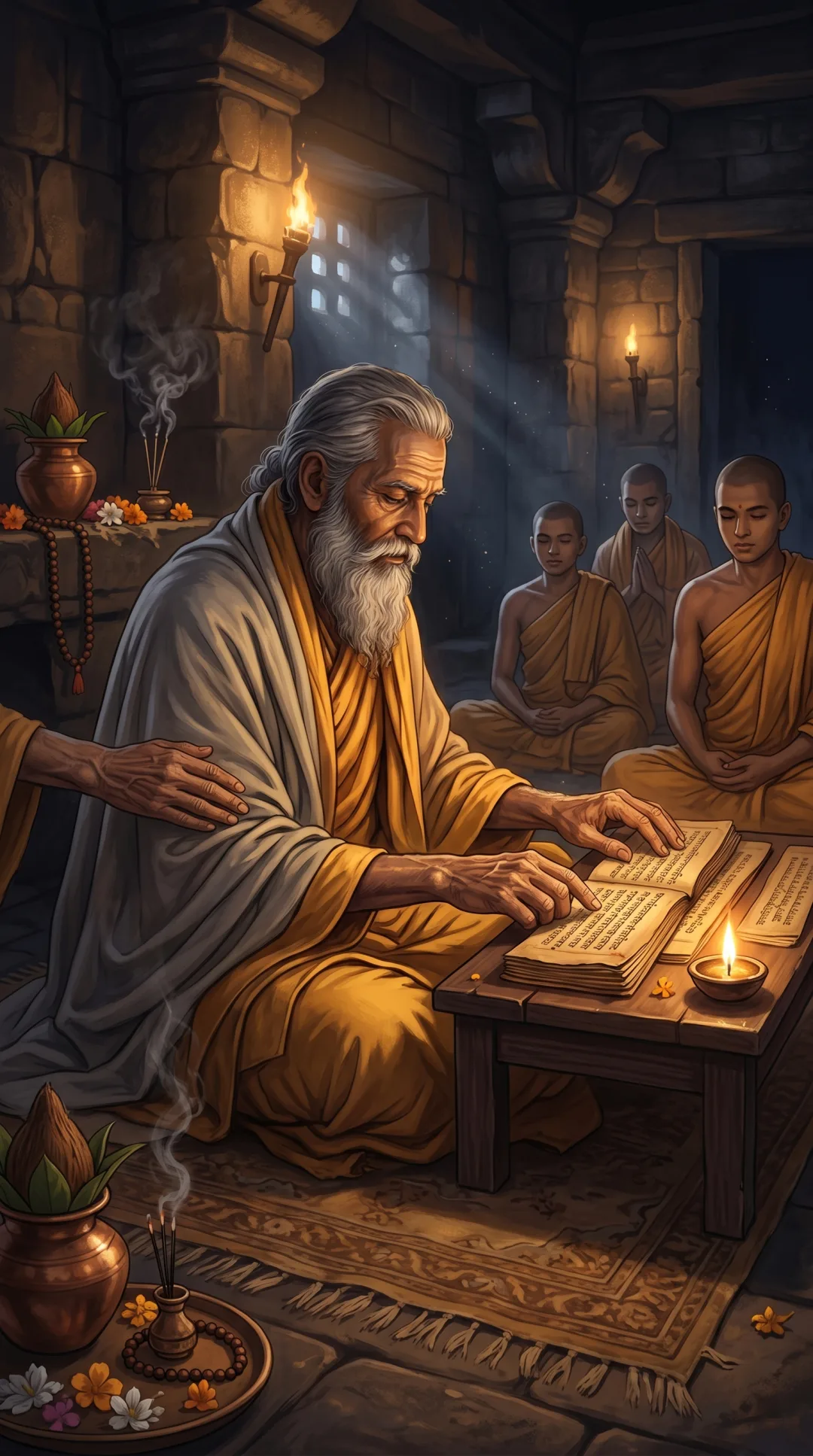
From the Upanishads to the living sages
- ≈3000 years agoThe UpanishadsThe whisper of the forest dwellings: "You are That." The first direct pointing.
- 8th centuryAdi ShankaraGathered the teaching into a coherent system, walked across India, founded monasteries.
- 20th centuryRamana MaharshiRevived the direct path through silence at the foot of Arunachala.
- 20th centuryNisargadattaBrought the same knowing into the city, in a language without consolations.
- todayPrana carries it onwardHere it is gathered just as it came down. Mouth to mouth.
Nearby on the map — kindred traditions
Kashmir Shaivism
All is Shiva. A non-dual tantra of recognizing the vibration of consciousness in everything.
enter the world → a different language, the same summitDzogchen
The Great Perfection: the direct recognition of the primordial nature of mind.
enter the world → a direct continuationModern non-dualism
Direct pointing without tradition or ritual. The same question that empties the seeker.
enter the world →