


Kashmir Shaivism
All is Shiva · the vibration of consciousness in everything you perceive
There is a tradition that does not call you to flee from the world. Quite the opposite. It says: stop, and look closely at what is right in front of you.
Because all of it is your own self. Its name is Kashmir Shaivism. Its heart they call Trika.
In Sanskrit that means the trinity – Shiva, his power, and the soul of the human being as one. It was born in the mountains of Kashmir, among snow-covered summits and silent lakes, about a thousand years ago. Its central thought is bold and simple.
There is only one consciousness. And it is not somewhere far away. It trembles in every sensation you have.
This trembling is called spanda. The sacred tremor. The subtle pulsation from which the whole world is born and into which it returns.
This teaching was carried by great sages. Vasugupta, who found the sutras carved upon a rock. Utpaladeva, who sang to Shiva from the very heart.
And the greatest of them all – Abhinavagupta. So what is its path? It is not to suppress your desires or turn away from your feelings.
When a strong joy takes hold of you. Or anger. Or the tremor of fear.
Do not run from that wave, and do not drown in it. Turn your attention back toward its source. Ask: who is the one in whom this is rising right now?
And there you will find not a small self, but consciousness itself, trembling as Shiva. And so any experience becomes a door home. Here is what the one who walks this path feels.
At first the world seems flat and external, separate from you. Then you begin to catch the tremor – in a sound, in a taste, in the breath. And the world comes alive from within.
And at the end comes what is called jivanmukti. Freedom while still alive. You live an ordinary day, yet everything in it shines, because you have recognized yourself in all of it.
This tradition I come to know together with Artur – the one who gathers wisdom for this School. He goes to the living keepers, to the places where the knowledge is still passed from mouth to mouth. So that he can bring it to you pure.
You can help him reach them – with a subscription to the School, or with any offering. Every gift brings closer the day he returns with this knowledge and opens it to you. Thank you for being near.
There is a teaching that does not bid you flee from the world.
On the contrary – it bids you stop and look deeply into what is right before you. Into this sound, into this tremor of joy, into this ordinary breath. Because all of it is your own self.
Its name is Kashmir Shaivism, and its heart is called Trika – the trinity. There is only one consciousness, and it is not somewhere far away: it trembles in every sensation you have.
I have brought this teaching just as it came down from the mountains. Listen to where it comes from – and how it turns the strongest experience into a door home.
Not renunciation. Recognition.
Its roots are in the Shiva Sutras, which the sage Vasugupta, as the story goes, found carved upon a rock at the foot of a mountain in Kashmir in the ninth century. A revelation lifted from stone.
Somananda and his disciple Utpaladeva gave the teaching its precise language of recognition – pratyabhijna, the remembering of oneself. Not to reach Shiva, but to remember that you have always been him all along.
And in the tenth century all of this was gathered and brought to its peak by Abhinavagupta – yogi, poet, and scholar, whose work the Tantraloka remains to this day the master map of this tradition.
The sacred tremor
The path here is not to suppress your feelings, but to enter them all the way. When a strong wave rises – rapture, anger, the tremor of fear – do not run from it and do not drown in it.
Turn your attention back to the very source of that wave. Ask: who is the one in whom this is rising right now? And there you will find not a small self, but consciousness itself, trembling as Shiva.
This is spanda – the sacred tremor, the subtle pulsation from which the whole world is born. Catch it in any experience, and that experience becomes a door home.

At first the world seems flat and external – things apart, you apart. That is how it should be at the start. We will begin from where you are.
Then you will begin to catch the tremor – in a sound, in a taste, in the pause between the in-breath and the out-breath. Do not invent it – simply notice that living quiver, and the world will come alive from within.
And beyond that will come jivanmukti – freedom while still alive. You live an ordinary day, yet everything in it shines, because you have recognized yourself in all of it.
The one whose knowing has grown steady sees this whole world as the play of consciousness – and so remains free, whatever he may do.– Abhinavagupta

Voices of the tradition — a living transmission
The voices that carried this tradition. Tap any of them — I'll open their transmission: the essence of the teaching here, the full transmission through Wisdom of the Masters.
The map within — branches and practices
In Kashmir Shaivism there are no timed exercises – there is the art of catching the tremor of consciousness in the very thick of life. I will open it to School members: how to enter a strong experience all the way, so that it reveals its source rather than carrying you off.
Spanda · the tremor of consciousness
To catch the living pulsation of consciousness in perception, in feeling, in the breath.
Pratyabhijna · recognition
Not to attain, but to remember that the perceiver in all things is one.
Read within — one facet at a time
Each article is a doorway into one facet of the tradition.
The Tremor the World Is Made Of
Spanda – the subtle pulsation of consciousness that trembles in every sensation you have. Kashmir Shaivism reads it as the very fabric the world is woven from.
read →philosophyThe Tradition That Won't Let You Leave
Most paths call you to renounce the world. Kashmir Shaivism leaves the world right where it is and reads it as the free play of consciousness – anger, pain and joy included.
read →lineageRemembering the One You Always Were
Pratyabhijna – recognition. The Kashmir lineage teaches not to attain Shiva but to remember that you were always him. Liberation here is not an arrival, but a memory.
read →This teaching cannot be learned – it can only be entered.
And for now – breathe with what is already open. In the Atlas of Breath, eight practices are freely available. Enter the School, and I will lead you into the art of recognizing the tremor step by step, beside you, in my own voice.
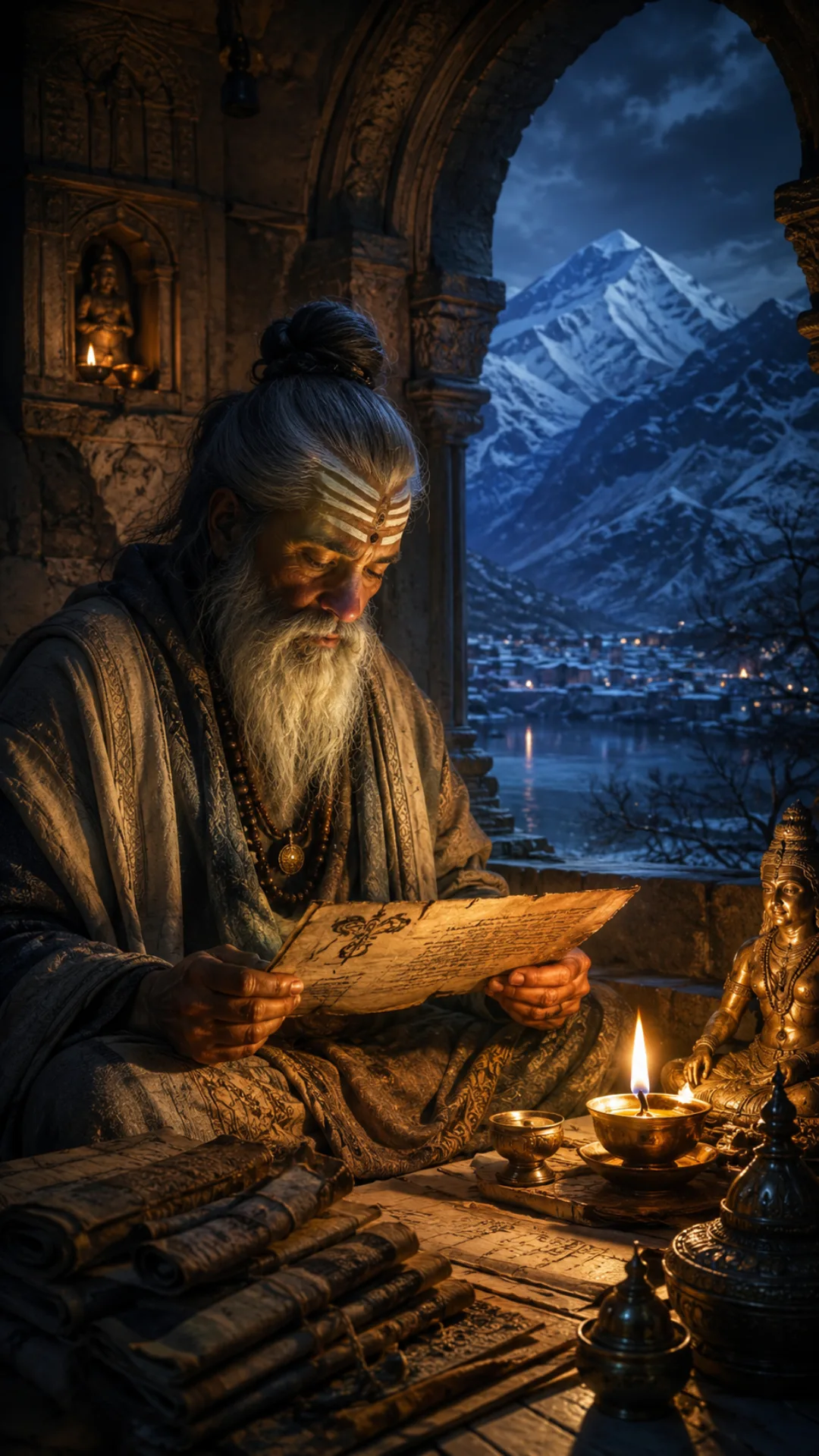
From a rock in the mountains to a living transmission
- 9th centuryVasuguptaFound the Shiva Sutras carved upon a rock. With him the written Trika begins.
- 10th centurySomananda and UtpaladevaGave the teaching its language of recognition – pratyabhijna, the remembering of oneself.
- ≈year 1000AbhinavaguptaGathered the whole tradition into the Tantraloka – the summit of Kashmiri nondualism.
- 11th centuryKshemarajaCompressed the system into the twenty sutras of the Heart of Recognition – a direct way in.
- 20th centurySwami Lakshman JooCarried the full oral transmission down to our own day.
- todayPrana carries it onwardHere it is gathered just as it came down. From mouth to mouth.
Nearby on the map — kindred traditions
Advaita Vedanta
You are consciousness itself. A direct inquiry into the self with a single question that empties out the seeker.
enter the world → another language, the same summitDzogchen
The Great Perfection: the direct recognition of the primordial nature of mind.
enter the world → a kindred flameBhakti
The path of heart-devotion – the same heat of love with which Utpaladeva sang to Shiva.
enter the world →