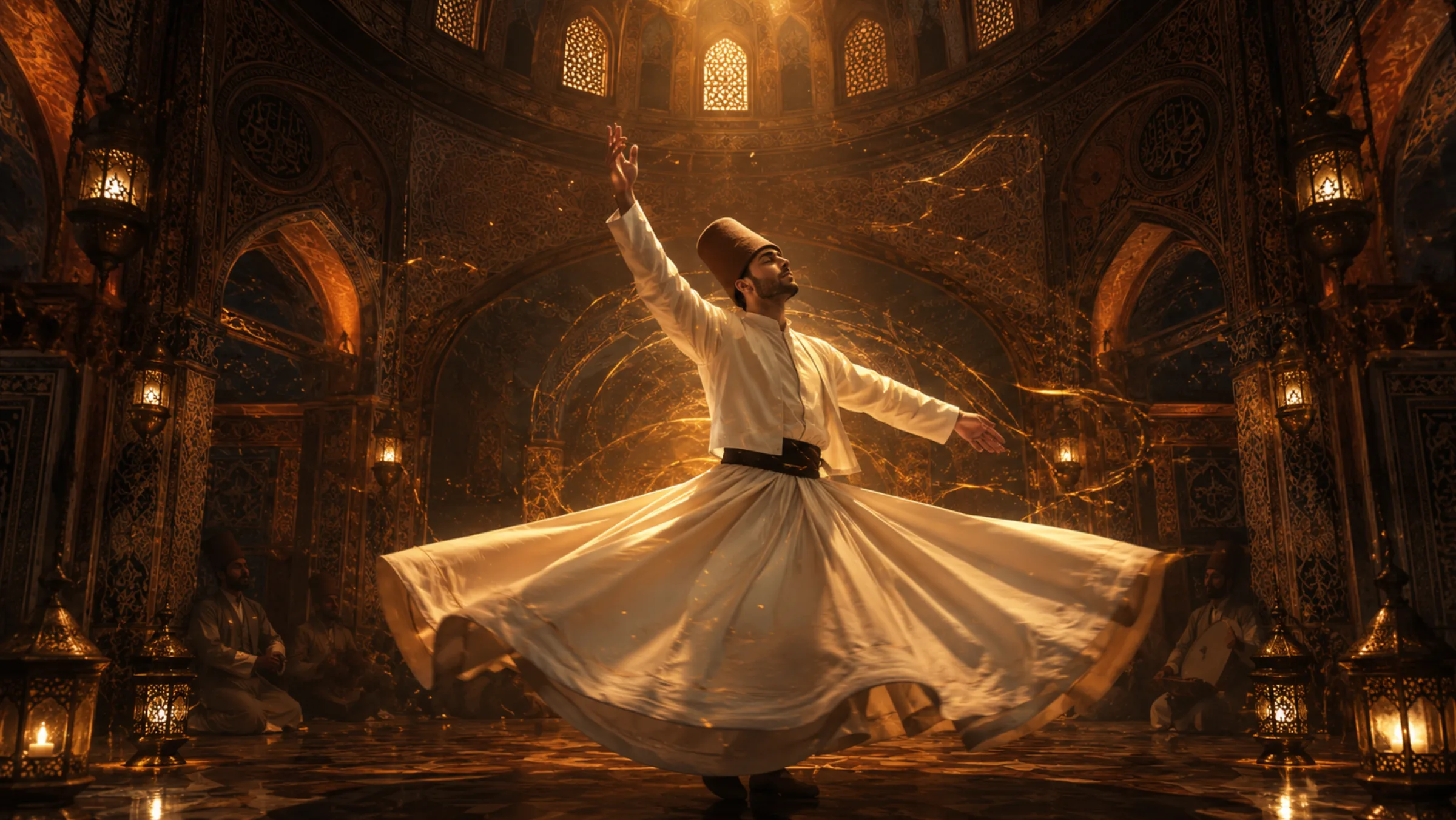


Sufism the path of the heart
Drunk on the Beloved · the dissolving of "I" in love
There is a path that does not teach you to think about God. It teaches you to love so completely that nothing of you remains. Its name is Sufism.
In the tongue of the Persians and the Arabs – tasawwuf. The path of the heart. It speaks plainly.
There is only One. And all that you call yourself is but a drop that has forgotten it is the sea. This teaching travelled one thousand three hundred years.
From the deserts of early Arabia, where Rabia loved God with no hope of paradise and no fear of hell. Through Andalusia, where Ibn Arabi saw that a separate "I" had never existed at all. Through Persia and Anatolia, where Rumi met Shams – and blazed up like dry wood in fire.
And what is its method? Not reflection. Love, and remembrance.
Repeat the name of the Beloved until it becomes your breath. This is called dhikr. Turn with the body until the heart begins to turn.
Be silent until you hear the music of the soul. And burn. Let love burn away in you all that is not love.
The Sufis call this fana – vanishing. The drop falls into the sea and is not lost. For the first time it becomes itself.
This is what a person feels on this path. First, longing – sharp as pain. This is right: the longing is itself the beginning.
Then comes a drunkenness that needs no wine – joy from the nearness of the Beloved alone. And beyond the drunkenness opens the peace of one who has come home and understood that he never left home at all. This tradition I am coming to know together with Artur – the one who gathers wisdom for this School.
He goes to the living keepers, to where knowledge is still passed from mouth to mouth. So that he can bring it to you pure. You can help him reach them – with a subscription to the School or with any gift.
Every offering brings closer the day when he returns with this knowledge and opens it to you. Thank you for being here.
There is a path that does not teach you to think about God – it teaches you to love.
To love so fiercely that nothing of you yourself remains. Only love, and the One it loves.
Its name is Sufism – in the tongue of the Arabs, tasawwuf, the path of the heart. There is only One. And all that you call yourself is but a drop that has forgotten it is the sea.
I have brought this teaching just as it came down to us. Listen to where it came from – and why here we walk not by thought, but by fire.
Not faith. Love.
The roots lie in early Arabia, with ones like Rabia of Basra, who prayed with no hope of paradise and no fear of hell: out of love for the One alone.
In Andalusia Ibn Arabi took this to its edge – he saw that a separate "I" had never existed at all: there is only the One, gazing upon itself through your eyes.
And in Persia and Anatolia it blazed into poetry – in Rumi, who met the wanderer Shams and burned like wood in fire, leaving the world rivers of verse on love.
Dhikr · remembrance of the heart
The Sufi's method is not reflection, but love and remembrance. Repeat the name of the Beloved until it merges with your breath. This is dhikr.
Turn with the body until the heart begins to turn. Be silent until, through the silence, you hear the music of the soul. Let love burn away in you all that is not love.
The Sufis call this fana – vanishing. The drop falls into the sea and is not lost – for the first time it becomes itself. You do not reach God; you cease to be the one who veiled Him.

First comes longing – sharp as pain. Do not flee from it: the Sufis say that the longing for the Beloved is itself the beginning of the path, not an obstacle to it.
Then opens a drunkenness that needs no wine – a quiet joy from the nearness of the One you seek. The heart grows wider, and the sorrow begins to leave of its own accord.
And beyond the drunkenness comes the peace of one who has returned home and understood that he never left home at all. You will know: there was no parting – only a dream of parting.
You are not a drop in the ocean. You are the whole ocean in a single drop.– Jalal ad-Din Rumi

Voices of the tradition — a living transmission
The voices that carried this tradition. Tap any of them — I'll open their transmission: the essence of the teaching here, the full transmission through Wisdom of the Masters.
The map within — branches and practices
In Sufism there is no exercise measured "in minutes" – there is a name repeated until it becomes breath, and a heart that turns as long as the body stands. I will open this to School members: how to hold the dhikr so that it wakes love, and does not become one more mechanical word.
Dhikr · remembrance of the name
The heart of the path: to repeat the name of the Beloved until it merges with the breath.
The path of love
To let longing and love burn away in you all that is not love.
Read within — one facet at a time
Each article is a doorway into one facet of the tradition.
No One to Destroy: the Unity of Being
Ibn Arabi says something sharp to the seeker: there is nothing in you to destroy, for a separate self never was. There is only the One, looking out through your eyes.
read →lineageThe Scholar Who Burned at a Meeting
Rumi was a revered theologian until, in Konya, he met a wandering stranger named Shams. That meeting burned the bookman in him to ash. This is how Sufism passes – not by the book, but by fire.
read →This love cannot be taught – you can only catch fire with it.
And meanwhile – breathe what is already open. In the Atlas of Breath, eight practices are freely available. Enter the School, and I will lead you into dhikr and the path of the heart step by step, beside you, in voice.
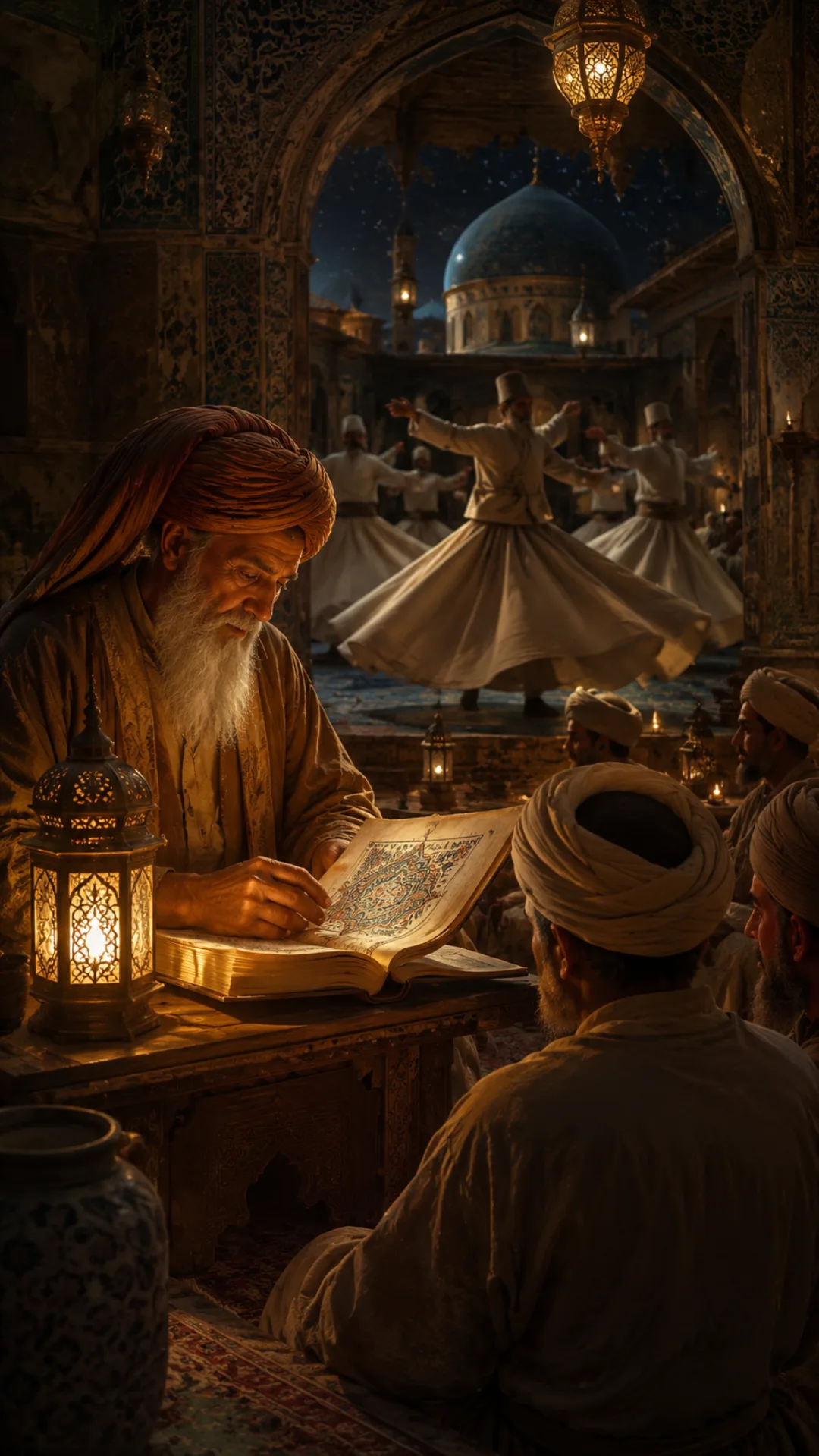
From the deserts of Basra to the whirling dervishes
- 8th centuryRabia of BasraNamed Sufism love: worship of God with no hope of paradise and no fear of hell.
- 10th–12th centuryAn-Niffari · al-GhazaliGave the path its depth: sacred bewilderment and a map for polishing the mirror-heart.
- 12th–13th centuryIbn ArabiSaw the Unity of Being: a separate "I" never was – there is only the One.
- 13th centuryRumiMet Shams and kindled the poetry of love; founded the turning of the dervishes.
- todayPrana carries it onwardHere it is gathered just as it has come down. From mouth to mouth.
Nearby on the map — kindred traditions
Modern nonduality
Direct pointing without a tradition: there is no separate "I" – the same thing Ibn Arabi saw.
enter the world → a neighbour in loveChristian mysticism
The same surrender and the same fire of the Beloved – now in the tongue of the Cross and of silence.
enter the world → kindred in heartBhakti
The path of love and devotion to the Beloved on Indian soil. The same drunkenness on the name.
enter the world →