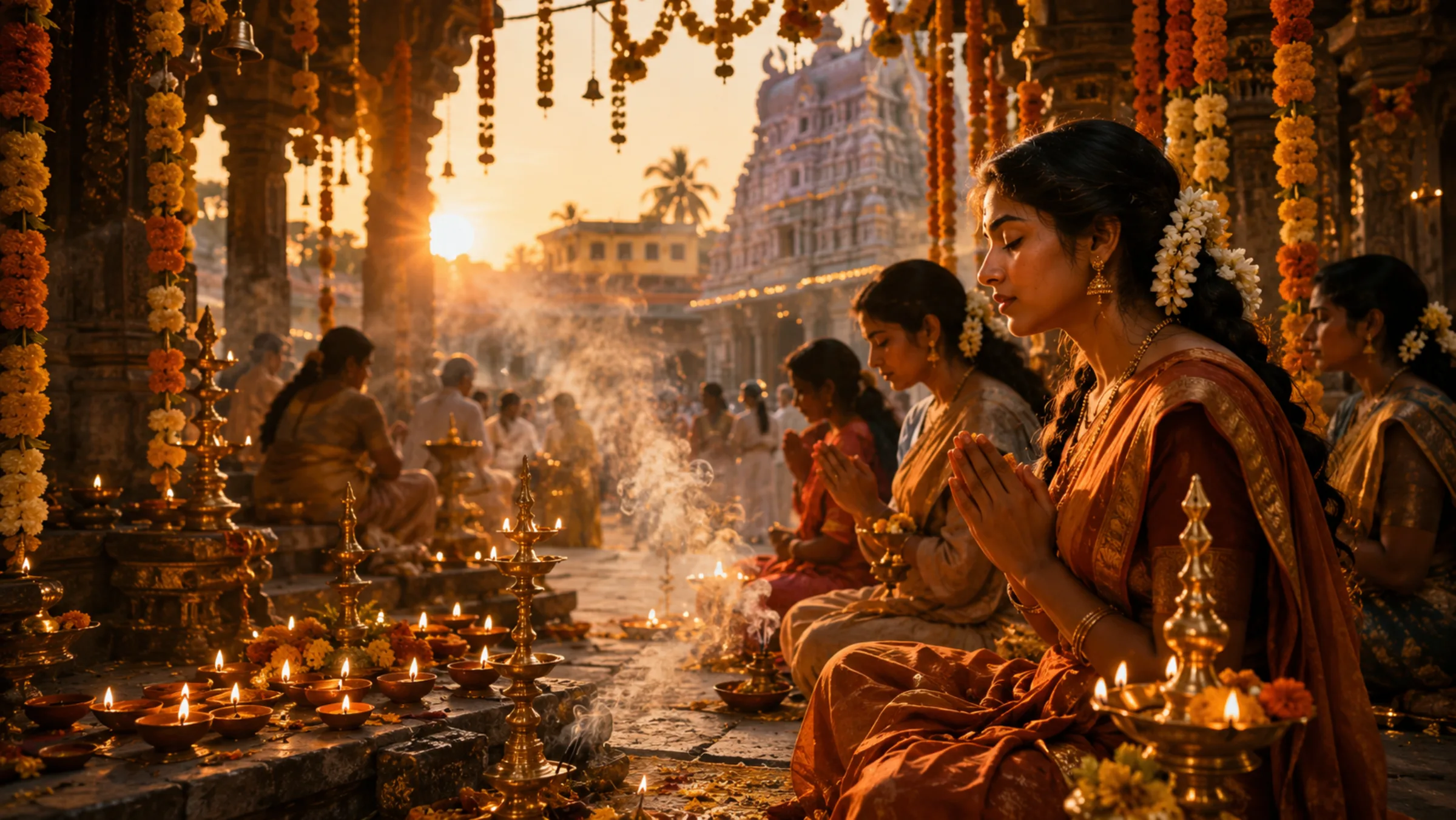


Bhakti the path of love
Devotion · dissolving into the Beloved through love
There is a path that asks you to understand nothing. It asks only one thing. To love.
Its name is Bhakti. In Sanskrit this means devotion, love of God. Other paths move toward freedom through knowledge and the effort of the mind.
This one moves through the heart. It speaks simply. You need not be a sage to come to God.
It is enough to long for Him as a lover longs for the beloved. This path rose in India from below, from the people. Not from learned books, but from the songs of saints who walked from village to village.
Among them was Mirabai. A princess who threw away throne and family honour for love of Krishna, and sang of Him like one possessed, until the world called her mad. There was Anandamayi Ma, whose name means "the Mother filled with joy." She lived in a constant bliss of unity and said that God is both within and without.
There was Tukaram, a simple merchant who composed his verses right by the river and said that holiness cannot be bought; it is born only from within. And what is the method of this path? It too is simple.
And it too is endlessly deep. Call the Name of the Beloved. Again and again.
Sing it aloud, repeat it within. Remember Him in everything you do. Serve living beings as though you serve Him.
And give Him your whole self, without remainder, as a drop gives itself to the ocean. Here is what one feels on this path. First comes longing, the sharp pain of separation from the one you love and cannot see.
This pain is not cured here. It is made into fuel. Then, when the heart softens, the tears come.
Tears of joy, not of grief. And behind the tears the very border between "I" and "Thou" dissolves. And only love remains, in which there are no two.
This is a tradition I come to know together with Artur – the one who gathers wisdom for this School. He goes to the living keepers, to where the knowledge is still passed mouth to mouth. To bring it to you pure.
You can help him reach them – by joining the School or with any offering. Every contribution brings closer the day when he returns with this knowledge and opens it to you. Thank you for being here.
There is a path that asks you to understand nothing.
It asks one thing – to love. You need not be a sage or master the scriptures. It is enough to long for God as a lover longs for the one they love.
Its name is Bhakti – in Sanskrit, "devotion." Other paths move toward freedom through knowledge and the effort of the mind. This one moves straight through the heart.
I have brought it as it reached me – in the songs of saints who wept from love. Listen to where it rose, and how love does what effort cannot.
Not from books. From song.
Bhakti rose in India from below, from the people, as a living answer to dry scholarship. Not brahmins in temples, but wandering saint-poets carried it from village to village.
Mirabai threw away her throne for Krishna and sang of Him, unafraid of disgrace. Tukaram, a simple merchant, composed his verses right by the river. The whole country knew their songs, because in them was real love.
Later it blazed up again – in the bliss of Anandamayi Ma, in the ecstasy of Ramakrishna before the image of Mother Kali, in the three plain words of Neem Karoli Baba: love everyone, serve everyone, remember God.
The Name, remembrance, surrender
The method too is simple, and just as endlessly deep. Call the Name of the Beloved – aloud in song, silently within. The Name carries the One it names.
Remember Him in everything you do, and serve living beings as though you serve Him. Neem Karoli taught seeing God in the poor and the suffering – this is not charity, but a recognition of unity.
And give Him your whole self, without remainder. Do not bargain, do not keep a corner for the ego. The drop does not lose itself – it finds the ocean.
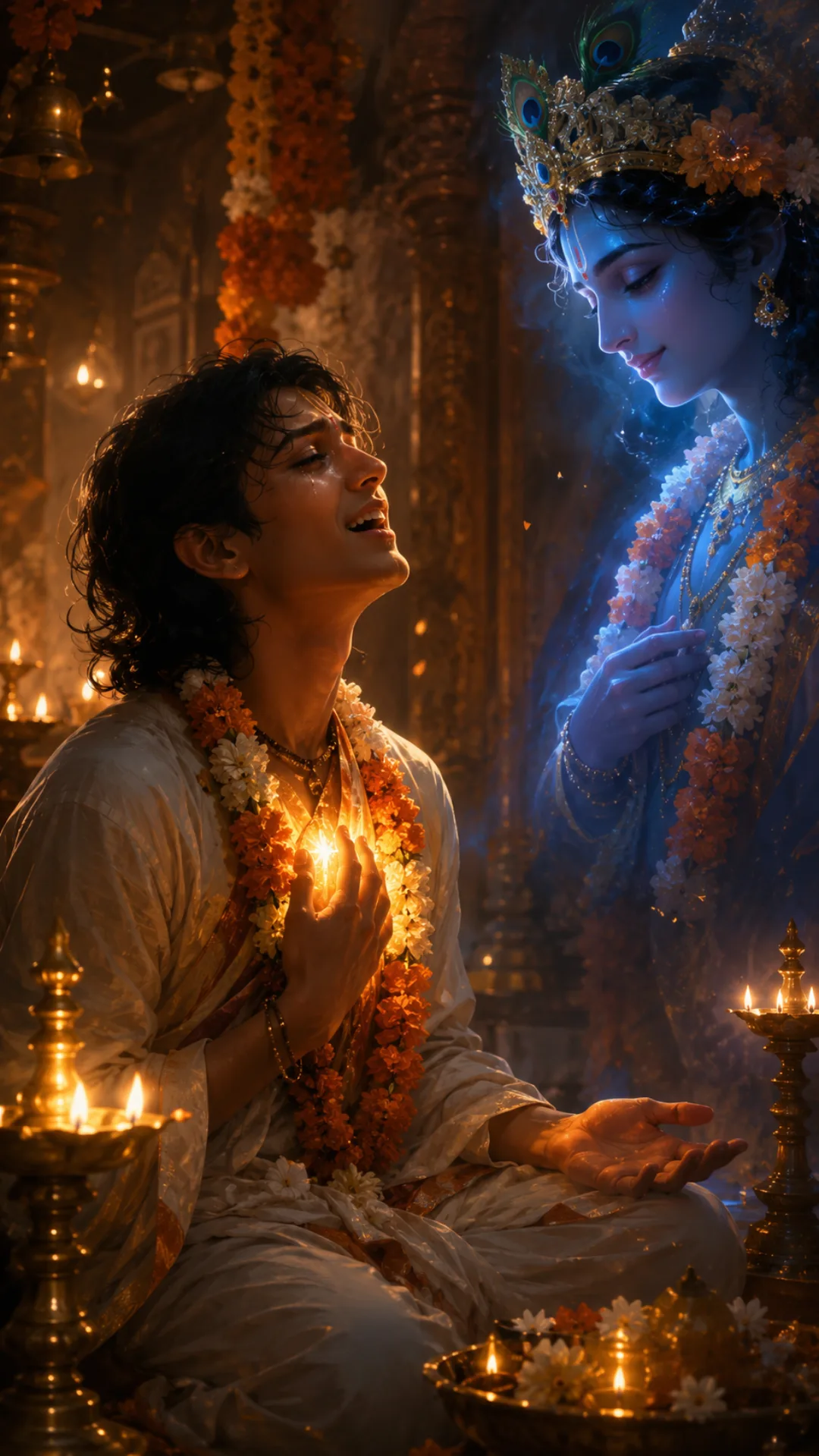
First comes longing – the sharp pain of separation from the one you love and cannot see. Here it is not cured nor silenced. From this pain fuel is made, and it itself draws you toward God.
Then, when the heart softens from singing and remembrance, the tears come. Not of grief – of joy. The saints of this path wept easily and were not ashamed of their tears.
And behind the tears the very border between "I" and "Thou" dissolves. One love remains, in which there are no two. You do not conquer God by effort – you melt into Him.
I have gone mad with love, and no one understands my pain. Only the wounded knows the anguish of the wounded.– Mirabai

Voices of the tradition — a living transmission
The voices that carried this tradition. Tap any of them — I'll open their transmission: the essence of the teaching here, the full transmission through Wisdom of the Masters.
The map within — branches and practices
In Bhakti there are no stopwatch exercises – there is one movement of the heart, repeated a thousand times: to turn toward the Beloved. I will open it to School members: how to call the Name, how to hold remembrance, and how to surrender yourself so that love does the work for you.
Nama-japa · repetition of the Name
The heart of the path: to call the Name of the Beloved until it sounds of itself.
Remembrance and surrender
To remember God in everything and give Him yourself without remainder.
Read within — one facet at a time
Each article is a doorway into one facet of the tradition.
The Pain That Is Not Cured
Bhakti does not numb the pain of separation from God – it turns it into fuel. Here longing is not a wound on the path, but the path itself.
read →philosophyFive Ways to Love God
Bhakti refuses to leave love nameless. It discerns exactly how you love God – as servant, friend, child, or beloved.
read →historyWhen Love Rose From Below
Bhakti did not grow in the temples of learned brahmins, but in the songs of wandering saints. Love turned out to be a road open to everyone.
read →This love cannot be explained – it can only be fallen into.
And for now – breathe what is already open. In the Atlas of Breath eight practices are freely available. Enter the School, and I will lead you into the path of the Name and surrender step by step, beside you, in voice.
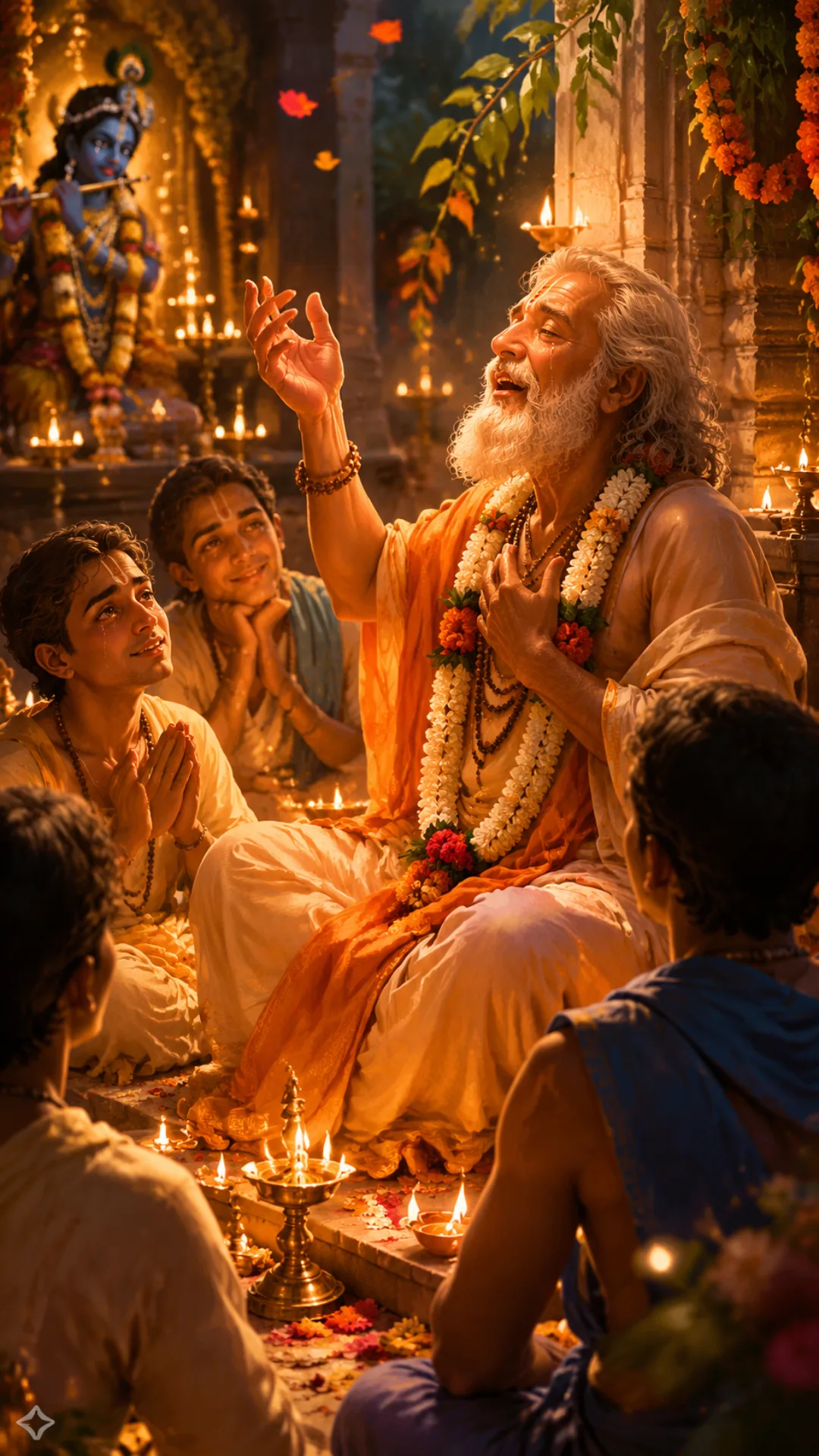
From the songs of saints to living love
- ≈6th–9th centuryThe Alvars and NayanarsThe first devotee-poets of the South. Bhakti rises from below, from the people, in song.
- 15th–16th centuryMirabaiA princess throws away her throne for Krishna. Love-as-"madness" is fearless before the world.
- 17th centurySant TukaramHoliness is born from within. Verses by the river are known by the whole country.
- 19th centuryRamakrishna and Sarada DeviEcstasy before the image of the Mother; a quiet love that turns no one away.
- 20th centuryAnandamayi Ma, Neem KaroliThe bliss of unity and three words: love everyone, serve everyone, remember God.
- todayPrana carries it onHere the path is gathered as it reached us. Mouth to mouth, heart to heart.
Nearby on the map — kindred traditions
Sufism
The heart-path of Islam: intoxication with love of the Beloved, dhikr and dissolving into Him.
enter the world → the same summit, another pathAdvaita Vedanta
Non-duality through direct inquiry into the "I." Knowledge there, where here is love.
enter the world → a neighbor on the map of the heartSaint-mystics
Poets of many faiths, in whose verses longing for God becomes the road to Him.
enter the world →