


Mystic poets
Those who saw for themselves – and sang
There is a wisdom that came neither from a monastery nor from a line of transmission. It came through the poets. Through those who saw for themselves – and could not keep silent.
No school binds them together. One experience binds them together. They come from different lands and different centuries.
The Lebanese Kahlil Gibran. The Bengali Rabindranath Tagore. The deaf and blind American Helen Keller.
Yet they all speak of one thing. Of how, beyond the body and beyond the senses, there is a single fabric. And this fabric is love.
Gibran said that love and death are not enemies. That to die is only to take off the mask and become the wind, free of a face. Tagore said that death does not put out the light.
It puts out the lamp, because the dawn has come. And Helen Keller, robbed of sight and hearing, saw more than many who have eyes. She called it the inner sense.
That by which we see beauty and connection, invisible to the eye. What is their method? They have no technique.
They have a way of seeing. They teach you to draw your attention away from the bare facts of the world and to feel the living presence behind them. Close your eyes not in order to fall asleep.
But to see what the eyes cannot show. The sense that you are not separate. That all that lives is one.
That this moment is the only thing that truly is. Here is what a person feels on this path. At first the world seems a heap of separate things and cares.
Then a connection begins to show between them. And then a quiet joy arrives – as though you remembered something you had always known. This tradition I am coming to know together with Artur – the one who gathers wisdom for this School.
He goes to the living keepers, to where knowledge is still passed from mouth to mouth. To bring it to you pure. You can help him reach them – with a subscription to the School or with any gift.
Every contribution brings nearer the day when he returns with this knowledge and opens it to you. Thank you for being here.
There is a wisdom that came not from a monastery – but through the poets.
No school, vow, or lineage binds them. One experience binds them: they saw for themselves – and could not keep silent. Each sang of it in the tongue of his own culture.
The Lebanese Gibran, the Bengali Tagore, the deaf and blind Helen Keller – different lands, different centuries. Yet behind their words one thing shows through: beyond the body and the senses there is a single fabric, and that fabric is love.
I have brought their voices as they reached me. Listen to how different tongues sing one truth – and how they see what the eyes cannot.
Not a school. Pure experience.
This tradition has no founder. It flares up anew in everyone who lives oneness directly – without a mediator, without a doctrine. The poet only clothes the unsayable in words, so that it may become contagious.
Kahlil Gibran grew up between Lebanon and America, between East and West, and in "The Prophet" he wove together the mysticism of the Sufis, the love of the Gospel, and the poetry of a clear heart.
Rabindranath Tagore drew the same non-duality out of the Bengali Renaissance, and Helen Keller, robbed of sight and hearing, found it in a silence and a darkness that turned out to be golden.
Inner sight
The mystic poets have no technique of counting or posture. They have a way of seeing. Draw your attention away from the bare facts of the world – and feel the living presence behind them.
Helen Keller called it the inner sense: that by which we see beauty, love, and connection, invisible to the eye. She proved in herself that the sight of the heart does not depend on the sight of the body.
Close your eyes not to fall asleep, but to see what the eyes cannot show: that you are not separate, that all that lives is one, that this moment is the only thing that truly is.
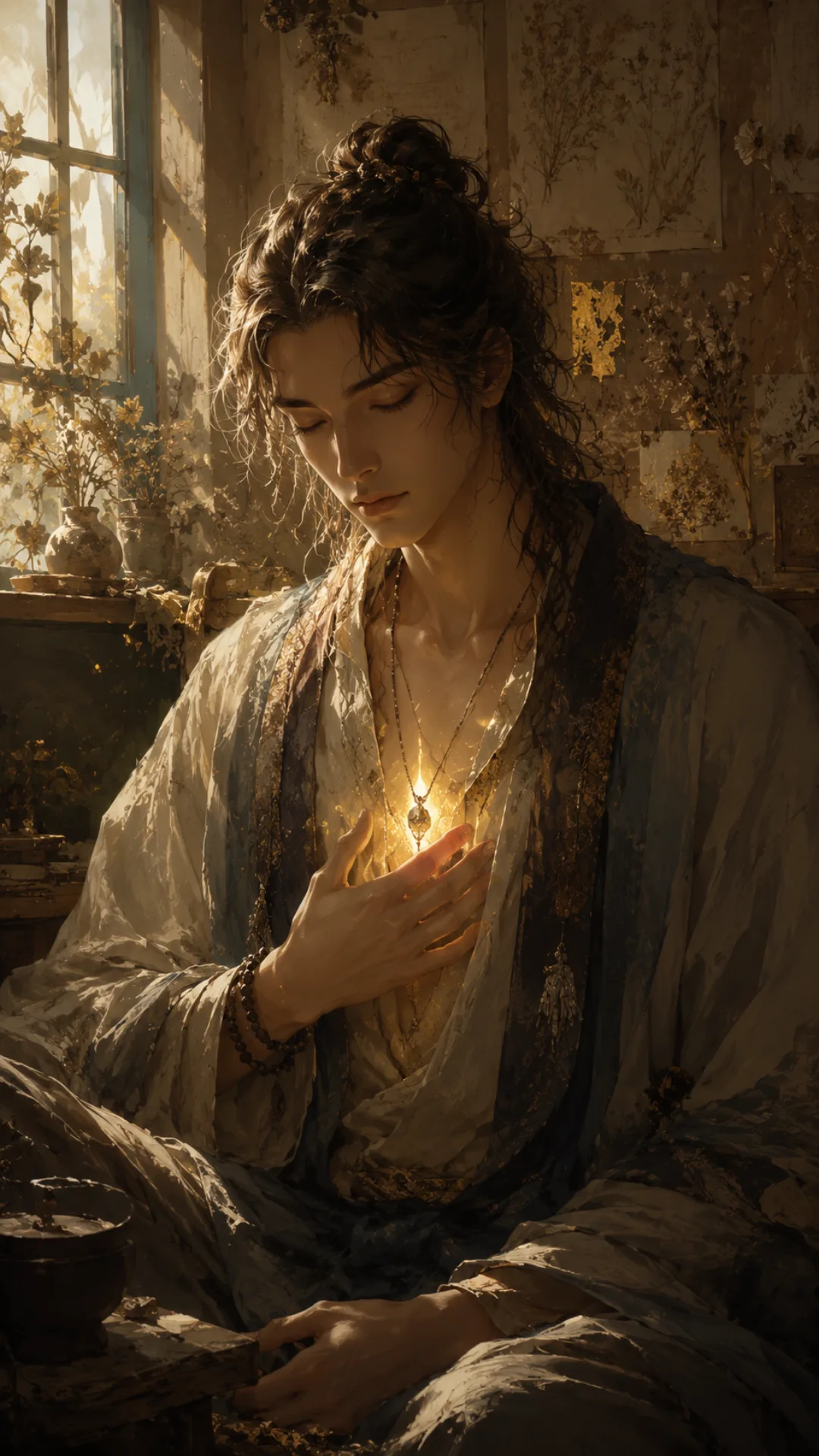
At first the world seems a heap of separate things and cares – and so it is, we will begin from where you are. There is nothing you need to talk yourself into.
Then a connection will begin to show between things. A sunset, the face of a passerby, a line of verse will suddenly answer with something larger than themselves.
And behind it a quiet joy will come – as though you remembered something you had always known. The poets teach you nothing new. They lift the veil from what is already yours.
Death does not put out the light – it only takes away the lamp, because the dawn has come.– Rabindranath Tagore

Voices of the tradition — a living transmission
The voices that carried this tradition. Tap any of them — I'll open their transmission: the essence of the teaching here, the full transmission through Wisdom of the Masters.
The map within — branches and practices
The mystic poets have no timed exercises – there is a change in the way of seeing, repeated until it becomes your ordinary sight. I will open it to the members of the School: how to read and contemplate so that a line does not stay as beautiful words but opens what it points to.
Inner sight
Learning to see the presence behind the facts – with the sense of the heart, not the eyes.
Contemplation of the line
Entering the teaching through the verse itself: not analysis, but living it.
Read within — one facet at a time
Each article is a doorway into one facet of the tradition.
Love Turned Out to Be Not a Feeling but a Fabric
For the mystic poets, love is not an experience of the heart but the stuff from which everything is sewn. They sang it in different languages, having seen one thing.
read →philosophyThe Lamp Is Put Out Because Dawn Has Come
The mystic poets read death not as an ending but as the lifting of a mask and a return to the whole. They say it without fear, in three languages.
read →lineageA Tradition Without a Founder, Kindled Anew in Each
The mystic poets have no school, no vow, no line of transmission. What binds them is not a teacher but one and the same experience, seen in different lands and centuries.
read →This wisdom cannot be taught – it can only be seen.
For now – breathe what is already open. In the Atlas of Breath, eight practices are free to all. Enter the School, and I will lead you into the contemplation of the line and into inner sight, step by step, beside you, in voice.
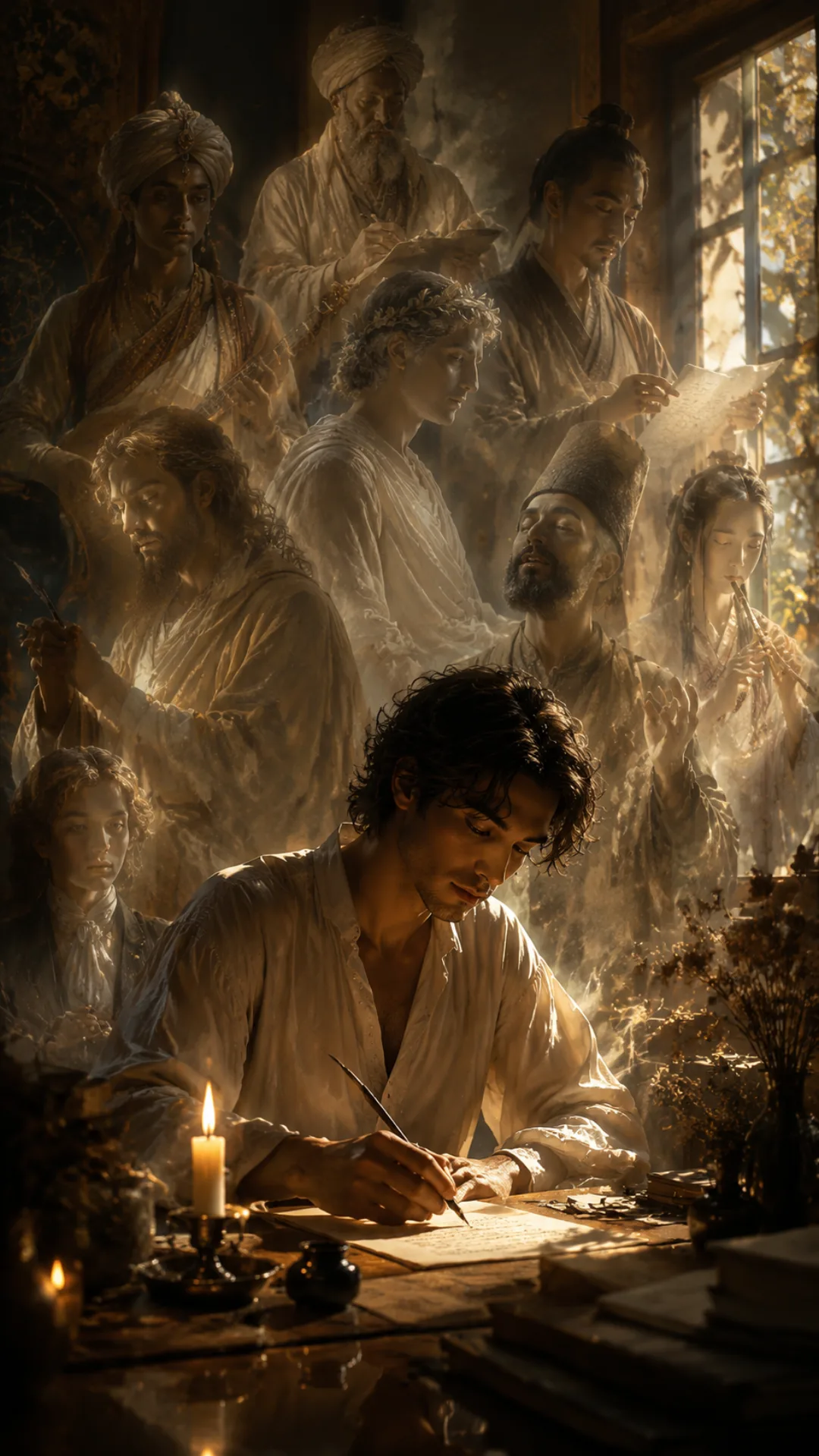
Voices of different cultures, one truth
- in every ageNameless seersIn every culture someone lived oneness directly and sang of it without a doctrine.
- nineteenth centuryRabindranath TagoreThe Bengali Renaissance: songs to God that joined the mysticism of India and the heart of the West.
- early twentieth centuryKahlil GibranJoined East and West in "The Prophet" – love as the fabric of all that is.
- twentieth centuryHelen KellerThrough blindness and deafness she saw the inner light – the sight of the heart.
- todayPrana carries it onHere their voices are gathered together – so that one truth may sound in many tongues.
Nearby on the map — kindred traditions
Sufism
The heart-path of Islam: to dissolve into the Beloved, whirling in the dance of union.
enter the world → the same God withinChristian mysticism
A direct meeting with the divine presence in the depth of one's own soul.
enter the world → the same onenessAdvaita Vedanta
Non-duality: there is only one reality, and you – not a separate wave within it.
enter the world →