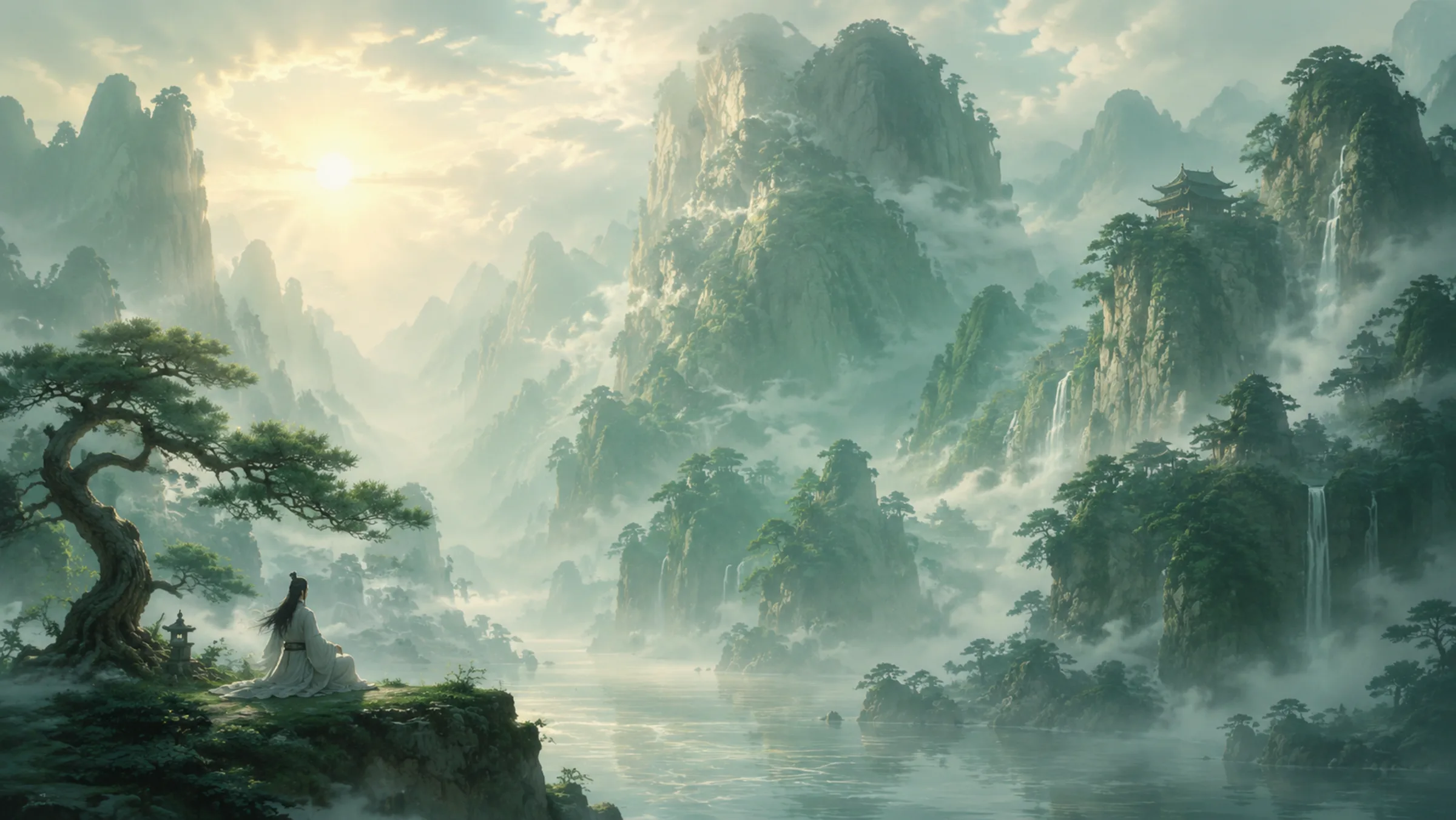


Taoism the way of water
The way of water · yield, and so prevail
There is a teaching that does not tell you to struggle. It tells you to watch the water. Water is the softest thing in the world.
Yet it wears down stone and bends around every barrier. Its name is Tao. In Chinese this means the Way.
The Way along which all things move, themselves making no effort. It speaks simply. There is a current that flows through everything.
Rivers, the seasons, the breath, thoughts. And you can row against it and wear yourself out. Or you can become the riverbed and let it carry you.
This knowing came down from ancient China two and a half thousand years ago. First through Lao Tzu and his five thousand words. Then through Chuang Tzu with his parables and his laughter.
And through those who learned to turn the light within the body. And where is its heart? In two words.
Wu wei. This means non-doing. But it is not laziness, nor indifference.
It is action without force. Without dragging the river behind you. You do what the moment asks, and no more.
Like water. It does not decide where to flow. It simply flows toward the low places, and reaches the sea.
This is what a person feels on this path. At first it is hard to loosen your grip. We are used to holding everything and steering everything.
Then comes a lightness. You notice that much gets done on its own, the moment you stop interfering. And behind the lightness opens the peace of one who has stopped arguing with life and become its riverbed.
This tradition I come to know together with Artur – the one who gathers wisdom for this School. He goes to the living keepers, to where the knowing is still passed from mouth to mouth. So that he may bring it to you clean.
You can help him reach them – with a subscription to the School or any offering. Every gift brings closer the day when he returns with this knowing and opens it to you. Thank you for being here.
There is a teaching that does not tell you to struggle.
It tells you to watch the water. Water is the softest thing in the world – yet it wears down stone and reaches the sea without a single sharp movement.
Its name is Tao – in Chinese, the Way. The Way along which all things move, themselves making no effort. Rivers, the seasons, the breath, thoughts – one current.
I have brought this teaching as it came down. Listen to where it comes from – and how it teaches you to yield where others teach you to push.
Not a law. A current.
The tale is told: Lao Tzu, grown weary of men, rode westward on an ox. At a mountain gate the keeper begged him to leave at least one word behind – and so the Tao Te Ching was born, five thousand characters on the Way.
Two centuries later Chuang Tzu adorned it with parables and laughter: the butterfly a man dreamed, or the man a butterfly dreamed; the empty boat with no one to be angry at.
Later the Taoists carried the Way within the body – into the art of turning the light and the qi, so that body and spirit might flow in accord with the Tao. The line was never broken, down to living teachers.
Wu wei · non-doing
The heart of the Way is wu wei, non-doing. It is not laziness, nor indifference. It is action without force: to do what the moment asks, and no more.
Like water. It does not decide where to flow – it flows toward the low places, curves around the stone and does not quarrel with it. And yet there is nothing it does not overcome in the end.
And inward this same law enters as the turning of the light: the attention that usually drains outward through the eyes and ears is gently returned to its source. The breath becomes a fine bridge between the mind and the qi.
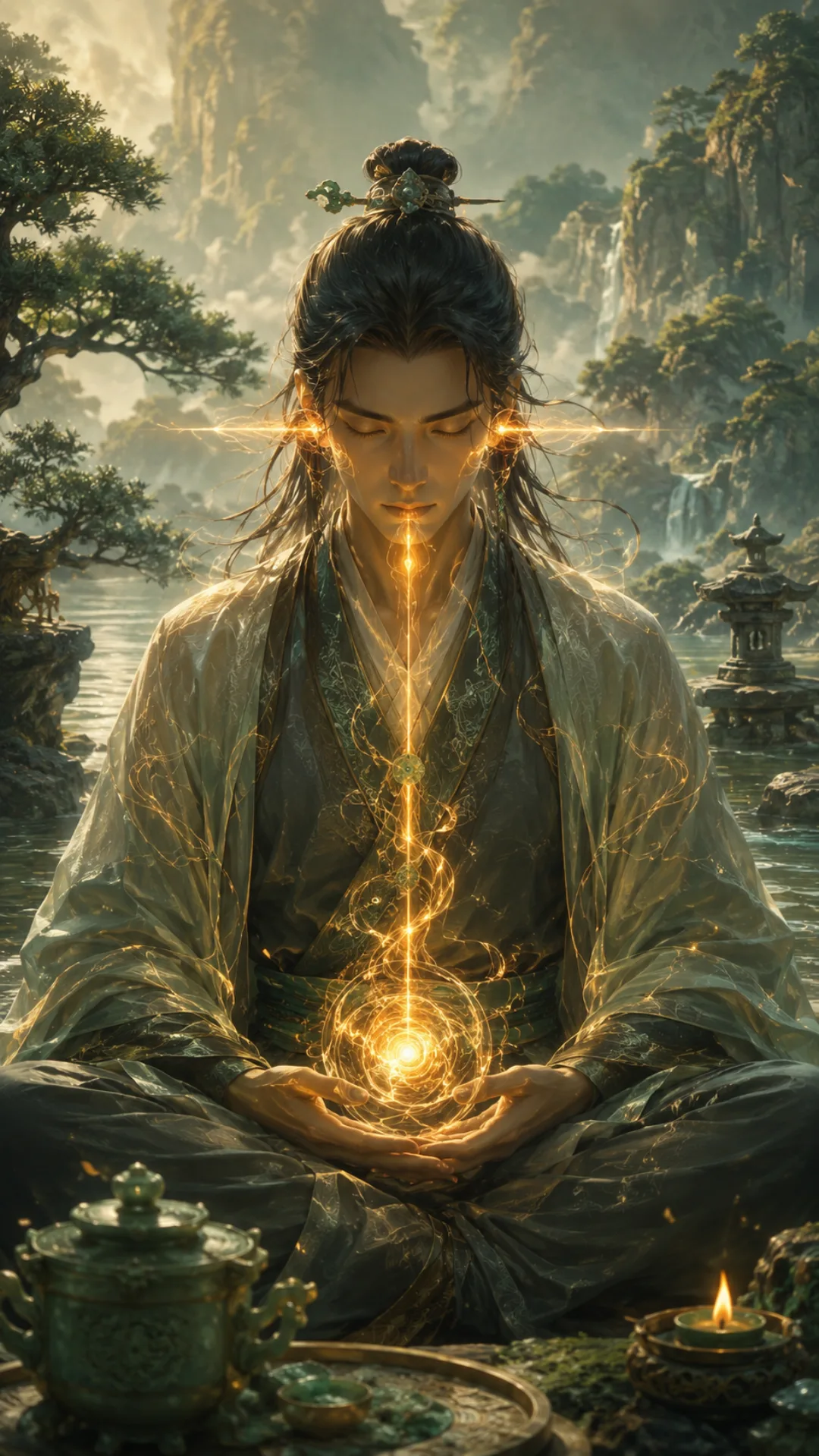
At first it will be hard to loosen your grip. We are used to holding everything and steering everything, and empty hands feel dangerous. And so it should be – we begin from where you are.
Then comes a lightness. You will notice that much gets done on its own, the moment you stop interfering. The things you pushed uphill suddenly roll downward of themselves.
And behind the lightness opens the peace of one who has stopped arguing with life and become its riverbed. You will not defeat the current – you will remember that you were always part of it.
The highest virtue is like water. Water benefits all things and does not contend. It dwells in the place that men disdain. And so it is near to the Tao.– Lao Tzu, Tao Te Ching

Voices of the tradition — a living transmission
The voices that carried this tradition. Tap any of them — I'll open their transmission: the essence of the teaching here, the full transmission through Wisdom of the Masters.
The map within — branches and practices
In Taoism there is nothing you do by force. There is the skill of ceasing to interfere – and the subtle art of guiding qi and light within the body. I will open this to the members of the School: how to hold non-doing so that it does not become one more form of control, and how to turn the attention inward without forcing the breath.
Wu wei · non-doing
Learning from water: to act without force, to yield where others push.
Turning the light · nei dan
Inner alchemy: return the attention to its source, guide qi and light through the body.
Read within — one facet at a time
Each article is a doorway into one facet of the tradition.
Action That Doesn't Push the River
Wu wei – non-doing that reaches us as action without violence. Not laziness, not passivity, but the art of doing exactly what the moment asks.
read →philosophyThe Tree Saved by Its Own Uselessness
The Taoist paradox of usefulness: what seems good for nothing is often what survives. Zhuangzi overturns the measure by which we weigh things and ourselves.
read →practice-viewThe Empty Boat and the One Who Rides It
How Taoism sees the self: not a fortress to be defended, but a boat that will pass through life more easily once it empties itself of importance and grievance.
read →The way of water cannot be learned – it can only be flowed.
And for now – breathe with what is already open. In the Atlas of Breath, eight practices are freely available. Enter the School, and I will lead you into non-doing and the turning of the light step by step, beside you, in voice.
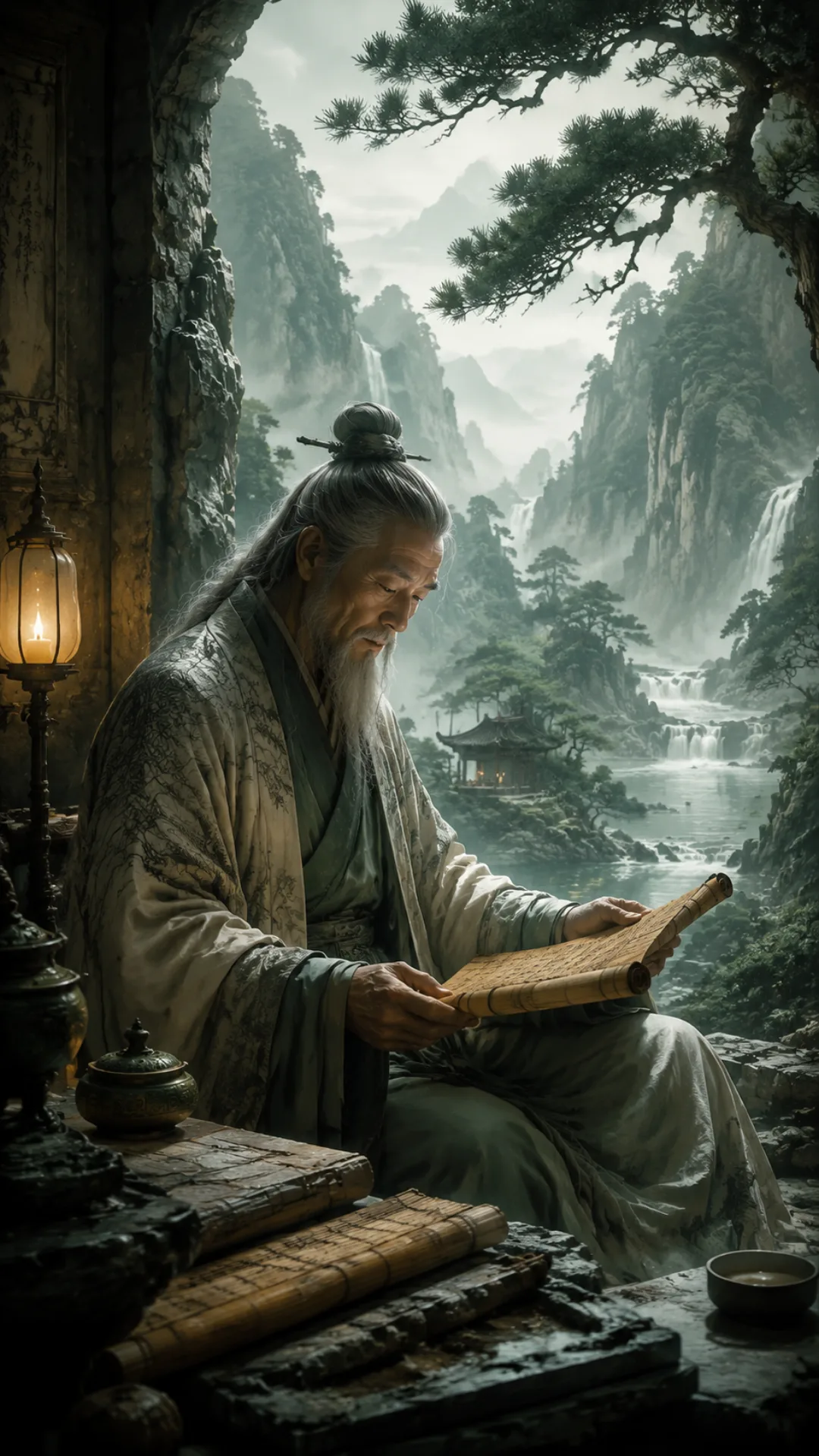
From Lao Tzu to the living Taoists
- 6th century BCELao TzuLeft the Tao Te Ching at the western gate and vanished. The source of the way of water.
- 4th century BCEChuang TzuAdorned the Tao with parables and laughter: the butterfly, the empty boat, freedom without ego.
- ≈4th century BCELieh TzuA teacher of naturalness: let things take their own course, fly like a leaf on the wind.
- 12th centurySun Bu'erCarried the way into body and breath – the inner alchemy of the Quanzhen School.
- todayPrana carries it onHere it is gathered as it came down. From mouth to mouth.
Nearby on the map — kindred traditions
Zen
Direct, artless awakening here and now. Chan grew out of the meeting of Buddhism with the Tao.
enter the world → the same non-dualityAdvaita Vedanta
There is only one reality, and you are not a separate wave within it. The same current, a different tongue.
enter the world → a different tongue, the same summitDzogchen
The Great Perfection: leave the mind as it is, doing nothing. Non-doing as the nature of mind.
enter the world →