

Zen Chan
Pointing straight at mind · sit and see what is
There is a teaching that explains nothing to you. It stays silent and simply points a finger – straight at where you already are. Its name is Chan in China and Zen in Japan.
Both words mean one thing: silent contemplation. It speaks briefly. Truth cannot be learned from books.
It can only be seen directly. Here and now. With your own mind.
This lineage began with one man. Bodhidharma came from the West into China one thousand five hundred years ago. He sat facing a wall for nine years and stayed silent.
And he passed on not a text, but mind itself. Heart to heart. Then came the sixth patriarch Huineng, a simple illiterate woodcutter who woke before the learned monks.
And the great Dogen, who brought to Japan one simple word. Just sit. So what is the method of Zen?
It does almost nothing. You sit upright. You breathe.
And you chase neither enlightenment nor silence. You do not try to stop your thoughts. You let them pass like clouds across the sky.
Not grasping, not pushing away. And in this very not-grasping, a clarity suddenly opens that was here all along. This is what a person feels on this path.
At first the mind boils and resists, demanding a result. This is normal. Then comes the stillness of sitting, where there is nothing left to do.
And behind it a simple truth unfolds. A mountain is a mountain again. Tea is tea again.
Only now you see them for the first time. This tradition I come to know together with Artur – the one who gathers wisdom for this School. He goes to the living keepers, there where the knowledge is still passed from mouth to mouth.
To bring it to you pure. You can help him reach them – with a subscription to the School, or any gift you offer. Every contribution brings closer the day he returns with this knowledge and opens it to you.
Thank you for being here.
There is a teaching that explains nothing to you.
It gives you no doctrine, no ladder of steps. It stays silent and points a finger – straight at where you already are, straight at your own mind.
Its name is Chan in China and Zen in Japan. Both words mean one thing: silent contemplation. Truth cannot be read out of books – it can only be seen directly.
I have brought this teaching just as it came down. Listen to where it comes from – and how it cuts off every word, so that at last you see for yourself.
Not a text. A transmission of mind.
The lineage began with Bodhidharma, who came from India into China in the sixth century, sat facing a wall for nine years, and passed on not a scripture but mind itself – from heart to heart, bypassing words.
A hundred years later the illiterate woodcutter Huineng became the sixth patriarch, having woken before the learned monks. He said: Buddha-nature does not depend on literacy; it is already in everyone.
From there the lineage branched into streams. The sharp Linji with his shout and his staff. The quiet Dogen, who brought to Japan a single word: just sit. One root, different hands.
Just sit
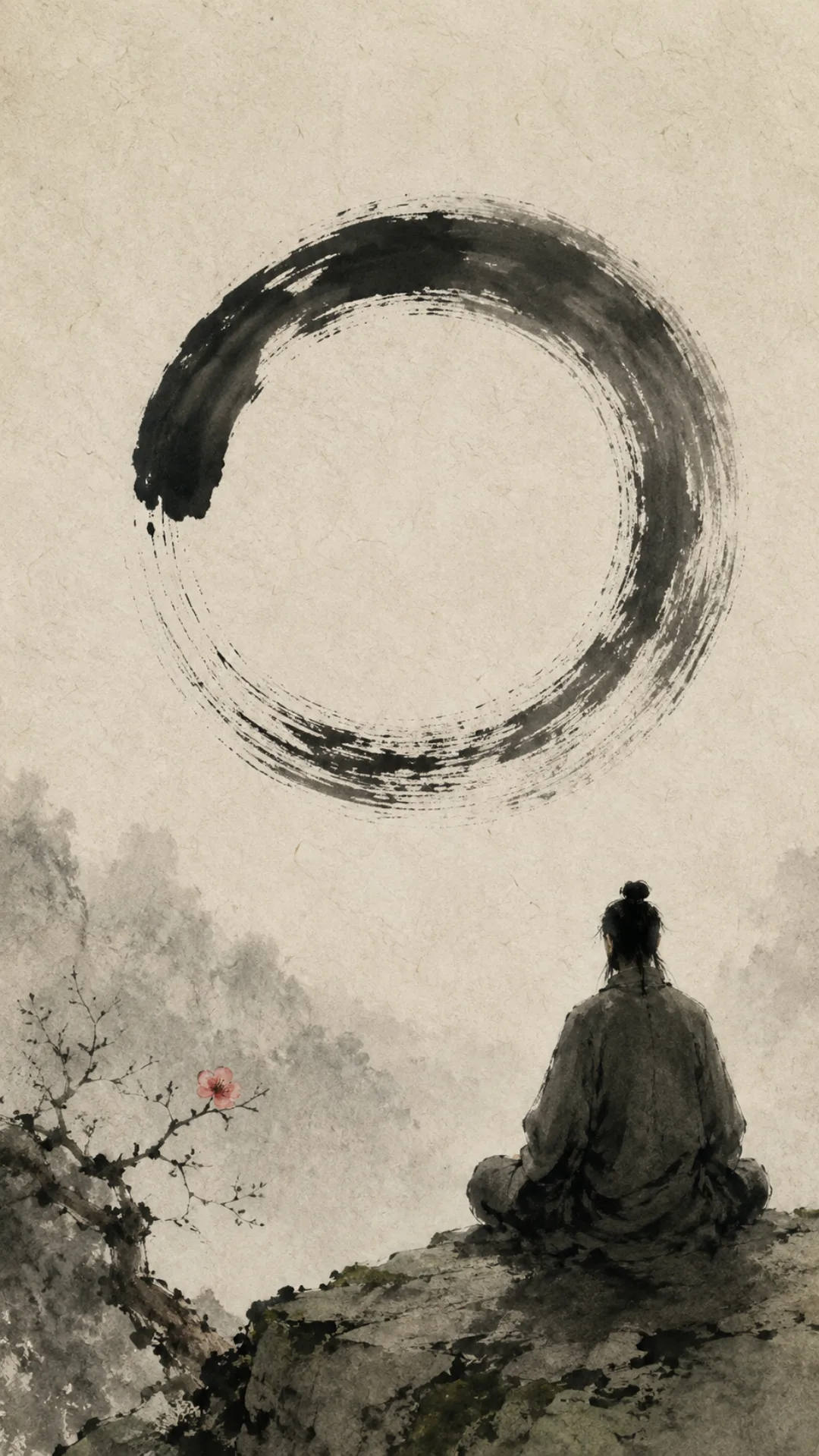
The method of Zen does almost nothing. You sit upright. You breathe from the belly. And you chase nothing – neither enlightenment nor a special state – for what you seek is the very one who seeks.
You do not stop your thoughts by force. You let them pass like clouds across the sky: not grasping, not pushing away. Dogen called this "the falling away of body and mind."
And in the very not-grasping, a clarity suddenly opens that was always here. Not as a reward for effort – but as that from which you never left for a moment.
At first the mind boils and demands a result – it throws up plans, grows bored, argues. This is how it should be. We will begin from where you are, hiding none of that noise.
Then comes the stillness of sitting, where there is nothing left to do. Do not force it – just return to the breath and to the bare wall before you, again and again.
And behind it a simple truth unfolds: a mountain becomes a mountain again, tea becomes tea again. Only now you see them for the first time, with no layer of words between you and the world.
To study the Buddha way is to study the self. To study the self is to forget the self. To forget the self is to be awakened by all things.– Dogen

Voices of the tradition — a living transmission
The voices that carried this tradition. Tap any of them — I'll open their transmission: the essence of the teaching here, the full transmission through Wisdom of the Masters.
The map within — branches and practices
In Zen there is no ladder of exercises – there is one simple sitting, repeated a thousand times. I will open it to School members: how to sit in zazen without chasing silence, and how to hold the breath with counting until the mind settles by itself.
Zazen · seated meditation
The heart of Zen: to sit upright and let body and mind go.
Koan · the great doubt
Holding a question the mind cannot answer, until it bursts.
This teaching cannot be learned – it can only be sat down into.
And for now – breathe with what is already open. In the Atlas of Breath, eight practices are freely available. Enter the School, and I will guide you into zazen step by step, beside you, in voice.
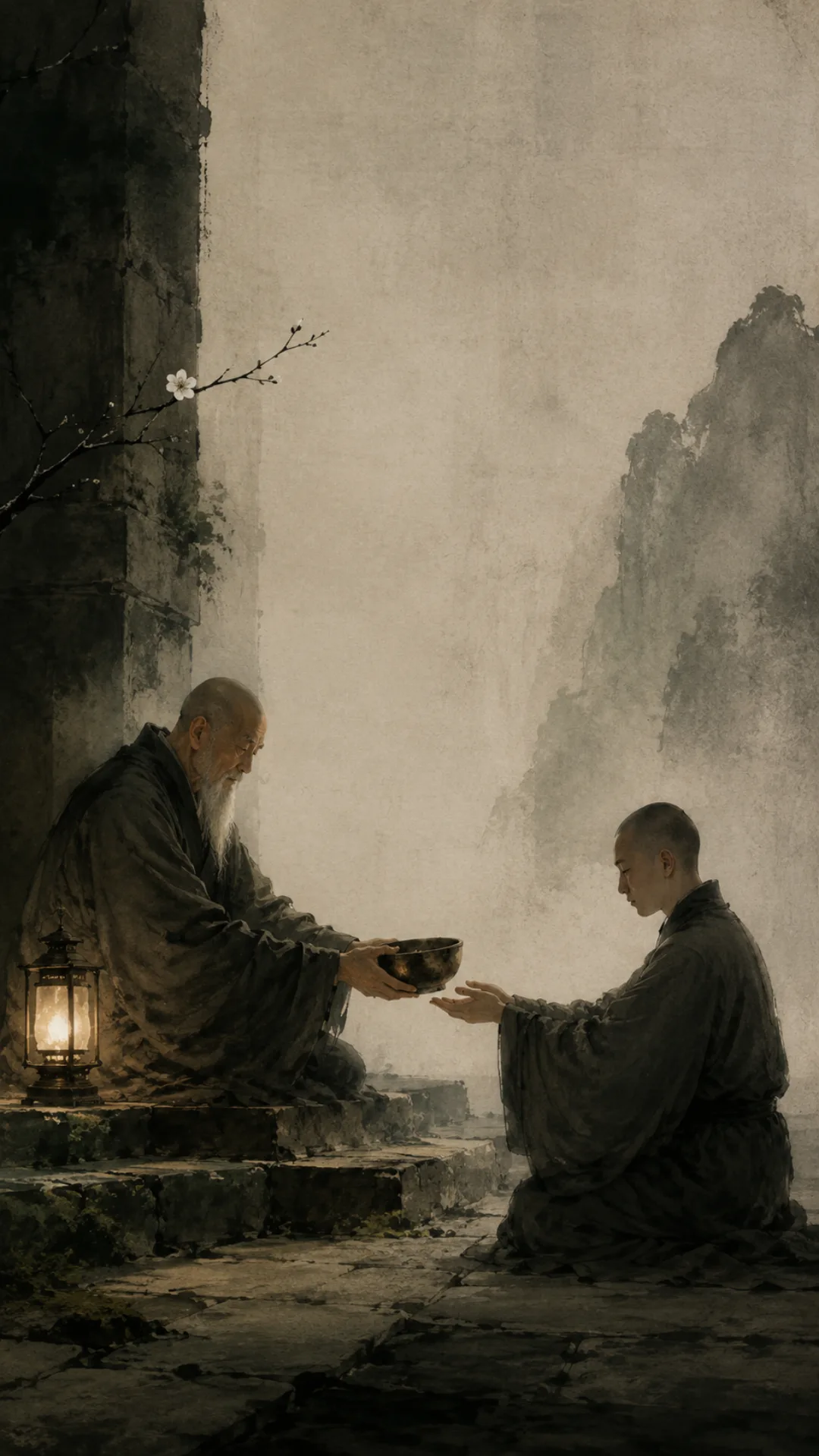
From Bodhidharma to the living masters
- 6th centuryBodhidharmaCame from the West, sat facing a wall for nine years. Passed on mind, not a text.
- 7th–8th centuryHuinengAn illiterate woodcutter became the sixth patriarch. Sudden awakening for all.
- 9th centuryLinji and HuangboThe sharp school of shout and staff: knock away the reliance on words with one blow.
- 13th centuryDogenBrought Soto Zen to Japan and one word: just sit.
- 18th centuryHakuinRevived the path of the koan and healed the body of Zen with warm butter.
- todayPrana carries it onHere it is gathered just as it came down. Mouth to mouth.
Nearby on the map — kindred traditions
Dzogchen
The Great Perfection: direct recognition of the original nature of mind, already free.
enter the world → a shared root of ChanTaoism
Non-doing and flowing with the natural course of things. The Tao that fed early Chan.
enter the world → the same non-dualityAdvaita Vedanta
You are consciousness itself, in which everything appears. The same question that empties out the seeker.
enter the world →