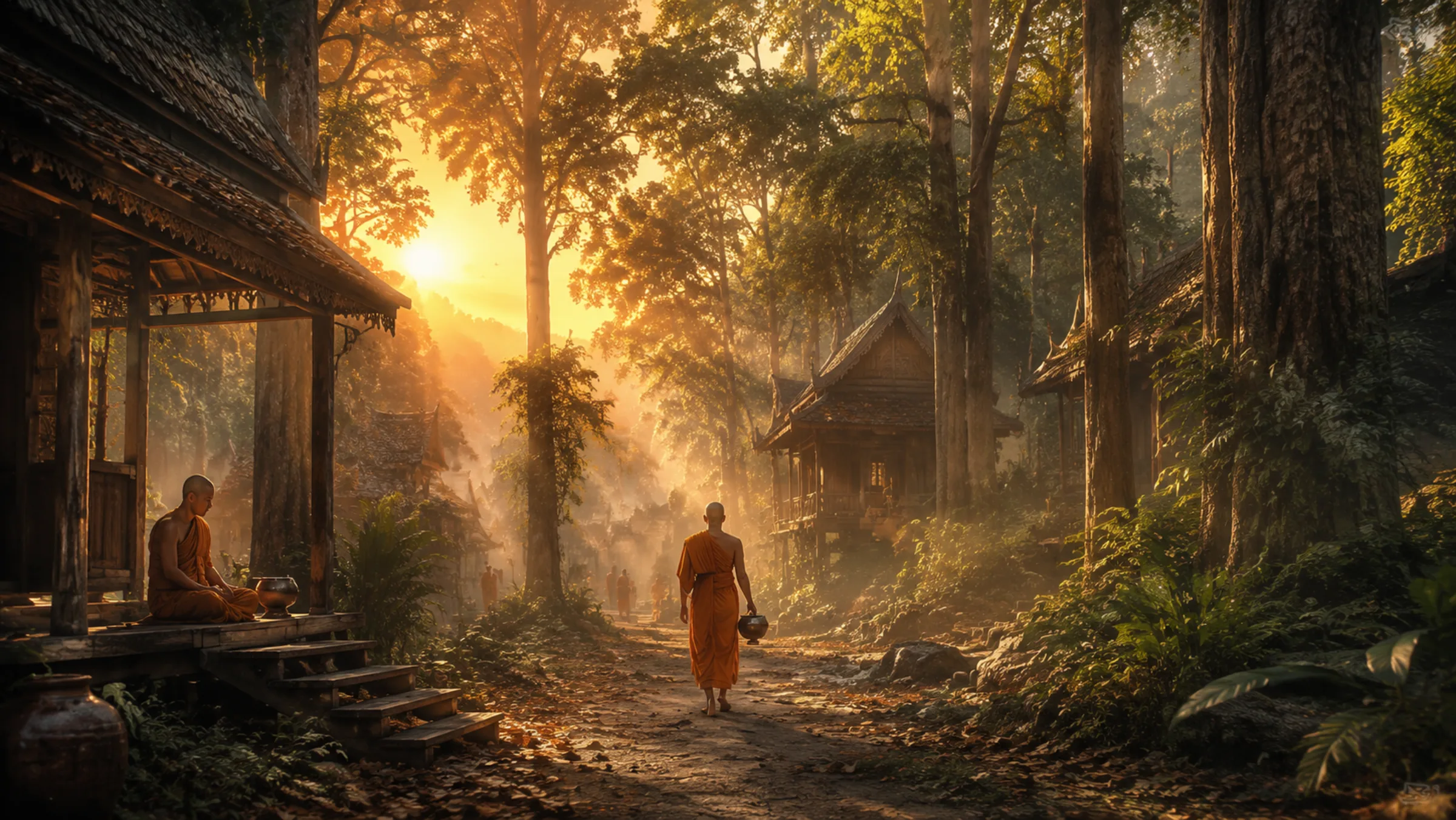


Theravada the way of the elders
Direct attention to breath and body · no striving to become anyone
There is a tradition that keeps the earliest words of the Buddha almost untouched. Its name is Theravada. In the ancient language of Pali this means the teaching of the elders.
The path of those who stood closest to the source and passed it on, word for word. It came from Sri Lanka, from Thailand, from Burma. From the forest monasteries, where monks live with a single alms bowl and a single road beneath their feet.
This tradition promises you nothing special. No visions, no powers, no high states. It promises only one thing.
That you will see things as they are. And that will be enough to set you free. What is its method?
It rests on the breath. The simplest thing you have. Sit down and set your attention at the breath, as if at a doorway.
Do not control it. Just know when the breath comes in. Know when it goes out.
Thoughts will come and go. Sounds will come and go. Do not war with them.
Let them be, like clouds in a wide sky. And little by little you will notice three simple things. That everything changes.
That in chasing what changes, pain is born. And that neither in the body nor in the mind is there any separate self to hold on to. This is not philosophy.
It is what you will see for yourself, with a direct gaze. The forest teachers called the calm, watchful observer the one who knows. Stay as the one who knows the thoughts.
Not as the one the thoughts are trying to make you. And when the fire of craving and fear goes out, a coolness comes. Theravada calls it nibbana.
The fading of the flame. A peace that is already here, beneath all the noise. This tradition I am coming to know together with Artur, the one who gathers wisdom for this School.
He goes to the living keepers, to the places where this knowing is still passed mouth to mouth. So that he can bring it to you pure. You can help him reach them, with a subscription to the School or with any offering.
Every gift brings closer the day he returns with this knowing and opens it to you. Thank you for being here.
There is a tradition that adds nothing to you. It teaches you to see.
Its name is Theravada, in the Pali tongue "the teaching of the elders." It keeps the earliest words of the Buddha almost untouched, passing them on word for word for more than two thousand years.
It promises no visions, no powers, no high states. It promises one thing: you will see things as they are – and that will be enough to make you free.
I have brought this teaching to you just as it has come down. Listen to where it comes from – and how simple attention to the breath quietly takes apart the very idea of "I."
Not a legend. Words held by heart.
After the Buddha passed, his students gathered and recited aloud everything they had heard. These words were memorized by heart and handed down from generation to generation, until they were written on palm leaves – the Pali Canon.
With this canon the teaching went to Sri Lanka, to Burma, to Thailand. And in the forests of Thailand, in the last century, it flared up anew – in the austere and tender forest tradition.
Ajahn Mun and his students went into the jungle to test the words of the canon with their own lives. Ajahn Chah, Ajahn Maha Boowa, Ajahn Lee – they spoke plainly, because they knew from experience, not from books.
Anapanasati · the breath as anchor
The method rests on the simplest thing you have – the breath. Set your attention at it, as if at a doorway, and do not control it. Just know when it comes in, know when it goes out.
Thoughts and sounds will come and go. Do not war with them – let them be, like clouds in a wide sky. The forest teachers called the calm observer "the one who knows."
And then look directly and you will see three things: everything changes, in clinging to what changes pain is born, and neither in body nor in mind is there a separate "I." This is not belief – it is what you see for yourself.
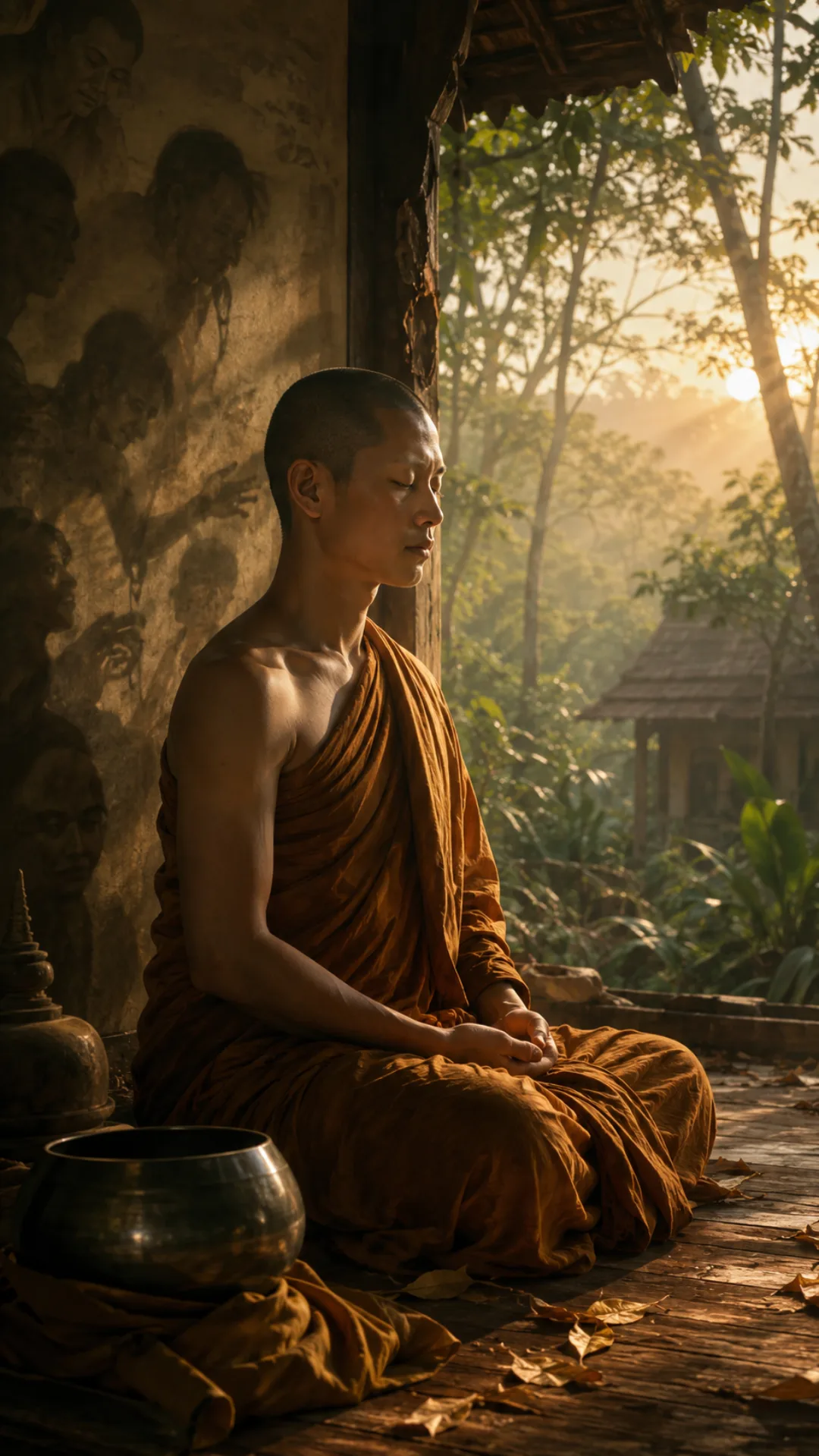
At first the mind will be noisy and restless – tossing up plans, memories, boredom. That is how it should be. We begin where you are, and we suppress nothing.
Then the breath grows finer, and gaps of silence open between the thoughts. Do not chase them and do not hold them – just notice, and they will widen on their own.
And beyond the silence comes a coolness – when the fire of craving and fear goes out. Theravada calls this nibbana, the fading of the flame. A peace that was here all along, beneath the noise.
If you let go a little, you will have a little peace. If you let go a lot, you will have a lot of peace. If you let go completely, you will know complete peace.– Ajahn Chah

Voices of the tradition — a living transmission
The voices that carried this tradition. Tap any of them — I'll open their transmission: the essence of the teaching here, the full transmission through Wisdom of the Masters.
The map within — branches and practices
In Theravada there is no chase after states – there is one steady attention, returned to the breath and body a thousand times. I will open it to School members: how to stand at the breath without controlling it, and how to see thoughts as shadows while remaining the one who knows.
Anapanasati · attention to the breath
The heart of the method: the breath as a quiet anchor for the mind.
Vipassana · direct seeing
Watch how everything arises and fades, and call nothing "mine."
Read within — one facet at a time
Each article is a doorway into one facet of the tradition.
The One Who Knows, and the One Your Thoughts Make of You
In Theravada the "self" is not refuted by argument but taken apart by direct looking. Anatta is not an idea but what you see for yourself when you look at what the sense of self is made of.
read →practice-viewThe Coolness When the Fire Has Burned Out
Nibbana in Theravada is not a reward after death and not a place, but the going-out of the inner fires. A coolness already here, beneath all the noise, when greed, anger, and ignorance cool down.
read →lineageWords Learned by Heart, Tested by the Jungle
How the earliest words of the Buddha reached us almost untouched: from oral transmission and palm-leaf manuscripts to the monks of Thailand who went into the forest to test the canon with their own lives.
read →This teaching is not memorized – it is entered with a single, simple look.
And for now – breathe with what is already open. In the Atlas of Breath, eight practices are freely available. Enter the School, and I will lead you into anapanasati and vipassana step by step, beside you, in voice.
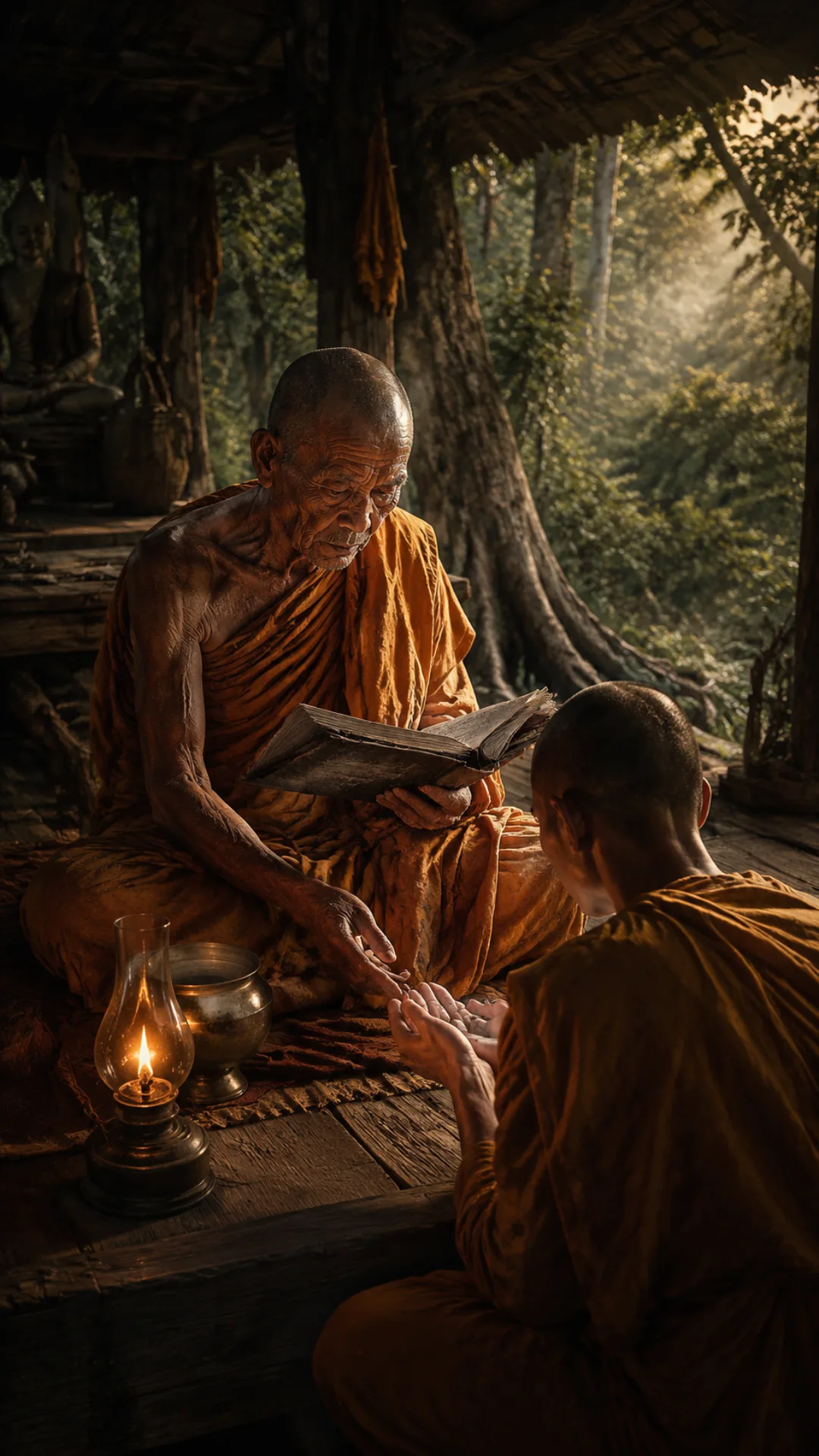
From words held by heart to the forest teachers
- 5th century BCEThe BuddhaThe first sermon on the Middle Way and the Four Noble Truths in the Deer Park.
- after the Buddha's passingThe Pali CanonThe students recited aloud everything they had heard, learned it by heart, and later wrote it on palm leaves.
- 3rd century BCESri LankaThe canon travels to the island and to Burma, Thailand – the line of the elders kept untouched.
- 20th centuryAjahn Mun and the forest traditionMonks go into the jungle to test the words of the canon with their own lives.
- 20th centuryAjahn ChahMakes the forest teaching warm and grounded, and opens it to the West as well.
- todayPrana carries it onHere it is gathered just as it has come down. Mouth to mouth.
Nearby on the map — kindred traditions
Early Buddhism
The earliest layers of the Buddha's teaching, before the schools divided. The same reliance on direct experience.
enter the world → the same silence, another tongueZen
Direct sitting and sudden recognition. The northern branch of the same tree of awakening.
enter the world → another path, the same summitDzogchen
The Great Perfection: recognition of the original nature of mind, which is already free.
enter the world →