


The Words of the Buddha
Four truths · the end of suffering at its very source
There is a teaching that begins not with a god and not with a mystery. It begins with an honest look at what everyone already carries. With the fact that life holds pain.
And that this pain has a cause. And that it can be brought to an end. Its name is early Buddhism.
These are the very first words of the Buddha, before the temples, before the schools, before the arguments. Buddha is not the name of a man, but a word. It means "the one who awoke." The one who woke up.
He lived two and a half thousand years ago in northern India. A prince named Siddhartha. He grew up behind palace walls, where everything heavy was hidden from him.
And one day he went out beyond the gate. And he saw an old man. Then a sick man.
Then a dead man. And he understood that this awaits everyone he loves. And himself.
He left the palace and for six years sought a way out through extremes. First he indulged, then he tormented his body almost to death. Neither one gave him peace.
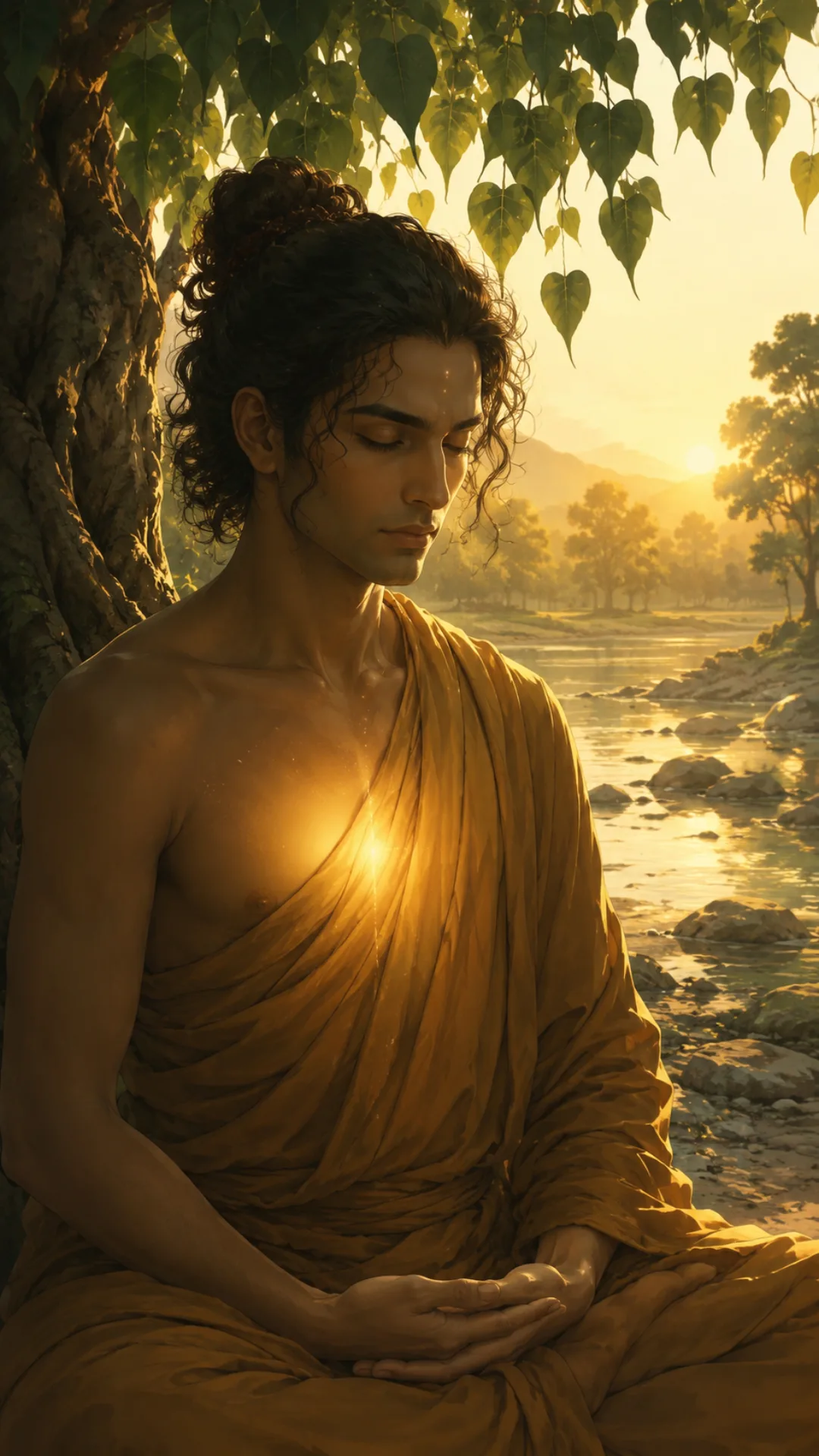
So he sat beneath a tree and said to himself: I will not rise until I understand. And at dawn he understood. He called it the four noble truths.
Pain exists. Pain has a cause – clinging, the thirst for everything to be other than it is. Pain can end.
And a clear path leads to that end. This path is simple and hard at once. To see things as they are.
To live honestly. And above all – to train attention. His very first tool is the breath.
Sit and simply notice the inbreath and the outbreath. Do not control it. Just be with it.
When attention wanders, gently bring it back, like a child by the hand. Without anger at yourself. This is what a person feels on this path.
At first the mind darts about and will not sit still. That is normal. Then comes a calm in which everything is seen more clearly.
And after it – a lightness, as if you have set down a heavy burden you were carrying without knowing why. I am coming to know this tradition together with Artur – the one who gathers wisdom for this School. He goes to the living keepers, to the places where knowledge is still passed from mouth to mouth.
To bring it to you pure. You can help him reach them – with a subscription to the School or with any gift. Every contribution brings closer the day when he returns with this knowledge and opens it to you.
Thank you for being here, beside me.
There is a teaching that promises no heaven and threatens no hell.
It begins with what everyone honestly has. Life holds pain. Pain has a cause. And that cause can be removed.
Its name is early Buddhism – the very first words of the Buddha, before the temples and the schools. And "Buddha" is not a name, but a word: the awakened one. The one who woke up.
I have brought this teaching to you just as it has come down. Listen to how it began – and how four simple truths lift from your shoulders a burden you carried without knowing why.
Not a revelation. An insight beneath a tree.
Two and a half thousand years ago in northern India lived a prince, Siddhartha. He grew up behind palace walls, where everything heavy was hidden from him.
One day he went out beyond the gate and saw an old man, a sick man and a dead man. And he understood that this awaits everyone he loves. He left the palace and for six years sought a way out – first in pleasures, then in the cruel torment of his body. Neither one nor the other gave him peace.
So he sat beneath a tree and said: I will not rise until I understand. And at dawn, gazing at the morning star, he understood. From that insight began a line that has not broken to this day.
The breath and the four truths
The Buddha gave not a dogma, but a map. Four truths: pain exists; its cause is clinging and the thirst for everything to be other than it is; pain can end; and a clear eightfold path leads to that end – the middle way between luxury and torment.
And the first and most direct tool is the breath. Anapanasati: sit and simply notice the inbreath and the outbreath. Do not control it, do not make it special. Just be with it, as it is.
When attention wanders – and it will wander – gently bring it back, like a child by the hand. Without anger at yourself. In this quiet returning the mind is trained.
At first the mind darts about and will not sit still – it throws up errands, boredom, worry. That is how it should be. We will start from where you are.
Then comes a calm in which everything is seen more clearly: the thoughts, the feelings, and the very habit of clinging. You will stop warring with them and begin simply to watch.
And after this a lightness opens – as if you have set a heavy burden down on the ground. Not because the world has changed, but because you have unclenched your hand.
As the great ocean has but one taste – the taste of salt – so this teaching has but one taste: the taste of liberation.– The Buddha, Udana

Voices of the tradition — a living transmission
The voices that carried this tradition. Tap any of them — I'll open their transmission: the essence of the teaching here, the full transmission through Wisdom of the Masters.
The map within — branches and practices
In early Buddhism practice begins not with belief, but with attention – and its first tool is the breath. I will show School members how to hold anapanasati and watch the mind so that it settles of itself, without violence against yourself.
Anapanasati · attention on the breath
The Buddha's first and most direct tool: to be with the inbreath and the outbreath.
Mindfulness · satipatthana
To watch the body, the feelings and the thoughts as they are, without warring with them.
Metta · loving-kindness
To begin with kindness toward yourself, so that it may spill over onto all without judgment.
This teaching is not memorized – it is walked, one step at a time.
And for now – breathe with what is already open. In the Atlas of Breath eight practices are freely available. Enter the School, and I will lead you into anapanasati and mindfulness step by step, beside you, in voice.
From the bodhi tree to a living sangha
- ≈2500 years agoThe BuddhaAwakening beneath the bodhi tree. The first sermon on the four truths at Sarnath.
- 5th century BCEThe great disciplesSariputta unfolds the teaching clearly, Ananda keeps every word in memory.
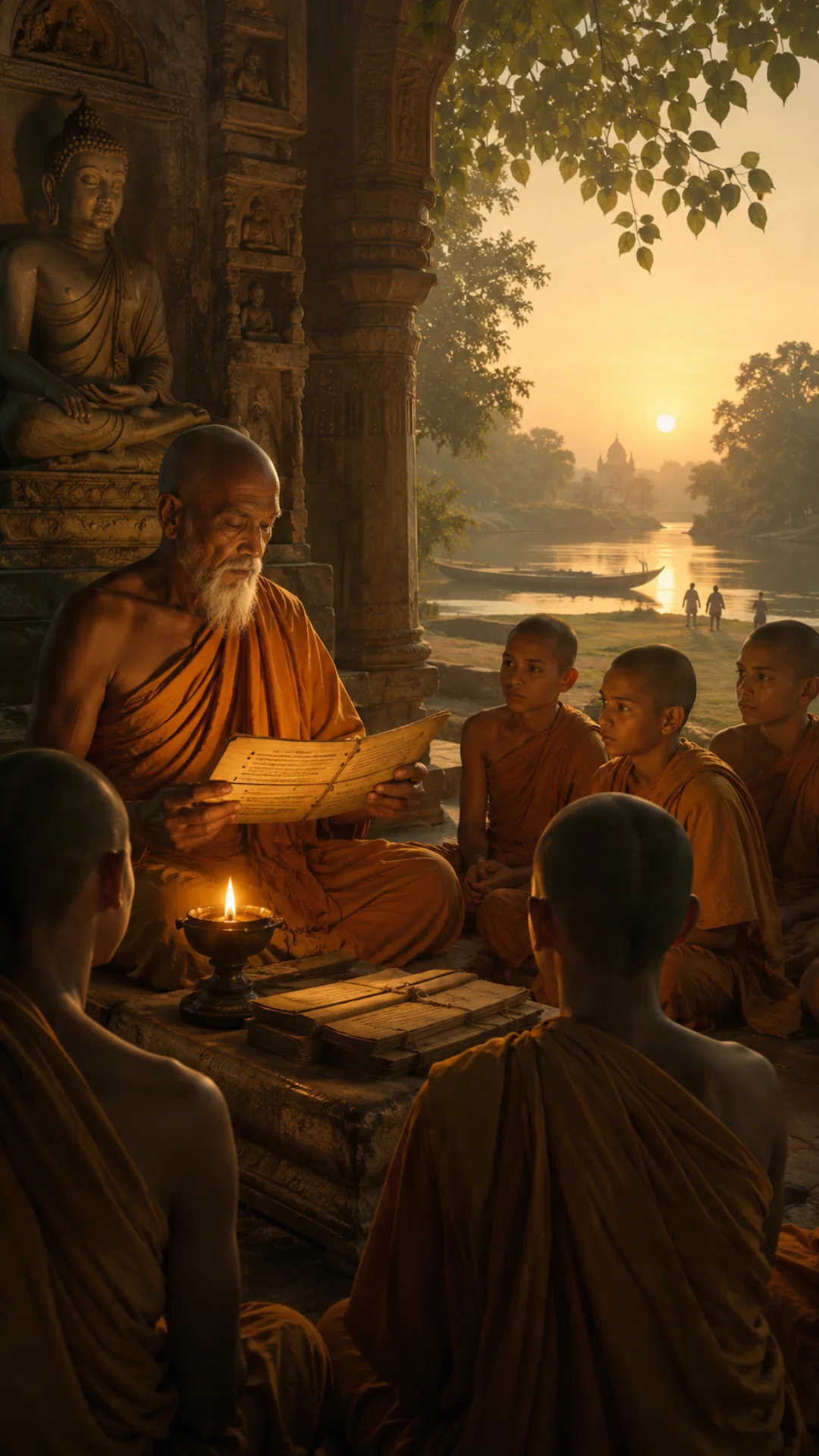
- 1st century BCEThe Pali CanonThe oral transmission set down on palm leaves – the Tipitaka, three baskets of the word.
- 20th centuryAyya Khema · Thich Nhat HanhLiving teachers bring the early path to the West in plain, warm words.
- todayPrana carries it onHere it is gathered just as it has come down. From mouth to mouth.
Nearby on the map — kindred traditions
Theravada
The teaching of the elders: the same Pali Canon, the same path of mindfulness, carried into rigorous practice.
enter the world → the same silence, another tongueZen
A direct pointing to the mind beyond words. Sitting, breath, the direct seeing of one's nature.
enter the world → a branch from the same rootMahayana
The path of the bodhisattva: the same awakening, unfolded into compassion for all beings.
enter the world →