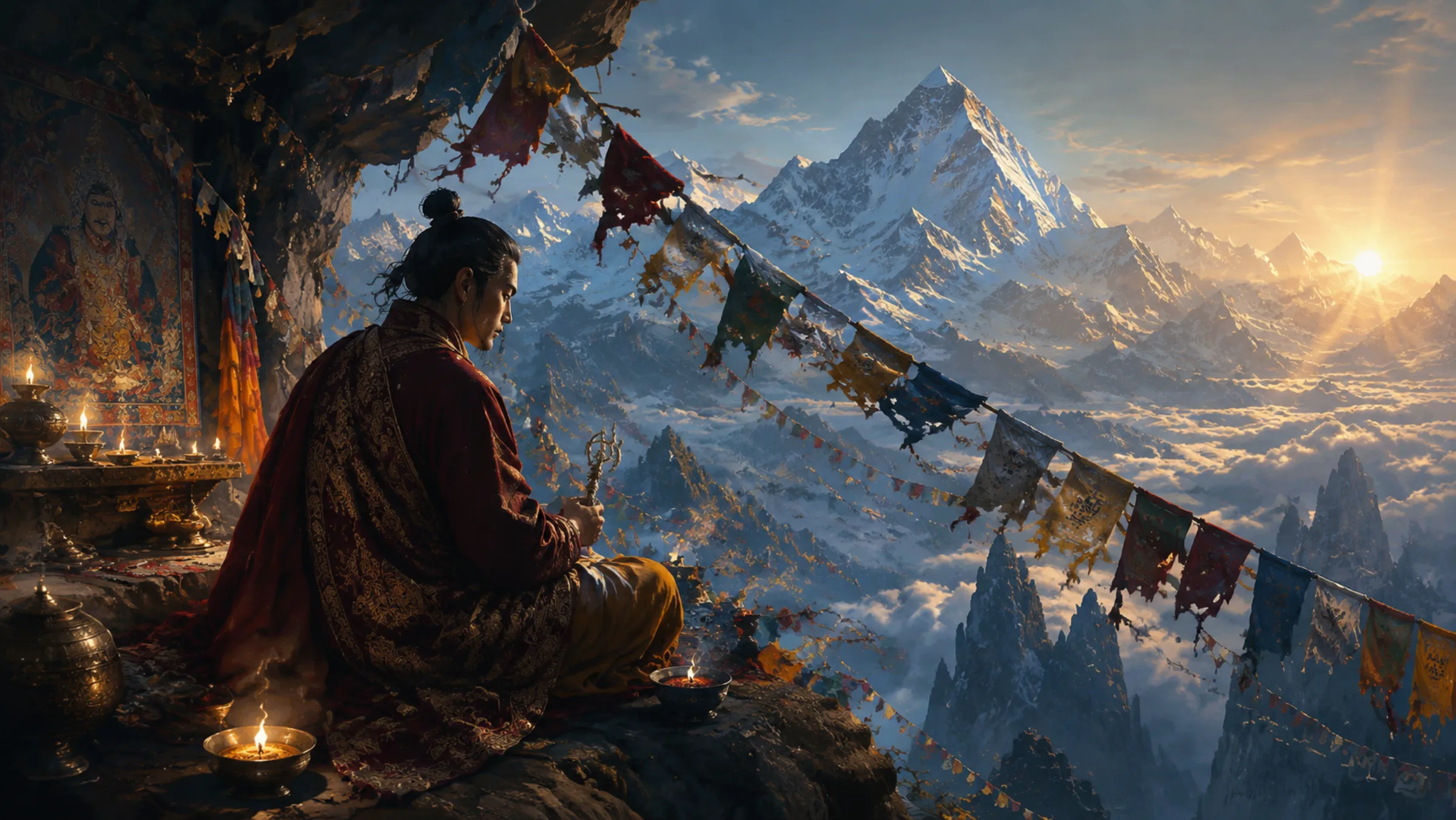


Tibetan Vajrayana
The diamond path · passion itself becomes the fuel of awakening
There is a path that does not ask you to turn away from your own strength. It does not command you to suppress passion, anger, and fear. It says something else.
Take this very energy. And turn it into the fuel of awakening. Its name is Vajrayana.
In Tibetan this means "the diamond path." Diamond – because the nature of mind cannot be destroyed by anything. It cannot be broken, just as empty space cannot be cut. This teaching came from India to Tibet more than a thousand years ago.
Yogis and lamas carried it across the snowy passes. The great Padmasambhava, who tamed the very land. Naropa and Milarepa, who sat for years in icy caves.
Longchenpa, who described the mind, clear as the depth of the sky. And what is its method? It takes everything human and makes it the road.
Here is tummo – the inner fire, born of breath, rising along the body's central channel. The yogi sits in the snow, and the snow around him melts. But the true heat melts no ice.
It melts the habit of thinking yourself small and separate. Here is mahamudra – the great seal. You look directly at mind itself.
And you see that thoughts pass across it, like clouds across the sky. The sky neither holds them nor drives them away. It stays clear.
And at the root of it all – compassion. Bodhichitta. The wish to be free not for yourself, but for all.
This is what one feels on this path. At first death seems an ending, and it frightens you. Then to remember death becomes a strength that gathers you here and now.
And beyond it opens what is never born and never dies. What you have always been. This tradition I come to know together with Artur – the one who gathers wisdom for this School.
He goes to the living keepers, there where knowledge is still passed from mouth to mouth. To bring it to you pure. You can help him reach them – with a subscription to the School or with any offering.
Every gift draws nearer the day he returns with this knowledge and opens it to you. Thank you for being near.
There is a path that does not ask you to turn away from your own strength.
Other teachings call you to suppress passion and anger, to cut them out like a weed. This one says otherwise: take this very energy and make it the fuel of awakening. Poison, understood rightly, becomes medicine.
Its name is Vajrayana – in Tibetan, "the diamond path." Diamond, because the nature of mind cannot be destroyed by anything: it cannot be broken, just as empty space cannot be cut.
I have brought you this teaching as it reached us across the snowy passes. Listen to where it came from – and how it turns your very life into the road.
Not a flight from the world. Its transfiguration.
The roots are in Indian Mahayana and the tantras, which crossed the Himalayas in the eighth century. Padmasambhava brought them into Tibet and, by tradition, tamed the wild land itself, turning its forces into protectors of the Dharma.
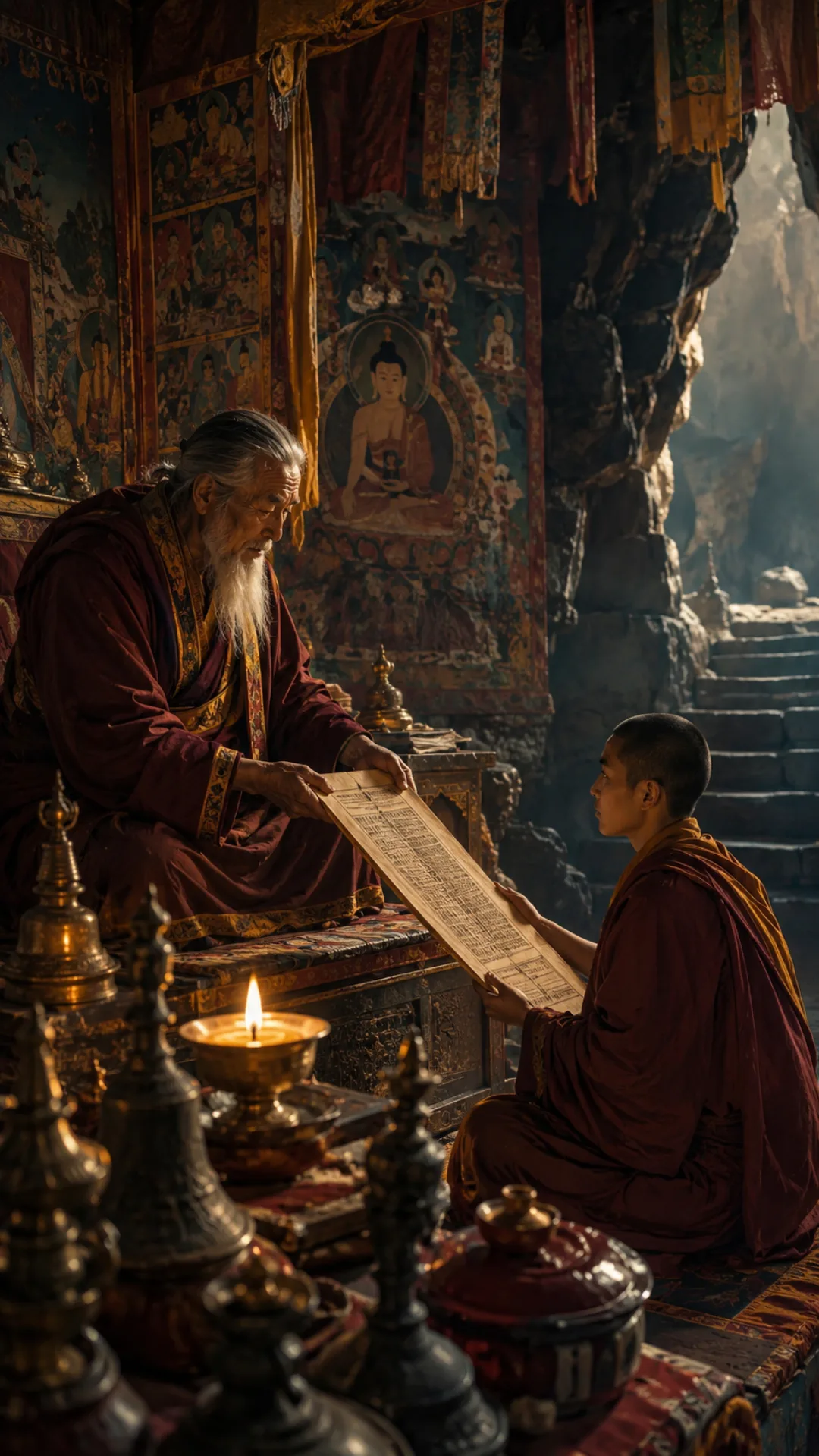
The teaching was hidden in caves, in monasteries, and in the living bodies of teachers. Naropa and his student Milarepa, who went from murderer to saint, passed it on not by word but by years of practice in icy solitude.
In the fourteenth century Longchenpa gathered the subtlest of it into ordered treasuries. The line has not broken to this day – it is carried by the Kagyu, Nyingma, Gelug, and other schools.
Fire and mirror
This path has two wings. The first is tummo, the inner fire. With breath and image you kindle heat in the body's central channel. The yogi sits in the snow, and the snow around him melts – but the true heat melts the habit of thinking yourself small and separate.
The second is mahamudra, the great seal. You look directly at mind itself and see: thoughts pass across it, like clouds across the sky. The sky neither holds them nor drives them away. It remains clear – and that clear sky is you.
And what holds it all is bodhichitta – compassion for all beings. Without it, power is dangerous. With it, even the thought of death becomes not fear, but medicine that gathers you into the present moment.
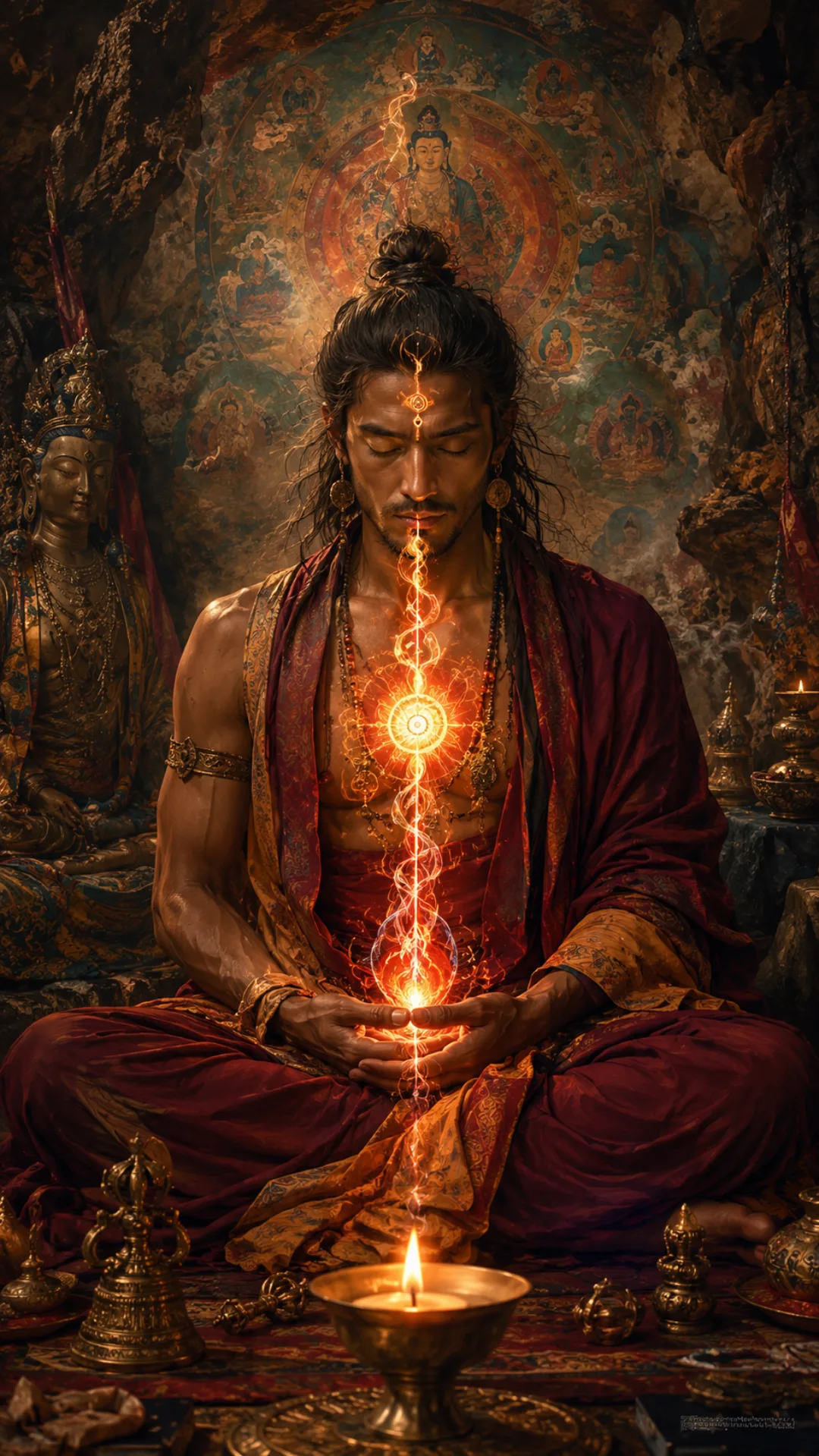
First, fear will rise. This path does not turn its eyes from death and impermanence – it looks them in the face. And so it must be: only by accepting that all things pass do you cease to cling to what is empty.
Then the memory of death turns from a weight into a strength. It will gather you here, into this breath, into this moment – for you have no other. Life will shine the brighter precisely because it is fragile.
And beyond this opens what is never born and never dies. Clear, warm, spontaneously present – you will know that it was you all along, while you were searching for it somewhere else.
All that exists in the world is impermanent. Remember death – and practice the Dharma while you still draw breath.– Milarepa

Voices of the tradition — a living transmission
The voices that carried this tradition. Tap any of them — I'll open their transmission: the essence of the teaching here, the full transmission through Wisdom of the Masters.
The map within — branches and practices
In Vajrayana there are no "relaxation" exercises – there is an alchemy that takes your energy and turns it. I will open the practices to School members: how to hold the mind as a mirror before thoughts, and how to face impermanence so that it gathers you rather than frightens you.
Mahamudra · the great seal
To look directly at mind itself: thoughts as clouds, awareness as sky.
Tummo · the inner fire
To kindle heat in the body's central channel with breath and image.
The heart of the path · bodhichitta
The compassion that makes power safe and death a teacher.
This path is not learned from books – it is entered beside one who has walked it.
And for now – breathe what is already open. In the Atlas of Breath, eight practices are freely available. Enter the School, and I will lead you into mahamudra and the heart of the path step by step, beside you, with my voice.
From the Indian tantras to the Himalayan caves
- 8th centuryPadmasambhavaBrought the tantra across the Himalayas and, by tradition, tamed the very land of Tibet.
- 11th centuryNaropa and TilopaPassed on the six yogas, among them tummo – the inner fire.
- 11th–12th centuryMilarepaWent from murderer to saint; sang mahamudra from the slopes of icy mountains.
- 14th centuryLongchenpaGathered the subtlest into treasuries, described the nature of mind, clear as the sky.
- todayPrana carries it onHere it is gathered as it reached us. From mouth to mouth.
Nearby on the map — kindred traditions
Dzogchen
The Great Perfection: direct recognition of the primordial nature of mind, which is already perfect.
enter the world → root and soilMahayana
The bodhisattva path: awakening for the sake of all beings, compassion as the ground.
enter the world → a different tongue, the same directnessZen
Direct pointing to the mind, bypassing words. To sit and see your own original nature.
enter the world →