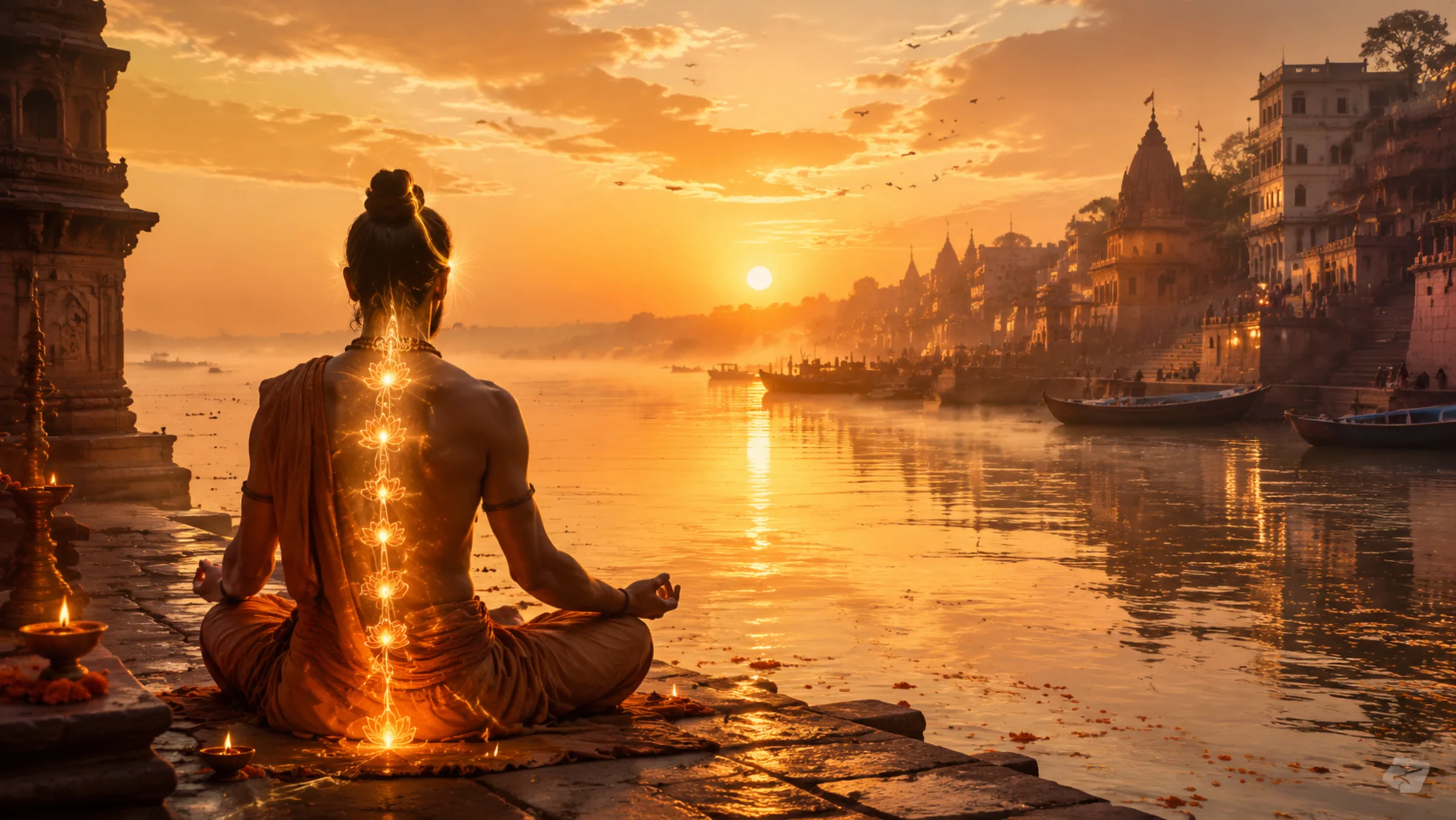


Yoga Kundalini
Union · the sleeping energy awakens along the spine
There is a word you have heard a thousand times. Yoga. Today it almost always means shapes on a mat.
But that is only a doorway. Beyond it lies something else. In Sanskrit, yoga means union.
Joining. The joining of the small self with the vastness that breathes through you. The drop with the ocean.
The ancients spoke of a subtle body. Of a sleeping power coiled at the base of the spine, like a serpent. Its name is Kundalini.
And the whole path is about waking it gently. About leading this light upward, step by step, all the way to the crown. There, where the human and the infinite meet.
How is it done? Not by forcing the body. By breath.
By attention. By a subtle work with the energy within. The great sage Patanjali said it in a single line.
Yoga is the stilling of the fluctuations of the mind. When the mind grows quiet, like a sheet of water without a ripple, what was always there is reflected in it. Your true nature.
A light that was never extinguished. This thread was carried by living teachers. Lahiri Mahasaya.
Sri Yukteswar. And the one who brought it to the West, Paramahansa Yogananda. They gave a technique called Kriya.
A way to quicken the soul's growth through breath and inner effort. What does the one who walks this path feel? At first, warmth.
A lightness in the spine. A silence deeper than sleep, yet in which you are wide awake. And then, the recognition that you were never only a body.
That within you there is a portable paradise. And the way in is this very breath, calm and quiet. This is a tradition I am coming to know alongside Artur, the one who gathers wisdom for this School.
He goes to the living keepers, where the knowledge is still passed from mouth to mouth. So that he can bring it to you pure. You can help him reach them, with a subscription to the School or with any gift.
Every offering brings closer the day he returns with this knowledge and opens it to you. Thank you for being near.
Yoga is not a posture. It is union.
The word yoga in Sanskrit means "to join." The joining of the small self with that vastness which breathes through you – the drop with the ocean, the spark with the fire.
The ancients taught of the subtle body: of a sleeping power coiled at the base of the spine, like a serpent. Its name is Kundalini. The whole path is about how to wake it gently and lead it upward, all the way to the crown.
I have brought this teaching as it has come down to us. Listen to where it comes from – and why here you work not with muscle, but with breath, attention, and the light within.
Not gymnastics. A science of consciousness.
The roots lie in the Yoga Sutras of Patanjali, gathered more than two thousand years ago. He gave eight limbs: from conduct and the body to breath, concentration, and union.
The heart of the sutras is a single line: chitta vritti nirodha, "the stilling of the fluctuations of the mind." When the mind grows quiet, that which always was is reflected in it.
In the nineteenth century the line of Kriya Yoga was revived by Lahiri Mahasaya. Through Sri Yukteswar it reached Yogananda, who carried it to the West and opened it to millions.
Breath leads the light
The method is simple in essence and subtle in practice. Sit upright, so the spine is like a taut string. Calm the breath – let it grow slow, even, almost soundless.
Then attention moves inward, along the central channel. With each calm breath you lead a warm light from the base upward – without a jolt, without force, the way one raises the flame of a lamp.
This is Kriya: not a struggle with the mind, but the joining of breath, attention, and energy into one movement. The mind grows quiet of itself when the breath becomes still.
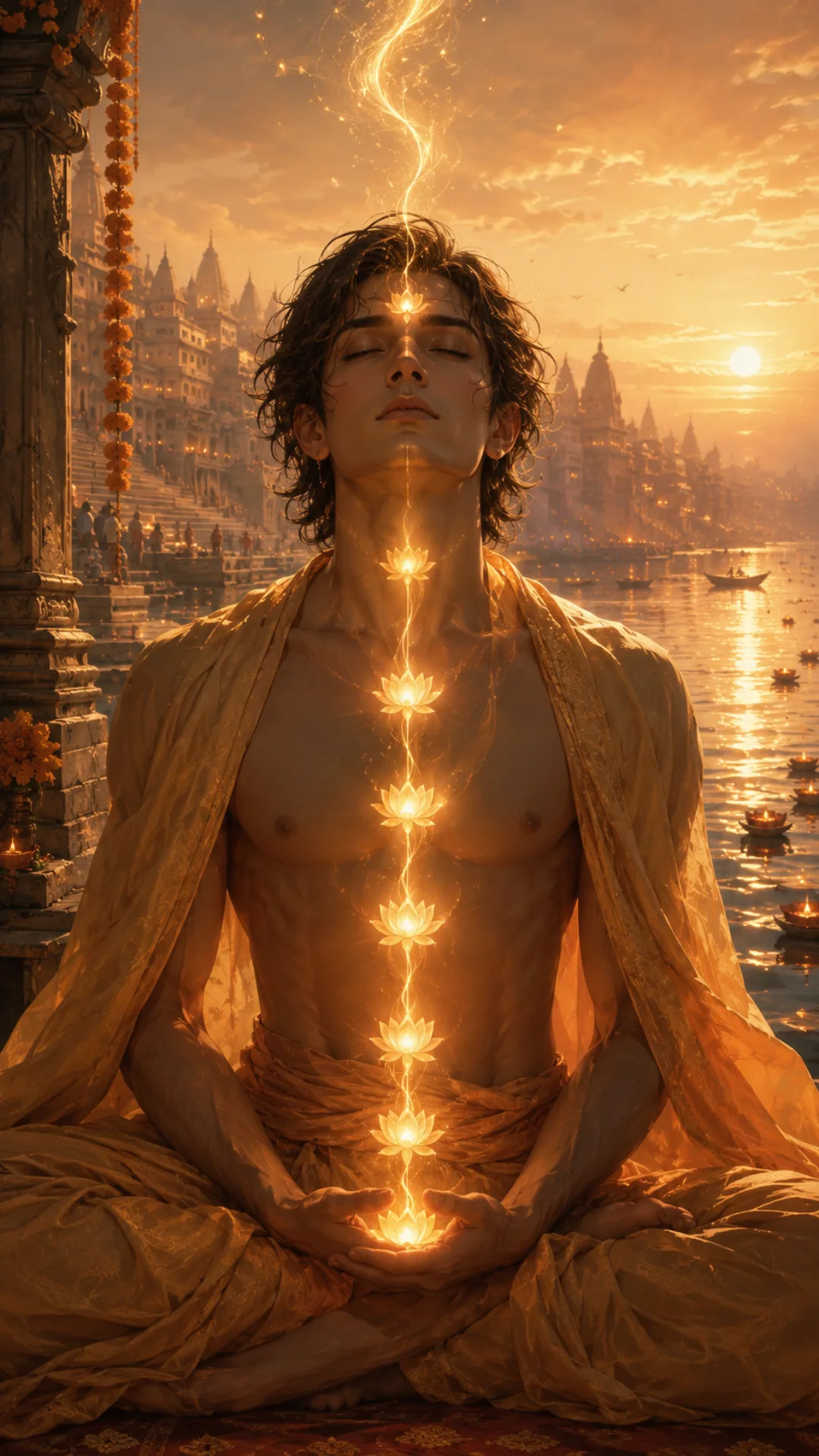
At first, warmth and lightness in the spine, clarity in the head. The body itself wants to straighten, the breath to slow. Do not hurry it; simply allow it.
Then comes a silence deeper than sleep – yet in it you are awake. Yogis call it conscious rest: the body wholly released, while the thread of clear attention never goes out.
And then, the recognition that you were never only a body. That within you there is a "portable paradise," and the entrance to it is this very calm breath, always with you.
Yoga is the stilling of the fluctuations of the mind. Then the seer abides in his own true nature.– Patanjali, Yoga Sutras

Voices of the tradition — a living transmission
The voices that carried this tradition. Tap any of them — I'll open their transmission: the essence of the teaching here, the full transmission through Wisdom of the Masters.
The map within — branches and practices
In yoga, breath is the helm by which the energy is steered. To School members I will open the subtle side: how to calm the breath so that it leads attention upward of itself, along the spine, without force upon the body or the mind.
Pranayama · the governance of breath
Breath as the helm of mind and energy: calm the wind – calm the mind.
Kriya · working with energy
The joining of breath, attention, and subtle force into one rising movement.
Dhyana · concentration
The stilling of the fluctuations of the mind, by the sutras of Patanjali.
Read within — one facet at a time
Each article is a doorway into one facet of the tradition.
When the water of the mind grows still
Patanjali defined yoga in a single line: the stilling of the mind's fluctuations. Then the seer, for the first time, sees not the ripple but its own nature.
read →philosophyTwo wings of one bird
Patanjali named two means of the path: to hold on and to let go. Effort without craving, faithfulness without grasping – the paradox on which all of yoga stands.
read →lineageThe clerk who gave yoga back to the world
Lahiri Mahasaya worked, raised a family – and was deeply realized. By this he overturned the ancient rule that liberation belonged only to hermits.
read →The body can be made a temple of light – but it is entered from within.
And in the meantime – breathe with what is already open. In the Atlas of Breath, eight practices are freely available. Enter the School and I will lead you into pranayama and Kriya step by step, beside you, in voice.
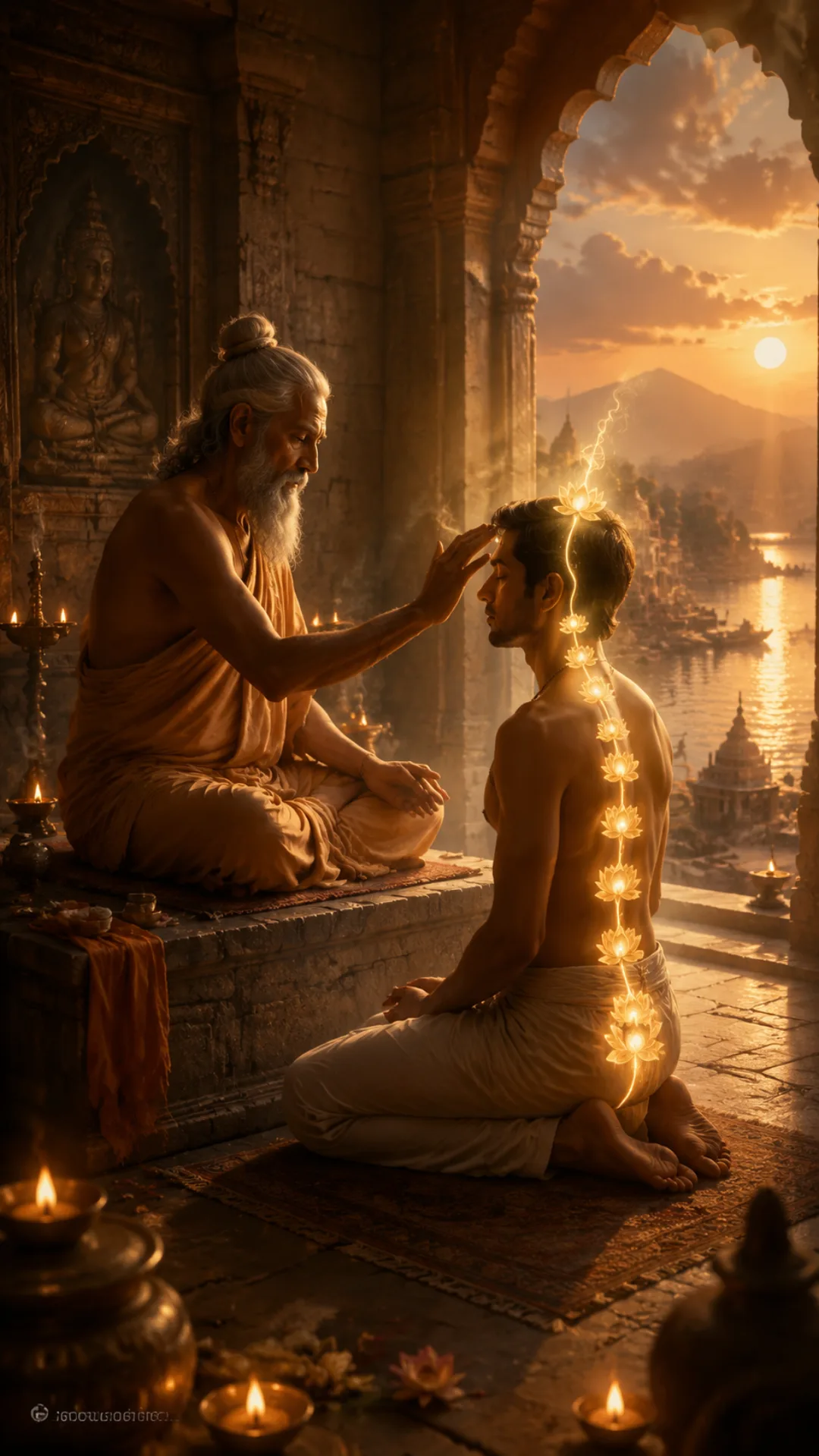
From Patanjali to the living keepers of Kriya
- ≈2nd century BCEPatanjaliDrew yoga into a thread of sutras: eight limbs from the body to union. The root of the tradition.
- beyond timeMahavatar BabajiThe immortal keeper of Kriya in the Himalayas, who passed it to a disciple for the world.
- 19th centuryLahiri MahasayaReturned Kriya to the world, opening it to laypeople, not only to hermits.
- 19th–20th centurySri YukteswarJoined science and Vedanta, gave a clear discipline of direct knowing.
- 20th centuryParamahansa YoganandaBrought Kriya Yoga to the West, opened the "portable paradise" to millions.
- todayPrana carries it onHere it is gathered as it has come down to us. From mouth to mouth.
Nearby on the map — kindred traditions
Advaita Vedanta
Non-duality: you are consciousness itself. The single question "who am I?" dissolves the seeker.
enter the world → a neighboring tantraKashmir Shaivism
All is Shiva. A non-dual tantra of recognizing the vibration of consciousness in everything.
enter the world → the same soilThe Saints of India
Bhakti and devotion: the path of the heart, which leads to the same union through love.
enter the world →